




Biogas composition analysis systems play an essential role in the wastewater treatment (WWTP), waste treatment and incinerator industries, biomass fuel producers and agriculture. They monitor the composition of biogas , such as methane, hydrogen sulfide, carbon dioxide or oxygen. Plants can thus guarantee the quality of the biogas they produce, ensure the safety of biomethane production and comply with environmental standards.

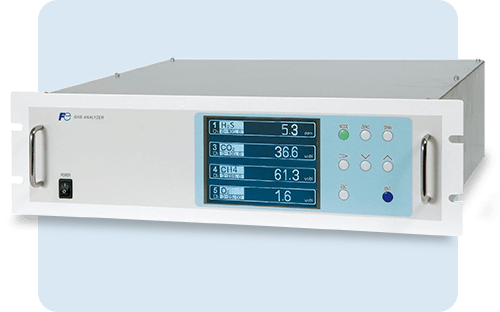
The Fuji Electric ZPAF biogasanalyser r continuously and simultaneously measures the four main components of biogas:
Methane (CH4)
Carbon dioxide (CO2)
Oxygen (O2)
Hydrogen sulfide (H2S)
This gas-analyser r is unique on the market thanks to its design and performance:


Simple maintenance

Digital link

Good precision

excellent stability
The Fuji Electric ZPAF biogasanalyser r measures biogas components within the ranges shown below:
CH4 (Methane) - Measurement ranges:
CO2 (Carbon Dioxide) - Measurement ranges:
H2S (Hydrogen Sulfide) - Measurement ranges:
O2 (Oxygen) - Measurement ranges:
The single-beam NDIR principle is based on the specific absorption of gases in the infrared, enabling precise measurements within specified ranges.
This method uses a special electrode that reacts selectively with hydrogen sulfide, providing an accurate measurement with a long service life.
The electrochemical cell measures oxygen by reacting with a specific electrolyte, offering a reliable solution for applications requiring precise oxygen detection.
The Fuji Electric ZPAF biogasanalyser r features exceptional technical specifications and metrological performance, making it an indispensable measurement and control instrument for biogas facilities.
These datasheet demonstrate the stability and accuracy of theanalyser, ensuring reliable measurements even under changing conditions.
Theanalyser 's fast response time ensures virtually instantaneous detection of changes in gas composition, which is crucial for sensitive applications.
This variety of input/output and communication options allows easy integration with other systems and precise control according to specific needs.
The clear, backlit display provides real-time information, making data easy to read even in poor lighting conditions.
The versatile power supply and compact design make it easy to integrate theanalyser into a variety of environments, while offering ease of use and maintenance.
To measure the composition of biogas, a biogas analyser uses different analytical methods depending on the component being analyzed.
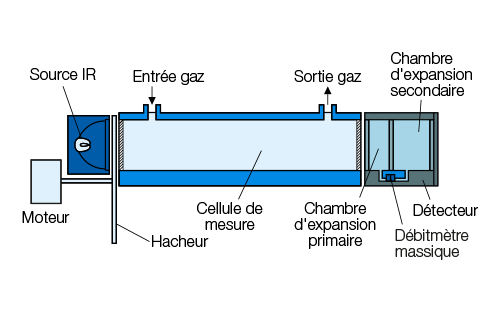
CO2 andCH4 are measured using non-dispersive infrared (NDIR) technology.
The measurement principle of an infrared gas analyser (NDIR) is explained on the page dedicated to Fuji Electric ’s infrared multig analysers .
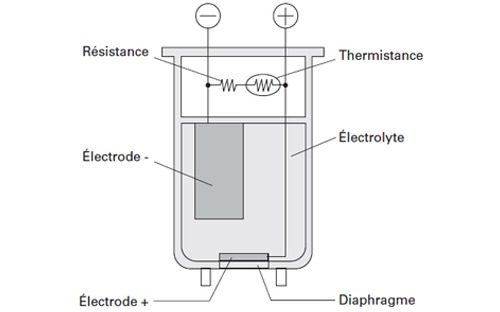
O2 is measured electrochemically.
The measurement principle of the electrochemical O2 cell is as follows:
Two electrodes are enclosed in the electrolyte-filled cell. When biogas enters the cell, a chemical reaction takes place, generating a flow of electrons and therefore an electric current, proportional to the amount of oxygen present in the biogas.
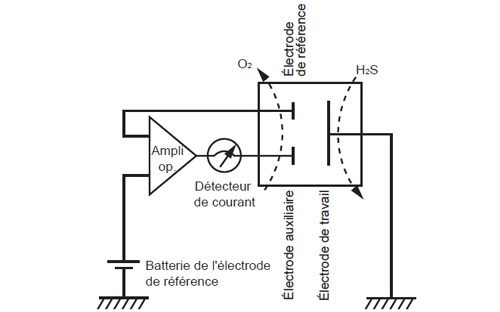
H2Sis measured by the electrolytic method at constant potential.
Two chemical reactions are required for this method.
As it passes through the cell, at the working electrode, theH2Sto be measured reacts with the moisture (H2O) also present.
Reaction at the working electrode
H2S+ 4H2O-> H2SO4 + 8H+ + 8e-
In parallel, at the auxiliary electrode, a second reaction takes place between the oxygen (O2) also present and the hydrogen ions (H+) generated by the first reaction.
Reaction at auxiliary electrode
O2 + 4H+ + 4E- -> 2H20
The electron flow varies in proportion to the amount ofH2Spresent in the cell.
For both reactions to occur, the cell must therefore contain not only theH2Sto be measured, but also a minimum amount of oxygen and moisture.
The Fuji Electric ZPAFanalyser continuously measuresH₂Sbecause it is equipped with an automatic regeneration system for theH₂Smeasurement cell.
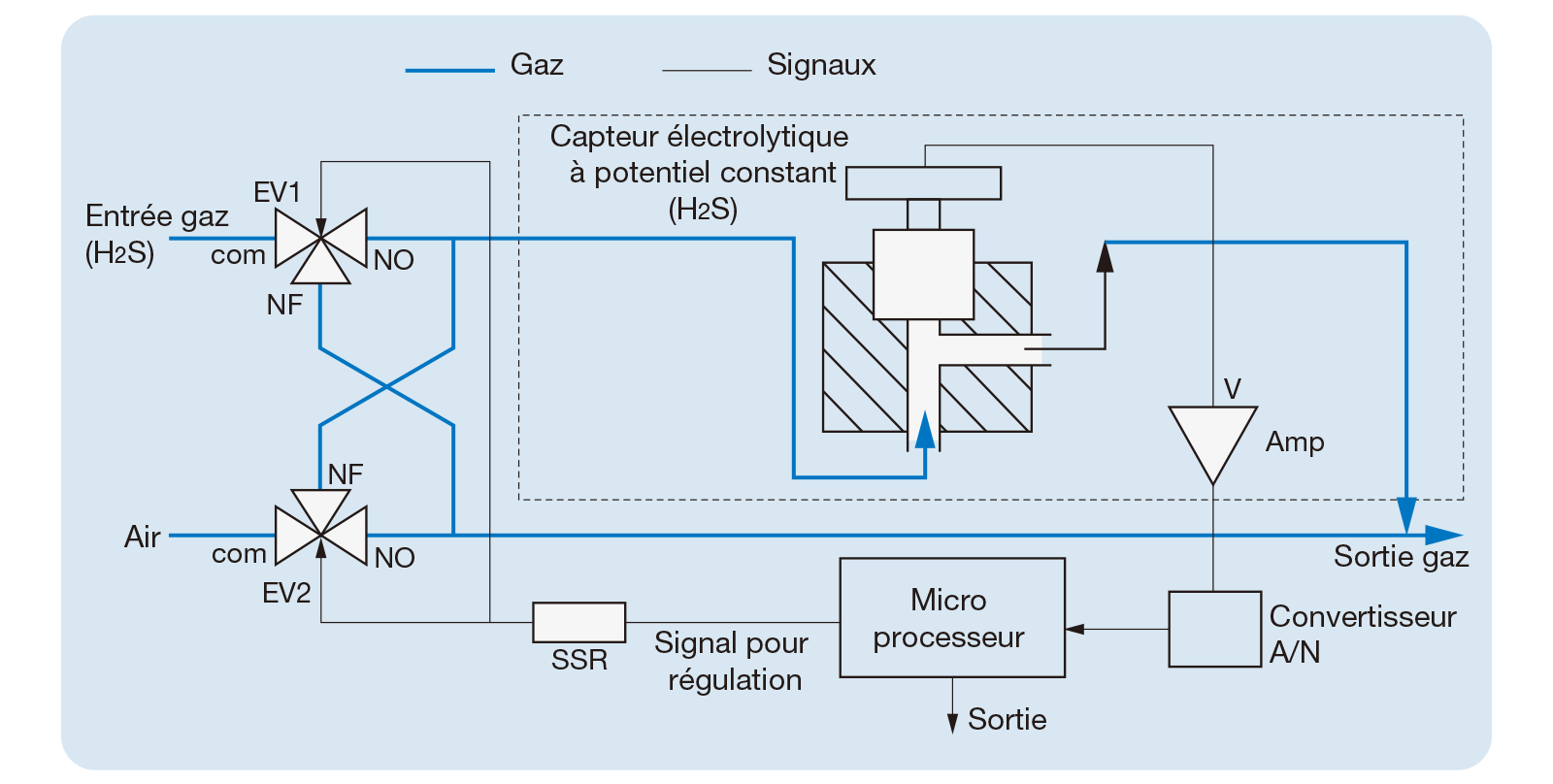
Since theH2Scell uses the constant potential electrolytic method, it is imperative to include oxygen and moisture in the gas to be analyzed. Thanks to this automatic regeneration system, ambient air is supplied to the sensor at regular intervals to enable analysis of the biogas, which is often oxygen-free and dried before analysis.
Fuji Electric is helping to preserve our environment, develop renewable energies and save energy.
Precise continuous measurement of biogas composition. Up to 4 components including H₂S measured continuously and simultaneously.
H2S - CH4 - CO2 - O2 - Pressure - Temperature - Flow rate
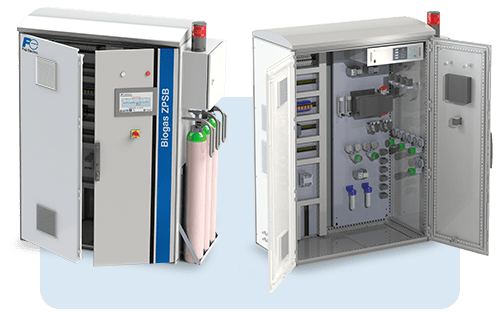
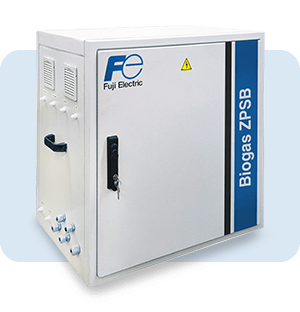
Analysis cabinet - wall-mounted box
Biogas production and treatment sites present environmental constraints in terms of corrosivity and toxicity (presence ofH2S), explosivity (presence of CH4), but also potentially high thermal stress and presence of dust.
The Fuji Electric ZPSB biogas analysis system has been designed to measure biogas composition on industrial sites such as non-hazardous waste landfills (NHWL), wastewater treatment plants and methanization sites with digesters and fermenters.
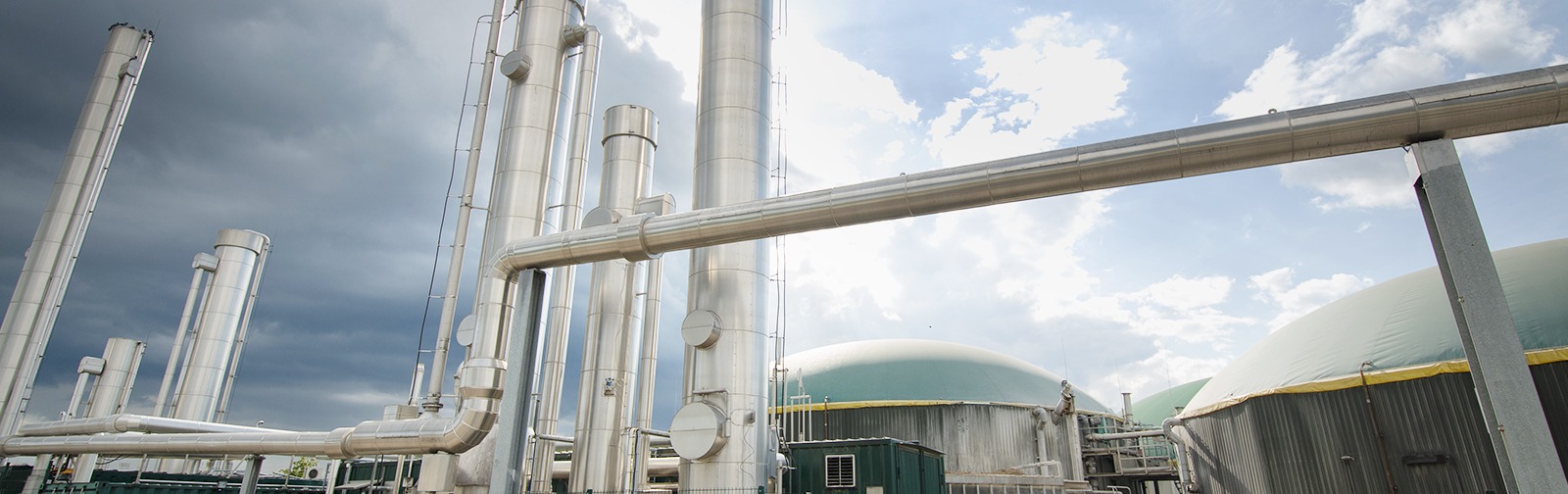
Proven, Excellent Performance of Fuji Electric Gas- analysers
Simultaneous, continuous measurement of CH₄, CO₂, O₂ and H₂S
Flexible solutions that adapt to site specificities
Flexible solutions that adapt to site specificities
 Flyer
FlyerDownload the flyer and discover all the advantages of the Fuji Electric biogas analysis system!
The ZPSB biogas analysis system incorporates the ZPAF biogasanalyser . It has the following technical specifications:
These cutting-edge technologies ensure exceptional precision and reliability in the measurement of these critical components.
These extensive measurement ranges cover a variety of applications, while the versatile power supply facilitates integration in diverse electrical environments.
These results demonstrate the speed and accuracy of theanalyser, ensuring reliable real-time monitoring.
A variety of outputs and means of communication ensure easy integration with other systems, while the backlit LCD display provides clear visualization of data.
These conditions enable use in a variety of environments, while the sampling options guarantee accurate measurement.
The multipoint system offers greater flexibility for complex applications, with advanced configuration and monitoring functions.