






1 product
Showing the single result
Please contact us

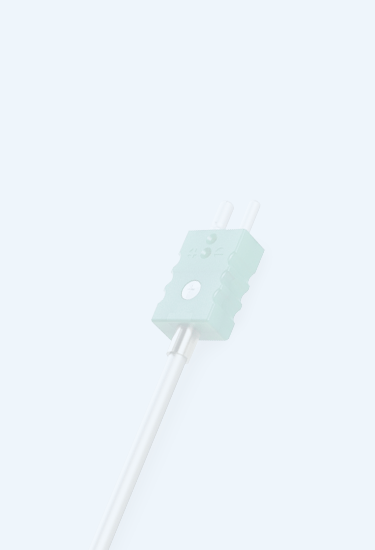
Showing the single result

Made in France

Local service near you

Customer support every step of the way

Seamless technical communication

A thermocouple probe is a sensor used to measure temperature. Thermocouples are versatile temperature sensors and are commonly used in a wide range of applications, from industrial thermocouples to standard thermocouples found in household appliances and equipment.

The thermocouple temperature probe, or thermocouple temperature sensor, is an essential temperature-measuring instrument in many industrial and scientific applications. Thanks to its durability, accuracy, and wide measurement range, it is widely used in fields as diverse as metallurgy, power generation, the chemical industry, and scientific research.
This device works on the principle of the Thomas Johann Seebeck effect, named after the physicist of the same name, where a voltage is generated between two different metals when they are exposed to a temperature difference. This voltage is then converted into a temperature measurement.
Despite their apparent simplicity, thermocouples require a thorough understanding of their operation, the types available, as well as mounting and wiring techniques to ensure reliable and accurate measurements.
Let's explore in detail the different types of thermocouples, the principle of operation, installation and wiring methods, and best practices for optimizing their use in various applications.

A thermocouple probe works by combining two different metals, connected at one end called the “hot junction.” When a temperature difference occurs at this junction, an electric current is generated in the circuit, producing an electromotive force (EMF). The value of this EMF depends on the properties of the metals used and the temperature difference between the hot junction and a reference junction, often called the “cold junction.”
The metals used in thermocouples are of homogeneous quality, enabling the device to withstand different temperature gradients along its entire length without altering the FEM. This means that the thermocouple can measure temperatures accurately, even under variable conditions.
Measuring devices such as digital displays, PLCs and temperature controllers are designed to accept thermocouples directly. They automatically manage cold junction compensation, essential for accurate readings.
The alloys used to manufacture thermocouples are generally available in wire form, making them easy to manufacture and handle.
To select the most suitable thermocouple for your application, it is essential to :

Knowledge of materials

Know how it works

Controlling temperature ranges

Knowing the different types of probe

Understanding assembly and wiring

Take insulation resistance into account


Each type of thermocouple probe has specific output characteristics (voltage) and requires proper calibration as well as appropriate measuring equipment to ensure accurate and reliable readings.
Thermocouples offer a number of advantages that make them indispensable in many industrial and scientific applications.


Reduced cost

High-temperature resistance and stability

Small dimensions and a wide range of diameters

Positioning the hot spot

Short response times

Good vibration resistance
By weighing up these advantages and disadvantages, it is possible to determine whether thermocouples are suitable for a specific application. For environments requiring fast, reliable temperature measurement at low cost, thermocouples are often the ideal solution.

The installation and wiring of a thermocouple probe are crucial steps in ensuring accurate and reliable temperature measurements. Here are the key steps and considerations:


Thermocouples are often exposed to harsh environments, subject to electrical, electromagnetic and other types of interference. To compensate for temperature measurement disturbances caused by such interference, metal-sheathed thermocouples are fitted with an insulation resistor between the wires and the protector.
This insulation resistance, rigorously tested at the factory, is between 1000 and 5000 MW minimum at 100 to 500 Vdc, depending on thermocouple diameter and ambient temperature. These datasheet are valid for thermocouple lengths of less than 1 meter, in compliance with current standards.
It is important to note that these resistance values decrease when the thermocouple is subjected to high temperatures, until they become almost zero at very high temperatures. Effective insulation of thermocouples is therefore crucial to ensure accurate and reliable measurements, particularly in extreme temperature conditions and disturbed environments.
That is why you should always choose measuring instruments with galvanic isolation between the input and output, or between the input, output, and power supply.

A thermocouple is a temperature sensor consisting of two wires of different metals welded together at one end, called the hot junction. When this junction is exposed to a temperature, it generates an electrical voltage proportional to that temperature, due to the Seebeck effect.
The main types of thermocouples are :
A thermocouple works by measuring the electrical potential difference between the hot junction and a reference junction, often maintained at a known temperature. The voltage produced is converted into a temperature measurement using calibration tables.
Cold junction refers to the reference junction of a thermocouple, where the wires are soldered to metal terminals. Cold junction compensation is a technique used to compensate for temperature variations at this junction to ensure accurate measurements.
The choice of a thermocouple depends on several factors:
Thermocouples are manufactured from various combinations of metals and alloys, such as :
The Seebeck effect is the phenomenon whereby a temperature difference between two different materials generates an electrical voltage. This effect is the basis of thermocouples.
Calibrating a thermocouple involves comparing its measurements with those of a known standard at different temperatures, and adjusting the readings accordingly to guarantee accuracy.
Thermocouples are used in many sectors and applications, including :
Our sales team is at your disposal
to help you with your projects.
Have a question or need assistance? Our experts are here to help you with fast, reliable solutions.
Ask for helpOur related articles
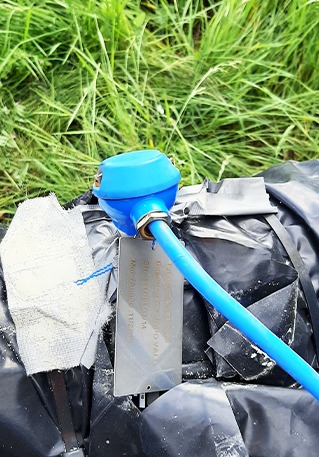
Find out how to calibrate a temperature sensor to guarantee accurate measurements. Follow our step-by-step guide to optimize your calibrations!
October 16, 2024
Find out how to master temperature units and conversions to boost your industrial performance.
October 16, 2024