






1 product
Showing the single result
Please contact us


Made in France

Local service near you

Customer support every step of the way

Seamless technical communication
Technologies
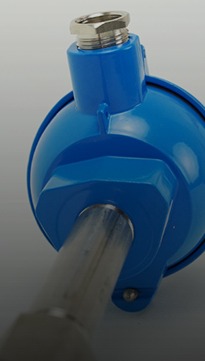
Find out how to read a table of ohmic values as a function of temperature, and the importance of this data in industrial applications.

A PT100 temperature probe uses an RTD (Resistance Temperature Detector) sensor to measure temperature. Made of platinum, it has a resistance of 100 ohms at 0°C. It is valued for its accuracy and stability over a wide range of temperatures. Suitable for various industrial applications, it is available in several configurations—including 2-, 3-, or 4-wire—to meet different accuracy requirements.

Find out why the PT100 probe is essential for accurate and reliable temperature measurements
The PT100 probe is essential for accurate temperature measurement in a variety of applications. Whether you're an engineer, a technician or simply a technology enthusiast, understanding the benefits and operation of the PT100 probe can greatly enhance your measurement processes.
The PT100 is an extremely precise and reliable temperature sensor, widely used in various industrial sectors to accurately measure temperatures from -200 to 850°C.
Let's take a closer look at how the PT100 sensor works, its applications and the main advantages it offers over other types of temperature sensor.

The PT100 probe, also known as a PT100 sensor, is based on the principle of the electrical resistance of metals, particularly platinum. The PT100 gets its name from the fact that its resistance is 100 ohms at 0°C. This type of probe belongs to the category of RTD (Resistance Temperature Detector) sensors, which exploit the property of metals to change their resistance as a function of temperature.

PT100 temperature probes are available in a variety of configurations to meet different needs. For example, a 2-wire PT100 platinum resistance thermometer is often used for applications where high accuracy is not essential. On the other hand, 3- or 4-wire versions are chosen for more precise measurements, as they reduce the impact of resistance in the connecting wires.
Typical applications include industrial process monitoring, temperature temperature control for climate control and manufacturing quality management in critical environments.

The accuracy of PT100 probes is defined by their class.
Here is a table summarizing the different classes of rtd probes and their accuracy:
| CLASS B | ± 0.12 Ohm | ± 0.30ºC |
| CLASS A | ± 0.06 Ohm | ± 0.15ºC |
| 1/3 B (1/3 DIN) | ± 0.04 Ohm | ± 0.10ºC |
| 1/10 B (1/10 DIN) | ± 0.012 Ohm | ± 0.03ºC |
To take things a step further, here's a table showing the accuracy of Class A and Class B as a function of temperature.
| Temperature in °C | Basic values in Ω | Permissible errors (tolerances) | |||
|---|---|---|---|---|---|
| Class A | Class B | ||||
| °C | Ω | °C | Ω | ||
| -200 | 18,52 | ± 0,55 | ± 0,24 | ± 1,3 | ± 0,56 |
| -100 | 60,26 | ± 0,35 | ± 0,14 | ± 0,8 | ± 0,32 |
| 0 | 100,00 | ± 0,15 | ± 0,06 | ± 0,3 | ± 0,12 |
| 100 | 138,51 | ± 0,35 | ± 0,13 | ± 0,8 | ± 0,30 |
| 200 | 175,86 | ± 0,55 | ± 0,20 | ± 1,3 | ± 0,48 |
| 300 | 212,05 | ± 0,75 | ± 0,27 | ± 1,8 | ± 0,64 |
| 400 | 247,09 | ± 0,95 | ± 0,33 | ± 2,3 | ± 0,79 |
| 500 | 280,98 | ± 1,15 | ± 0,38 | ± 2,8 | ± 0,93 |
| 600 | 313,71 | ± 1,35 | ± 0,43 | ± 3,3 | ± 1,06 |
| 650 | 329,64 | ± 1,45 | ± 0,46 | ± 3,6 | ± 1,13 |
| 700 | 345,28 | - | - | ± 3,8 | ± 1,17 |
| 800 | 375,7 | - | - | ± 4,3 | ± 1,18 |
| 850 | 390,48 | - | - | ± 4,6 | ± 1,34 |
These two tables reveal the superior accuracy of Class A compared with Class B. On the other hand, the first table clearly shows that class 1/3 B and 1/10 B probes achieve superior accuracy. This distinction is essential for applications requiring the highest accuracy.


PT100 temperature probes offer several distinct advantages over other temperature sensors, such as thermocouples. They are known for their long-term stability, high accuracy, and wide operating temperature range. In addition, platinum PT100 sensors are resistant to contamination and harsh environmental conditions, making them ideal for use in demanding industrial environments.

PRECISION

STABILITY

LINEARITY

COPPER WIRING

To choose the right PT100 platinum resistance thermometer, it's essential to consider the temperature range required, the type of mounting, and the operating environment.
PT100 temperature sensors can be manufactured with different sheath lengths and diameters to suit specific applications. It's also crucial to determine whether a 2, 3 or 4-wire PT100 sensor is required, depending on the accuracy required.
Consult a pt100 probe manufacturer who will help you choose the right product for your specific requirements. They can offer you a custom-made product or one of their stock items.
PT100 sensors are classified into different categories, such as classes A and B, according to DIN IEC 751 :
Class A = ±(0.15 + 0.002*t) °C or 100.00 ±0.06 Ω at 0 °C
Class B = ±(0.3 + 0.005*t) °C or 100.00 ±0.12 Ω at 0 °C
A Class A sensor offers better accuracy, but at a higher cost than a Class B sensor.
Two other temperature sensor tolerance classes coexist in industry:
1/3 DIN = ±1/3* (0.3 + 0.005*t) °C or 100.00 ±0.10 Ω at 0 °C
1/10 DIN = ±1/10* (0.3 + 0.005*t) °C or 100.00 ±0.03 Ω at 0 °C
Classes 1/3B and 1/10B offer greater precision.
The 1/3B class surpasses the A class in terms of precision.
Class 1/10B offers the highest precision, but at a higher cost.
The choice of class depends on the precision requirements of your application.
Thermocouples and PT100 temperature probes are two technologies commonly used to measure temperature.
However, PT100 sensors are often preferred for their accuracy and long-term stability.
Unlike thermocouples, rtd probes do not require cold junction compensation, which simplifies their use and improves measurement accuracy.
Regular maintenance and calibration of PT100 temperature probes are essential to ensure accurate measurements.
Sensors must be cleaned and inspected periodically to avoid contamination that could affect temperature measurement.
In addition, regular calibration, generally carried out by accredited laboratories, is necessary to maintain the sensor's accuracy.
The resistance of a PT100 sensor increases linearly with temperature.
This means that when the temperature rises, the resistance of the PT100 sensor also increases, enabling accurate temperature measurement based on this variation.
According to DIN EN 60751 (or IEC 751) we have an electrical resistance for a Pt100 resistance sensor:
Pt100 at 0 °C = 100.00 Ω
Pt100 from 0 to 100°C = resistance temperature coefficient (TCR) of 0.00385 Ω/°C
Refer to the pt100 probe table for ohmic value at different temperatures.
Calculation of PT100 sensors is essential to transform measured resistance values into accurate temperatures. The Callendar-Van Dusen formula, which describes the PT100 resistance-temperature relationship for platinum sensors, is commonly used. Here's the detailed formula:
R(T)=R₀×(1+A×T+B×T²+C×(T-100)×T³)
Explanation of the formula :
For positive temperatures, the term C × (T-100) × T³ is generally neglected, thus simplifying the calculation.
To maximize the efficiency and accuracy of your measurements without using the calculation method, always use a PT100 conversion chart conversion chart and follow good calibration and verification practices for your probes.
To wire a PT100 correctly, follow the manufacturer's connection instructions and determine whether a 2, 3 or 4-wire configuration is required. Each configuration offers different levels of accuracy and compensation for wire resistance.
To determine the resistance of a PT100 temperature probe at 0°C, the probe must be immersed in a bath of melted ice at 0°C.
The resistance measured should be 100 ohms, which is the standard value for a PT100 at this temperature.
DIN EN 60751 (or IEC 751) defines the electrical resistance for a Pt100 resistance sensor as follows:
Pt100 at 0 °C = 100.00 Ω
RTDs (Resistance Temperature Detectors) can be made from a variety of materials, each offering specific characteristics.
Platinum is the most popular and accurate material, offering excellent stability and precision over a wide temperature range.
Nickel, although less expensive, offers good precision over a more limited range. Copper is used for its excellent thermal conductivity properties, but its stability is inferior.
Balco and tungsten are rare materials used for specific applications, offering respectively good precision and the ability to operate at very high temperatures, but they are less stable and precise than platinum.

Our sales team is at your disposal
to help you with your projects.
Have a question or need assistance? Our experts are here to help you with fast, reliable solutions.
Ask for helpOur related articles
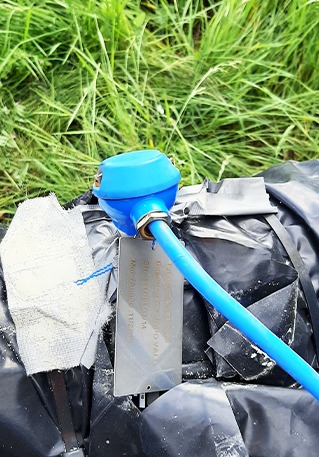
Find out how to calibrate a temperature sensor to guarantee accurate measurements. Follow our step-by-step guide to optimize your calibrations!
October 16, 2024
Find out how to master temperature units and conversions to boost your industrial performance.
October 16, 2024