






 PT100 temperature probe
 Thermocouple temperature probe

2 products
Showing all 2 results
Please contact us
Please contact us 
Thermocouple temperature probe

Showing all 2 results

Made in France

Local service near you

Customer support every step of the way

Seamless technical communication
Technologies
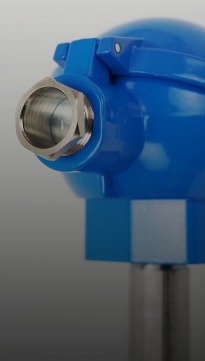
A range of resistance thermometers and PT100 temperature sensors, custom-built from single units to small series, adapted to your specific needs.
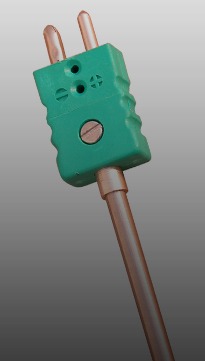
Looking for a thermocouple probe? We manufacture probes for temperature measurement with a high degree of accuracy and stability.
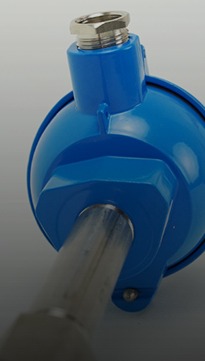
Find out how to read a table of ohmic values as a function of temperature, and the importance of this data in industrial applications.

In process industries (chemical, petrochemical, food and beverage, energy, and pharmaceutical), temperature measurement directly affects product quality, plant safety, and regulatory compliance. An industrial temperature probe that is not properly suited to the application can lead to process deviations, unplanned shutdowns, or costly non-compliance issues.
Fuji Electric France offers a range of high-performance industrial temperature probes, selected for their measurement accuracy, durability in harsh environments, and compatibility with existing automation systems (4–20 mA, HART, Profibus, Foundation Fieldbus).
Whether it’s a PT100 probe or a thermocouple probe, our solutions cover temperature ranges from -200 °C to +1,750 °C and comply with IEC 60751, ATEX, IECEx, and NF EN 13480 standards. They are suitable for use in ATEX environments and can withstand high pressures and vibrations.

A temperature probe, also called temperature sensor, is an instrumented sensor that converts a thermal physical quantity into an electrical signal that can be processed by a control system (DCS, PLC, transmitter). It consists of a sensing element (resistor or thermocouple), a protective tube (thermowell), and a standardized connection head.
In industrial settings, temperature probes are almost always paired with a temperature transmitter to convert the raw signal into a standardized 4–20 mA or digital signal.

Understanding how a temperature probe works is essential for selecting the right device and ensuring reliable readings in your industrial processes. Simply put, a temperature probe is a measuring device that converts a physical quantity—heat—into an electrical signal that can be processed by a control system. This principle, while seemingly simple, is actually based on precise physical phenomena, and a thorough understanding of these phenomena is key to ensuring the quality of the results obtained.

Every temperature sensor is based on a known and reproducible physical effect. Depending on the technology used, this effect varies:
For resistance temperature detectors (RTDs), the principle utilized is the variation in the electrical resistance of a conductive material as a function of temperature. When the temperature of a pure metal increases, the atoms vibrate more vigorously and impede the flow of electrons: the electrical resistance increases in a predictable and linear manner. It is this relationship between resistance and temperature that allows for the precise calculation of the measured temperature.
For thermocouple probes, the principle at work is the Seebeck effect: two different metals, joined at a junction, generate an electrical voltage whenever there is a temperature difference between the hot junction (in contact with the process) and the cold junction (reference point). The voltage produced is small—on the order of a millivolt—but it is characteristic of each type of thermocouple and allows for a precise calculation of the temperature.
For thermistors, the effect is similar to that of RTDs, but amplified: a thermistor is a semiconductor component whose resistance varies significantly with temperature. The term “thermistor” refers to two families:
These two families of thermistors offer high sensitivity but a narrower measurement range than platinum or nickel. This option is suitable for applications with a narrow temperature range that require very high detection accuracy.

To provide a concrete example of how a PT100 sensor works in an industrial process: the sensor is immersed in a reaction liquid inside a chemical reactor. The platinum sensing element, which is in thermal contact with the fluid through the stainless steel sheath, changes its resistance in real time. This resistance signal is transmitted via a 4-wire cable to the transmitter mounted at the probe head. The transmitter calculates the corresponding temperature, applies line resistance compensation, and outputs a 4–20 mA signal to the DCS. The control computer compares this reading to the setpoint and controls the heating or cooling system accordingly.
This closed-loop operation illustrates the probe’s central role in process control. Without reliable measurements at the source, any control system—no matter how sophisticated—loses precision. That is why the selection, design, and maintenance of the temperature probe are tasks that must leave no doubt as to the metrological quality of the instrument chosen.
The RTD (Resistance Temperature Detector) sensor utilizes the change in electrical resistance of a pure metal—usually platinum—as a function of temperature. It is the gold standard for industrial applications requiring precision, repeatability, and metrological traceability.

The PT100 temperature probe is the most widely used RTD type in industry. Its resistance is 100 Ω at 0 °C, in accordance with the IEC 60751 standard. Platinum (Pt) is used for its exceptional chemical stability, its linearity over a wide temperature range, and its reproducibility from one instrument to another.
Key Features:

The PT1000 temperature probe is based on the same physical principle and the same material as the PT100—platinum—but has a nominal resistance of 1,000 Ω at 0 °C, which is ten times higher. This difference, though seemingly technical, has significant practical implications that make it a relevant option in many contexts.
Key Features:
| Criteria | PT100 | PT1000 |
|---|---|---|
| Resistance at 0°C | 100 Ω | 1 000 Ω |
| Sensitivity to Cable Impedance | High | Low |
| Recommended connection | 3 or 4 wires | 2 wires possible |
| Compatibility with Standard Systems | Very wide (industry standard) | Large (modern facilities) |
| Low-Power Electronic Compatibility | Less suitable | Well-suited |
| Reference Standard | IEC 60751 | IEC 60751 |
| Preferred Applications | Heavy Industry, Process Industries | Long distances, regulation, service sector |

The thermocouple probe is based on the Seebeck effect: two different metals joined together at a junction generate an electrical voltage proportional to the temperature difference between the hot junction (measurement point) and the cold junction (reference point).
Thermocouples are classified by standard types (J, K, T, E, N, R, S, B), each covering a specific temperature range and application area.
Key Features:

In reactors, heat exchangers, distillation columns, and cracking units, temperature measurement is essential for controlling exothermic reactions, optimizing yields, and ensuring the safety of pressurized processes. Accurate monitoring also helps limit production deviations, reduce the risk of incidents, and improve the energy efficiency of facilities. Multi-zone PT100 probes equipped with high-pressure thermowells and certified to ATEX Zone 1 ensure reliable and long-lasting measurement, even in potentially explosive atmospheres and highly corrosive environments.

Fermentation, sterilization (WFI, SIP, autoclaves), and freeze-drying processes require extremely precise temperature control to ensure product quality and process reproducibility. Metrological traceability is essential for meeting regulatory requirements and facilitating quality audits. Class A PT100 RTD probes, supplied with ISO 17025 calibration certificates, meet GMP (Good Manufacturing Practices) requirements as well as FDA and EMA regulations. They ensure stable and reproducible measurements throughout the manufacturing cycle.

In steam generators, turbines, boilers, cooling circuits, and auxiliary systems, temperature measurements continuously feed into the facilities’ monitoring, protection, and control systems. Rapid detection of temperature variations helps prevent equipment failures, optimize energy efficiency, and ensure the availability of production units. Type K or N thermocouple probes, known for their fast response time and resistance to high temperatures, enable reliable monitoring of the most heavily used equipment.

Pasteurizers, sterilizers, dryers, tunnel ovens, cooking tanks, and packaging lines require accurate temperature measurement to ensure food safety, product quality, and compliance with health and safety requirements. Hygienic temperature probes that comply with EHEDG recommendations and 3-A standards are designed with Tri-Clamp connections and 316L stainless steel surfaces suitable for food contact. They withstand clean-in-place (CIP) and sterilize-in-place (SIP) procedures while ensuring excellent measurement repeatability and simplified maintenance.


The selection of a temperature sensor is based on five fundamental criteria: the measurement range, the required accuracy, environmental conditions, signal compatibility, and regulatory requirements.
Step 1: Determine the temperature range
The measurement range determines whether to use an RTD (up to 850 °C) or a thermocouple (up to 1,750 °C). Below 600 °C, the PT100 sensor is generally preferred for its superior accuracy.
Step 2: Evaluate process conditions
Pressure, vibrations, presence of corrosive agents, ATEX zone: these parameters determine the type of mechanical protection (thermowell, sheath, IP rating) and the materials (Inconel, Hastelloy, 316L stainless steel).
Step 3: Specify the required accuracy
The accuracy class (A, B, 1/3 DIN) directly affects the cost. Reserve Class A for quality control or safety measurements; Class B is sufficient for routine process monitoring.
Step 4: Select the output signal
Integrate the sensor into your existing system: passive signal (raw resistance) with a remote transmitter, or a sensor with an integrated transmitter (4–20 mA / HART).
Step 5: Check the required certifications
ATEX, SIL, hygienic (EHEDG), nuclear (RCC-M): Identify the standards that apply to your facility before placing an order.

temperature range

process conditions

required precision

output signal

Required Certifications
| Criteria | PT100 (RTD) Probe | Thermocouple probe |
|---|---|---|
| Measuring principle | Variation in the resistance of a platinum element (100 Ω at 0 °C) | Thermoelectric voltage generated by two different metals |
| Temperature range | -200 °C to +850 °C | -200 °C to +1,600 °C (depending on the type of thermocouple) |
| Accuracy | Up to ±0.15 °C | Depending on the type, from ±1 to ±2.5 °C |
| High-Temperature Resistance | Up to 850 °C | Up to +1,750 °C, depending on the type |
| Available Certifications | IEC 60751, ATEX, IECEx, ISO 9001, COFRAC / ISO 17025 calibration certificate (upon request) | IEC 60584, ATEX, IECEx, ISO 9001, COFRAC / ISO 17025 calibration certificate (upon request) |
| Output signal | Resistor (2-, 3-, or 4-wire) | Voltage (mV) |
| Recommended Applications | Processes requiring high precision: food and beverage, pharmaceutical, chemical, HVAC, and laboratory industries | High-temperature processes: industrial furnaces, heat treatment, metallurgy, glass manufacturing, cement plants, waste incineration, power plants |
| Main Advantage | Extremely high accuracy and excellent long-term stability | Very wide temperature range and high durability |

Both are platinum RTD sensors used as temperature measuring devices in industry. The PT100 has a resistance of 100 Ω at 0 °C, while the PT1000 has a resistance of 1,000 Ω at 0 °C. This difference should be taken into account when selecting your system. The PT1000 is less sensitive to wiring resistance and is particularly well-suited for long transmission distances, especially in a 2-wire configuration. In industrial applications, however, the PT100 in a 3- or 4-wire configuration remains the standard of choice due to its accuracy and proven track record.
All Fuji Electric temperature probes intended for ATEX zones are certified in accordance with Directive 2014/34/EU (ATEX) and the IECEx standard. The choice of category (1G, 2G, 3G for gases; 1D, 2D, 3D for dust) depends on the zone classification determined by your facility’s risk assessment. This assessment takes into account numerous factors, such as the process, the level of risk, and the operating environment. Our engineers are here to assist you and provide all the necessary information and recommendations to help you select the sensor best suited to your application.
Calibrating a temperature probe involves comparing its measurements with a thermometer or a reference standard traceable to the SI (thermostatic bath or calibration oven). This process verifies the device’s accuracy and detects any drift over time. It is recommended to calibrate Class A PT100 probes every 12 to 24 months, depending on the application and regulatory requirements (ISO 9001, GMP, FDA). Fuji Electric France offers a calibration service on-site or at a COFRAC-accredited laboratory.
A thermowell is a mechanical protective component that isolates the probe from the process fluid. Its purpose is to protect the measuring element from pressure, fluid velocity, or corrosive environments, while allowing it to be replaced without interrupting production. Depending on the application, it can be made of stainless steel, specific alloys, or other materials compatible with the process. Its design, based on the ASME PTC 19.3 TW standard, ensures resistance to vortex-induced vibrations.
Yes. Integrated-head temperature probes combine the sensing element (RTD or thermocouple) and an electronic transmitter in a compact housing mounted directly on the process. This solution integrates all measurement functions into a single device and delivers a standardized 4–20 mA signal (with or without HART) that can be directly processed by your DCS or PLC. It eliminates errors associated with long cable runs, simplifies installation, and facilitates any future modifications to the instrumentation. This configuration also improves the system’s overall reliability and reduces maintenance costs.
The choice of materials depends on the measurement environment and the desired performance. The sensing elements of RTD probes are made of platinum, while thermocouples use various combinations of metals, including certain copper-, nickel-, or chromium-based alloys, depending on their type. Protective sheaths are generally made of stainless steel or specific alloys suitable for corrosive environments. In certain measuring devices or laboratories, glass may also be used for specific applications.
Do you need thermal instrumentation? Our experts at Fuji Electric France will analyze your application and recommend the solution best suited to your process, regulatory, and budgetary requirements.
Our sales team is at your disposal
to help you with your projects.
Have a question or need assistance? Our experts are here to help you with fast, reliable solutions.
Ask for helpOur related articles
Find out how to calibrate a temperature sensor to guarantee accurate measurements. Follow our step-by-step guide to optimize your calibrations!
October 16, 2024
Find out how to master temperature units and conversions to boost your industrial performance.
October 16, 2024