






Solid state relay - PT3000S din rail - 1 phase
Ref: PT3000S
Retail price
depending on configuration
Discounts available on request
Request a quote
2 results displayed
Retail price
depending on configuration
Discounts available on request
Request a quote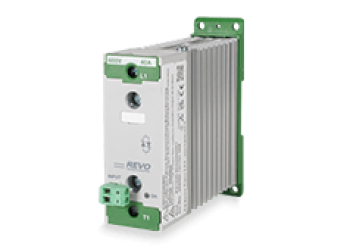

Made in France

Local service near you

Customer support every step of the way

Seamless technical communication
A solid-state relay (SSR), or static contactor, is an electronic switching device that uses an electronic switching element instead of an electromechanical contact to make or break the connection in the load circuit.
Our solid-state relays have several features that distinguish them from other switching devices:


SSRs (solid state relays) are designed to control high-power AC electrical loads with a low-voltage input signal.
These electronic components enable AC or DC electrical current to be switched without mechanical movement.
They are generally used in systems where PLCs or microcontrollers cannot provide the required power management capability.
This is a competitive product category to electromechanical relays and other switching methods.
There are two SSR relay technologies:

The basic internal structure of an SSR consists of several main elements:
The input interface, used to optically isolate the output circuit from the input.
A control section acts as an optical isolator. It often consists of one or two light-emitting diodes (LEDs) for emission. For receiving, one or more photosensitive elements such as photodiodes or phototransistors are used. These elements close the circuit and allow current to flow to the load.
A power section with a switching element, usually a thyristor such as a TRIAC, SCR, GTO thyristor, but FETs and triacs are also used to switch loads.

Solid-state relay operation uses solid-state devices such as transistors, thyristors or MOSFETs instead of electromechanical devices like relays to switch high-power resistive or inductive loads.
SSR relays are controlled by a low external voltage applied to their control terminals. This signal can be either AC or DC. A low-power circuit can be used to switch the controls of AC or DC power supplies for a high-power load.
A PXE temperature controller or PXF PID controller is used to control the solid-state relay for DC voltage and current to regulate the temperature. The temperature controller is responsible for turning the SSR on and off in response to temperature changes. To control the solid-state relay properly, the temperature controller must be selected correctly. Otherwise, the solid-state relay may fail to turn on or off at the correct temperature, which could damage sensitive equipment or pose safety risks. In addition, the temperature controller must be capable of handling the current required by the solid-state relay.


You can use this component to switch AC or DC loads from a low voltage or current. The solid-state relay, often considered the modern equivalent of the mechanical contactor, offers many advantages. It is particularly useful where protection against overvoltage is crucial. This device offers control without moving contacts, reducing the risk of wear and maintenance. Thanks to its contactless function, it is ideal for circuits requiring silent, spark-free switching.
Another key advantage is its ability to handle multi-phase loads, making it suitable for a wide range of industrial applications. The solid-state relay is easy to connect, usually with screws or wires, and can be fitted with a heatsink to manage heat dissipation. In special cases, where fast, precise control is required, solid-state relays offer reliable, consistent results. In terms of selection, there are many options available on our product page to meet your specific current and voltage requirements.
Finally, this type of solid-state contactor is frequently recommended in technical applications for its robustness and ability to provide optimum protection in a variety of control circuits.

Solid-state relays are widely used in industrial processes and machine automation. The main reasons for this are their ability to switch high voltages and currents, and their resistance to shock and vibration. This makes them ideal for environments where there's a lot of movement or harsh conditions.
These products can also be used in processes where precision is important, such as in medical equipment or data acquisition systems. In addition, they are often used in areas where space is limited. As a result, solid-state relays have a wide range of applications, including :

Solid-state contactors (SSRs) offer several advantages over electromechanical relays (EMRs). Here are some of the advantages that make SSRs more attractive than EMRs:
For all these reasons, solid-state relays are the preferred choice in many applications where reliability and precision are essential.
The disadvantages of these products include their higher price. However, this disadvantage is often offset by the many advantages of SSRs.

Long service life

High-speed switching

Heavy-duty

The first thing you need to know when selecting your solid state relays is to check the type of input and output:
Then there are other important technical features to consider:
You should also check the maximum dimensions (length x width x height), output noise and protection functions. And don't forget contact resistance!
 BROCHURE
Download the brochure and gain in compactness and performance with the REVO S solid-state relay.
Our sales team is at your disposal
to help you with your projects.
Have a question or need assistance? Our experts are here to help you with fast, reliable solutions.
Ask for help