






PID temperature controller - PXR3
Ref: PXR3
Retail price
depending on configuration
Discounts available on request
Request a quote

Showing all 17 results
Retail price
depending on configuration
Discounts available on request
Request a quote
Retail price
depending on configuration
Discounts available on request
Request a quote
Retail price
depending on configuration
Discounts available on request
Request a quote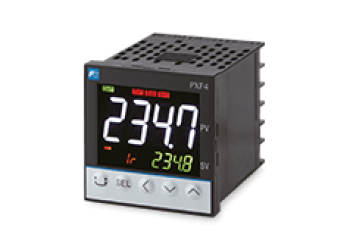
Retail price
depending on configuration
Discounts available on request
Request a quote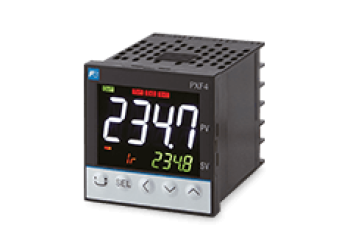
Retail price
depending on configuration
Discounts available on request
Request a quote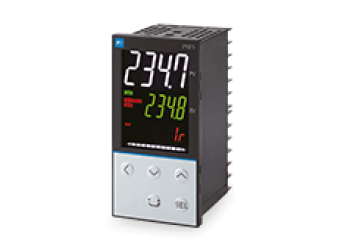
Retail price
depending on configuration
Discounts available on request
Request a quote
Retail price
depending on configuration
Discounts available on request
Request a quote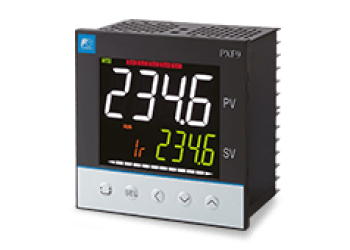
Retail price
depending on configuration
Discounts available on request
Request a quote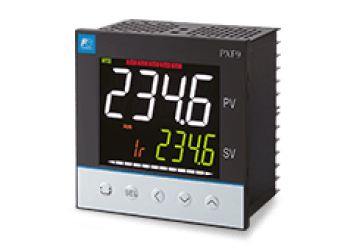
Retail price
depending on configuration
Discounts available on request
Request a quote
Retail price
depending on configuration
Discounts available on request
Request a quote
Retail price
depending on configuration
Discounts available on request
Request a quote
Retail price
depending on configuration
Discounts available on request
Request a quote
Retail price
depending on configuration
Discounts available on request
Request a quote
Retail price
depending on configuration
Discounts available on request
Request a quote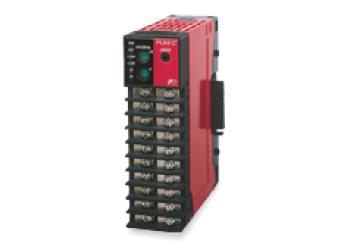
Retail price
depending on configuration
Discounts available on request
Request a quote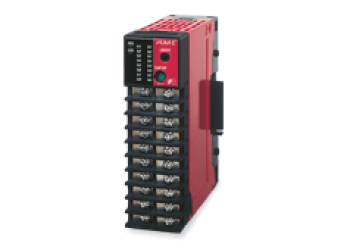
Retail price
depending on configuration
Discounts available on request
Request a quote

Made in France

Local service near you

Customer support every step of the way

Seamless technical communication
Technologies
Discover Fuji Electric's latest innovations in temperature controllers, with a practical guide to the new product references, combining performance and energy efficiency.
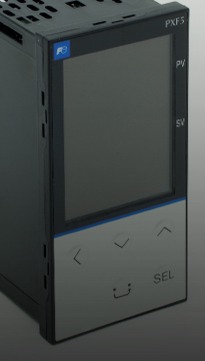
Looking for the best PID controller on the market? Choose the fastest, most compact, most accurate PID controller: Fuji Electric PXF series
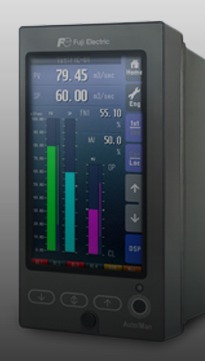
The PSC series process controller is a multi-loop controller that offers a flexible system with high operability. 16-color LCD display.
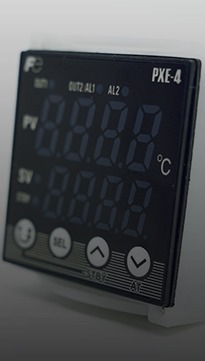
Looking for a complete, easy-to-use 48×48 PID controller? The Fuji Electric PXE controller is for you.
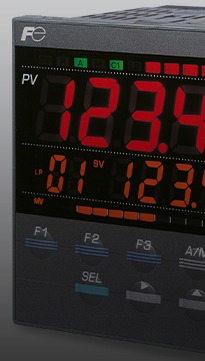
Discover the simplicity of the multifunction temperature controller PXH series. Multiple applications: corrected flow, calorie meter, etc.
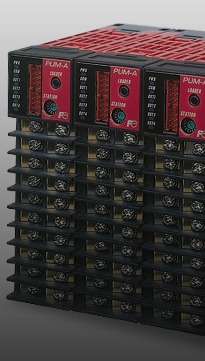
Optimize the performance of your equipment efficiently with PUM series modular multi-loop temperature controllers!
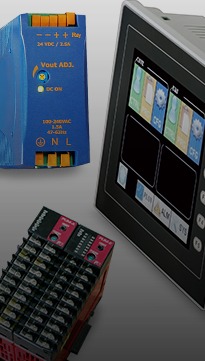
Fuji Electric has developed a simple, ready-to-use, all-in-one recorder control package for monitoring, programming and configuring your application.

Unstable temperatures can compromise product quality, increase energy consumption, accelerate equipment wear and tear, or cause production shutdowns. The temperature controller is therefore essential for maintaining a precise temperature setpoint.
Unlike a simple on/off thermostat, the PID controller continuously adjusts its control based on the difference between the measured temperature and the desired value. This limits oscillations, reduces overshoots, and improves process repeatability.
The Fuji Electric product line includes compact controllers, advanced digital models, versions designed for motorized valves, and multi-loop architectures for centralized control of multiple zones.
 Brochure
Download the brochure and optimize your thermal control with precise, fast and versatile control adapted to your industrial processes.

A PID temperature controller is an electronic device designed to maintain the temperature of a machine or process at a setpoint.
It receives a signal from a sensor, such as a PT100 probe or a thermocouple, and then compares the measured temperature to the setpoint. Based on this difference, the controller calculates the control signal to be sent to the heating or cooling system.
This command can control:
The PID controller can thus control electric resistors, burners, refrigeration units, hot and cold water circuits, and many other types of heating equipment.
The controller continuously measures the process temperature and compares it to the setpoint. The difference between these two values is the control error.
Based on this error, the controller calculates the command to be sent to the heating, cooling, or motorized valve. How it responds depends on the parameters associated with the three components: P, I, and D.

Proportional control applies a correction that is directly proportional to the instantaneous error. The greater the difference between the measured value and the setpoint, the stronger the control action.
The intensity of this response depends on the proportional gain. A high gain results in a rapid correction but can cause fluctuations or oscillations. Conversely, a gain that is too low slows down the control response and may allow a significant error to persist.
The proportional band represents the error range within which the output varies gradually. The narrower this band, the higher the gain. Depending on the convention used, the proportional gain and the proportional band can be considered inversely related.
Incorrect configuration of this component can lead to several problems:

The integral action accumulates the error over time. It gradually increases the correction as long as a deviation remains between the measured temperature and the setpoint.
This component eliminates steady-state error, also known as steady-state error. It is useful when the proportional action alone is not sufficient to exactly reach the setpoint.
However, setting the integral term too high can slow down the stabilization of the process and exacerbate overshoots. Its setting must therefore take into account the system’s inertia and thermal dynamics.

The derivative analyzes how the error changes over time. It takes into account the rate of change of the error in order to predict the future behavior of the process.
This component slows down the control when the temperature rapidly approaches the setpoint. It thus helps limit overshoots and fluctuations.
However, excessively high derived gain can amplify noise present in the measurement data. In this case, signal filtering or a more moderate setting may be necessary.

Stabilizing the process temperature
The controller continuously adjusts the output power to limit fluctuations around the setpoint. This stability is essential for processes that are sensitive to temperature variations.
Quickly Correct Errors
The controller analyzes the error between the measured value and the setpoint, then gradually adjusts the control signal. This allows it to respond to changes in production, external disturbances, or load variations.
Improving Quality and Repeatability
Precise control ensures that the same manufacturing conditions are reproduced from one cycle to the next. It helps reduce quality issues, scrap, and batch-to-batch variations.
Limiting Setpoint Overshoots
The combination of proportional, integral, and derivative control terms improves control dynamics. It limits overshoots that could degrade products or damage equipment.
Leveraging Process Data
Depending on the model, data on temperature, setpoints, output, and alarms can be transmitted to a PLC, a human-machine interface, or a supervisory control system. Analyzing this data makes it easier to monitor performance and identify deviations.

Stabilize

Correct

Improve

Limit

Exploit

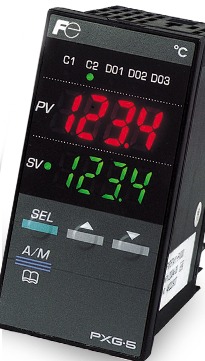
The PXR3 is a compact controller measuring 24 × 48 mm. It is suitable for machines with limited front-panel space and for applications requiring simple and reliable control.
It accepts various sensor signals and, depending on the configuration, offers PID control, fuzzy logic, a self-adaptive function, and RS-485 communication.

The PXE4 features a standard 48 × 48 mm form factor and is easy to handle. It is a cost-effective solution for single-loop applications that do not require advanced communication features.
Its two-degree-of-freedom PID control improves the response to setpoint changes and process disturbances.

The PXF4, PXF5, and PXF9 are the core models in Fuji Electric’s line of PID temperature controllers. They feature a 50-ms sampling cycle, accuracy of up to ±0.2% of full scale, and a large LCD display.
They are available in several formats:
Depending on the configuration, they include universal inputs, Modbus® communication, multiple alarms, programmable setpoints, various PID control algorithms, and a ramp and step generator.

The PXF4 DIN facilitates integration into electrical cabinets. Its plug-in terminal block simplifies wiring, replacement, and maintenance.
This version is particularly well-suited for machine builders and system integrators looking for a compact DIN-rail architecture.

The PXF4VM, PXF5VM, and PXF9VM models are designed to control a motorized valve, with or without position feedback.
They are suitable for hot water, steam, or cooling circuits in which the temperature is adjusted by gradually opening and closing a valve.

The PXH9 is designed for more complex control applications. It offers accuracy of up to ±0.1% of full scale, two measurement inputs, numerous input/output channels, and mathematical functions.
It can be used for temperature control, as well as for regulating pressure, flow, level, or other process variables.

The PUM series allows for the centralization of multiple temperature loops within a modular, rail-mounted architecture. The modules can manage two or four loops and can be combined with input/output or communication modules.
This solution is suitable for multi-zone machines, production lines, and systems requiring a high density of control points.

The PSC series combines multi-loop control, sequence programming, and visualization on a color screen. It is designed for complex processes that require an operator interface and advanced coordination of various control functions.
| Model | Format or Installation | Loops | Measurement accuracy | Sampling | Main functions | Recommended Applications |
|---|---|---|---|---|---|---|
| PXR3 | 24 × 48 mm | 1 | ±0.5% PE | 500 ms | PID, fuzzy logic, self-tuning, optional Modbus® | Small machines, compact panels, simple control systems |
| PXE4 | 48 × 48 mm | 1 | ±0.5% PE | 200 ms | All-or-nothing, PID, fuzzy logic, two-degree-of-freedom PID | Standard machines, ovens, and single-loop equipment |
| PXF4 | 48 × 48 mm | 1 | ±0.2% PE | 50 ms | Universal input, auto-tuning, ramps and hold, Modbus® | Fast and Versatile Industrial Control |
| PXF5 | 48 × 96 mm | 1 | ±0.2% PE | 50 ms | Advanced PXF features, larger display, more outputs | Processes requiring enhanced visualization |
| PXF9 | 96 × 96 mm | 1 | ±0.2% PE | 50 ms | Advanced features, large screen, numerous input/output ports | Furnaces, drying ovens, and complex thermal systems |
| PXF4 DIN | 48 × 48 mm, rail-mounted | 1 | ±0,5 % | 50 ms | PID, self-tuning, plug-in terminal block, 8 ramps and setpoints | Electrical cabinets and machine manufacturers |
| PXF VM | 48 × 48, 48 × 96, or 96 × 96 mm | 1 | ±0.2% PE | 50 ms | Motorized valve control, optional position feedback | Heating, steam, hot, or cold water systems |
| PXH9 | 96 × 96 mm | Up to 2 measurement inputs | ±0.1% of full scale | 50 ms | Mathematical functions, extensive I/O, Modbus® | Advanced Temperature and Process Control |
| PUM | Rail or wall mounting | 2 or 4 per module | ±0.3% PE | 200 ms | Modular architecture, heating/cooling, industrial communication | Multi-zone machines and multi-loop control |
| PSC | 4.3-inch TFT LCD screen | 2 | Depending on the configuration | Depending on the configuration | Control, programmed sequences, visualization, and communication | Boilers and Complex Industrial Processes |
The exact specifications depend on the configuration of the inputs, outputs, power supplies, and communication options.

A single-loop controller is suitable when only one temperature needs to be controlled. A machine with multiple heating elements, heating zones, or thermal circuits typically requires a multi-loop controller or a modular architecture.

The controller must be compatible with the signal output by the sensor:
A universal input facilitates equipment standardization and future upgrades to the system.

Fast or highly turbulent processes require a short sampling time. The PXF and PXH models, with their 50-millisecond cycle time, are suitable for applications that require a rapid response.
Accuracy must also be tailored to the process. Thermal comfort control does not require the same level of performance as a testing laboratory or a critical heat treatment process.

The choice of output depends on the actuator:

Some applications require only a heating control. Others must alternate between heating and cooling to quickly reach the setpoint. In such cases, a controller with a heat/cool function is recommended.

Baking, drying, polymerization, sterilization, or heat treatment cycles may require multiple ramps and hold times. The number of programmable segments must be verified when selecting the controller.

An RS-485 Modbus® connection facilitates the integration of the controller into an automated system. It allows for reading measurements, changing setpoints, retrieving alarms, and centralizing parameters.

The choice depends on the available space and the cabinet's design:

The PID controller maintains the temperature profiles required for drying, baking, annealing, polymerization, or surface treatments. The ramps and hold phases ensure a gradual and repeatable temperature rise.

Extruders, injection molding machines, thermoforming machines, and packaging machines often have multiple heating zones. A multi-loop control system allows each zone to be controlled while coordinating the entire process.

Cooking, pasteurization, cooling, and temperature maintenance require stable control to preserve product quality and ensure cycle repeatability.

Ovens, incubators, climate chambers, autoclaves, and testing equipment require precise temperature control and good reproducibility of operating conditions.

PID controllers are used in test benches, paint booths, curing ovens, and environmental chambers for characterizing materials and components.

PID controllers regulate flow in wastewater treatment plants. They adjust the speed of the pumps or the position of the valves based on data transmitted by the flow meters.
This closed-loop control system stabilizes the flow to the various treatment stages, compensates for variations in hydraulic load, and improves the performance of dosing, aeration, and filtration processes.

PID controllers are used in the chemical industry to ensure product consistency. They precisely maintain temperature, flow rate, pressure, level, or agitation speed within reactors and mixing tanks.
Controlling these parameters reduces batch-to-batch variations and helps ensure consistent quality. In the case of a temperature-sensitive reaction, the controller can regulate a steam valve, a cooling circuit, or a heat exchanger to maintain operating conditions.

Multifunction, multi-loop controllers coordinate various process variables to improve combustion stability, safety, and plant performance.

The quality of the control system depends as much on the choice of equipment as on its installation.
The sensor must be placed in a location that is representative of the actual process temperature, while minimizing response times and external disturbances. Its wiring must be separated from the power circuits to reduce electrical interference.
The controller's output must be properly sized and paired with a compatible power device. For loads that are switched frequently, a solid-state relay or a thyristor-based dimmer may offer greater durability than an electromechanical relay.
During commissioning, the self-tuning function calculates the PID parameters based on the system’s thermal response. These parameters can then be fine-tuned according to process priorities: speed, overshoot limitation, or maximum stability.

Fuji Electric offers a comprehensive product line covering simple control, programmed thermal cycles, valve control, and multi-loop systems.
Our solutions combine:
The Fuji Electric France teams will assist you in selecting the sensor, controller, power module, and control architecture best suited to your system.

A thermostat typically controls heating in an on/off mode. A PID controller modulates its output based on the deviation, its duration, and the rate of change. This results in a more stable temperature and limits overshoots of the setpoint.
Self-tuning is a function that analyzes the process's thermal response to automatically calculate the proportional, integral, and derivative parameters. It simplifies the controller's commissioning.
The error is the difference between the setpoint temperature and the measured temperature. The controller uses this data to calculate the control signal needed to regulate the process.
The proportional gain determines the intensity of the correction applied to the error. The proportional band represents the range within which the output varies gradually. A narrower band generally corresponds to a higher gain.
Dead time is the delay between a change in the control signal and the start of the process response. A long dead time makes control more difficult and generally requires less aggressive control settings.
Fluctuations may be caused by excessively high gain, excessive integral action, a poorly positioned sensor, or a long dead time. Self-calibration and data analysis can help identify the cause of the problem.
The time constant characterizes the response speed of the process. It makes it possible to distinguish a fast thermal system from a slow process with high inertia.
Yes. Models equipped with heating/cooling control can control two separate outputs, such as an electric heating element and a cooling solenoid valve.
Depending on the model, it is possible to connect thermocouples, PT100 resistance sensors, voltage signals, or transmitters that output an analog current.
The PXF4VM, PXF5VM, and PXF9VM models are designed to control motorized valves. Configurations with or without position feedback are available.
A multi-zone machine can be equipped with several single-loop controllers or a modular multi-loop controller from the PUM series. The choice depends on the number of zones, the available space, and the desired level of integration.
Modbus® communication allows the controller to be connected to a PLC, an HMI, or a supervisory system. This enables temperatures, setpoints, alarms, and parameters to be viewed or modified remotely.
A properly configured control system limits oscillations and periods of excessive heating. It can therefore help reduce energy consumption while maintaining process quality.
Our specialists analyze your process, the number of zones, the sensors, the actuators, and the communication requirements in order to provide you with a suitable PID control solution.
Our sales team is at your disposal
to help you with your projects.
Have a question or need assistance? Our experts are here to help you with fast, reliable solutions.
Ask for helpOur related articles
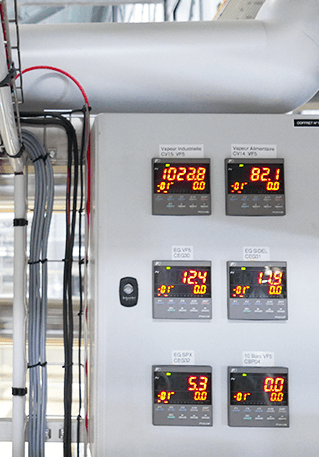
PID control for dummies is designed for those seeking a better understanding of PID control.
May 12, 2024

Discover fuzzy logic: a flexible model that manages uncertainty with degrees of truth. Explore its applications, advantages and limitations in our article.
July 8, 2024

Improve your industrial processes with PID controllers: stability, precision and automated temperature management for optimized production.
March 2, 2023
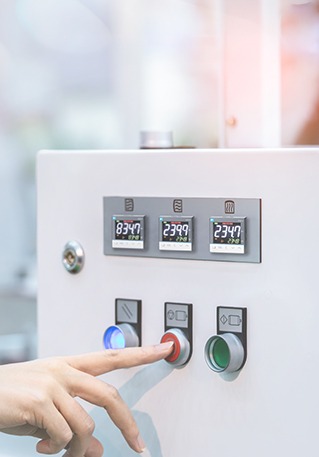
Discover 10 industrial applications where temperature control equipment optimizes production and guarantees quality and safety.
September 12, 2023

Efficient temperature control improves your industrial processes, reduces your costs, and guarantees safety and environmental protection.
December 9, 2022
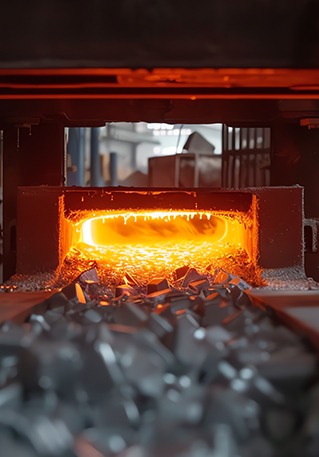
Temperature controllers optimize your heat treatments, guaranteeing precision, energy savings and equipment durability. Find out how!
October 30, 2024

Fuji Electric will be exhibiting its control solutions designed for the plastics industry: digital temperature controllers, multi-loop controllers, solid-state relays, etc.
September 24, 2023

Ensure precise, consistent firing in pottery kilns thanks to optimal temperature control. Find out how to control every step of the process.
July 10, 2023

Find out how temperature affects your manufacturing process and what temperature control solutions are available for your pharmaceutical equipment.
November 4, 2022