






On/Off thermostat controller - PXR3
Ref: PXR3V61
Retail price
depending on configuration
Discounts available on request
Request a quote
Showing all 2 results
Retail price
depending on configuration
Discounts available on request
Request a quote
Retail price
depending on configuration
Discounts available on request
Request a quote
Made in France

Local service near you

Customer support every step of the way

Seamless technical communication
Technologies
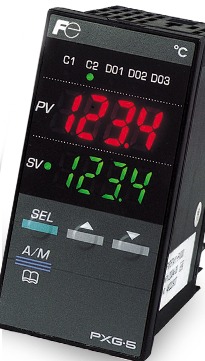
Discover Fuji Electric's latest innovations in temperature controllers, with a practical guide to the new product references, combining performance and energy efficiency.
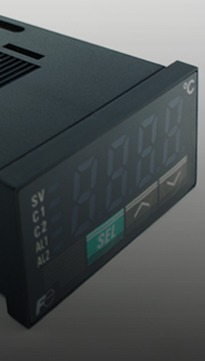
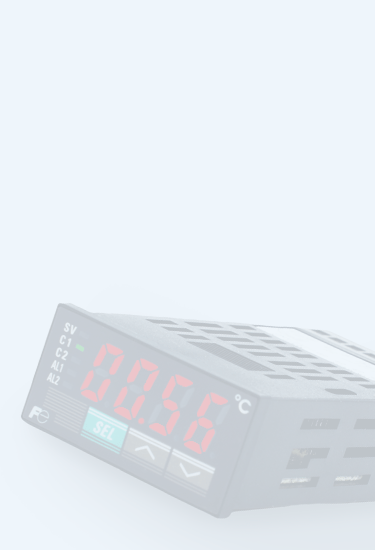
Easily control and regulate your process temperature and be alerted to deviations with the PXR3 on/off thermostat regulator.
The on off temperature controller is commonly used when simple, robust, and cost-effective temperature control is more important than extremely precise regulation around the setpoint. Understanding its operating principle, advantages, and limitations helps determine whether this technology is suitable for the process in question.
 Brochure
Download the brochure and optimize your thermal control with precise, fast and versatile control adapted to your industrial processes.

An on off temperature controller is a digital device whose output can assume only two states: on or off.
The controller continuously compares two values:
In a heating application, the output is activated when the measured temperature falls below the configured switching threshold. The heater remains on until the upper threshold is reached, at which point the output is deactivated. The heater therefore operates at full power until the setpoint is reached.
In a cooling application, the operating logic is reversed. The refrigeration equipment starts up when the temperature exceeds the permitted threshold, and then shuts down once the temperature has dropped sufficiently.
Unlike a PID controller, an on-off controller does not continuously adjust the percentage of power output. The controlled equipment operates either at full power or at zero power.

An on/off temperature control loop consists of four main components:
This switching cycle repeats automatically to maintain the temperature within an acceptable range around the setpoint.

Hysteresis creates a gap between the activation and deactivation thresholds. It prevents the controller's output from switching too frequently when the measured temperature remains close to the setpoint.
Without hysteresis, oscillation may occur in an on/off control system. Small temperature fluctuations around the setpoint then cause the relay output to repeatedly switch between the on and off states.
For example, in a heating process with a setpoint of 80 °C and a hysteresis of 2 °C, the heater can be turned on when the temperature falls below the lower threshold and then turned off when the upper switching threshold is reached.
The exact behavior depends on the controller's configuration. However, the objective remains the same: to stabilize the switching cycle while protecting the relays, contactors, and controlled equipment from excessive switching operations.
If the hysteresis is too low, it can lead to rapid switching and premature wear. If the value is too high, it can cause greater temperature fluctuations. The setting must therefore take into account the thermal inertia of the process and the desired level of stability.

On/Off control requires few parameters. The operator primarily sets the setpoint temperature, the direction of action—heating or cooling—the hysteresis, and the alarm thresholds.

The two-state principle is easy to understand and diagnose. This technology is therefore suitable for autonomous machines and equipment that require direct temperature control.

Configuring an on-off controller is generally less complex than configuring a PID solution. This technology is particularly cost-effective when temperature fluctuations around the setpoint do not adversely affect process quality.

The same control principle can be used to control electrical resistors, refrigeration units, fans, pumps, solenoid valves, and many other types of thermal equipment.

An on/off thermostat can operate independently of the main temperature control system. It can trigger an alarm or shut down equipment when a high or low temperature threshold is reached.
Standard temperature controllers generally resume operation once the measured value returns to the permitted range. Safety temperature limiters operate differently: once they have tripped, they must be manually reset.
This measure prevents the equipment from restarting until an operator has identified the cause of the temperature exceedance and verified that the system can operate safely again.
The choice depends primarily on acceptable temperature variations, the process inertia, and the effect of temperature on the final product.
| Selection Criteria | temperature control | temperature control PID |
|---|---|---|
| How the output works | Fully enabled or disabled | Continuously adjustable power |
| Temperature behavior | Fluctuates within a range around the setpoint | Keeps the value closer to the setpoint |
| Configuration | Simple | Requires PID tuning or self-tuning |
| Appropriate methods | Slow or non-critical processes | Precise and Dynamic Processes |
| Process response | Suitable for stable thermal loads | Better response to disruptions |
| Initial implementation | Cost-effective and fast | More advanced |
| Typical applications | HVAC, refrigeration, alarms, and temperature control | Furnaces, heat treatment, plastics processing, and critical processes |
An on/off temperature controller is suitable when moderate fluctuations around the setpoint are acceptable. PID control is preferable when overshoots, process disturbances, or tight tolerances can affect quality, safety, or energy consumption.
The on/off temperature controller from Fuji Electric supports both modes. It can therefore be configured for ON/OFF control and then switched to PID control if the process later requires more precise temperature control.

TOR controllers can control immersion heaters, heating cartridges, heating elements, heating mats, and electric tracing systems. They maintain the required temperature without unnecessarily complicating the control process.

In heating, ventilation, and air conditioning systems, the controller can regulate heating elements, fans, pumps, or refrigeration equipment. It helps maintain the temperature in rooms, technical areas, and storage spaces.

On off temperature controller can start and stop refrigeration equipment based on predefined thresholds. Common applications include cold rooms, refrigerated cabinets, food preservation systems, and laboratory equipment.

The controller can maintain the temperature of water, oil, or other liquids stored in tanks. It is suitable for processes in which gradual temperature changes do not affect product quality.
When temperature, pressure, and level are interdependent, each variable must be measured with an appropriate instrument. A temperature controller is temperature controller a substitute for a pressure transmitter or a pressure switch.

On/Off control can be used for furnaces, dryers, and heated chambers that have high thermal inertia and relatively wide temperature tolerances.

The controller activates the heating system when the temperature approaches a critical low threshold. It thus helps protect pipes, tanks, hydraulic systems, and outdoor equipment from freezing.

The PXR3 can be used as a standalone device for monitoring high or low temperatures. Its relay outputs can trigger an alarm or initiate a protective action when a configured threshold is reached.
The PXE is suitable when the machine requires a Pt100 input, an SSR/SSC output, or a controller capable of handling ON/OFF and PID modes.

The controller must be compatible with the selected temperature sensor and measurement range.
The Fuji Electric on/off PXR3 thermostat accepts the following signals:
The PXE should be the preferred choice when the application requires a Pt100 resistance probe. It also supports nine types of thermocouples, with the input type and measurement range configurable from the front panel.

The controller must be configured according to the direction of the process. A heating system and a cooling system require opposite output logic.
PXE can also provide dual heating/cooling control when the application requires it.

The control output must be compatible with the actuator or the controlled power device.
The PXR3 thermostat uses a relay contact output. The PXE is available with either a relay contact output or an SSR/SSC control output.
Relay outputs are suitable for moderate switching frequencies. An SSR/SSC output is recommended when frequent switching is required or when the controller needs to drive an external solid-state relay.
The selected output and the connected components must be capable of handling the required switching frequency. The permissible voltage, current, and power must always be verified before connecting the load.

A fast process may require a narrower switching band. Conversely, equipment with high thermal inertia may require a wider hysteresis to prevent cycles that are too closely spaced.
The probe's location also affects performance. A poorly positioned probe can cause a measurement delay, excessive overshoot of the setpoint, or an apparent measurement error.

It is necessary to determine whether the application requires:
Both the PXR3 and the PXE can provide alarm functions. The number and type of outputs must be confirmed based on the selected configuration.

The PXR3 has a compact front panel measuring 48 × 24 mm and a depth of 98 mm. It is designed for panel mounting and can be adapted for DIN rail or wall mounting.
The PXE has a front panel measuring 48 × 48 mm and a compact depth of 62 mm. Its compact design makes it particularly well-suited for control cabinets with limited installation space.
When comparing DIN formats, check the available cutout in the panel, the depth of the device, the terminal blocks, and the power supply.

A standalone digital controller does not necessarily require digital communication. The PXE is primarily designed for local temperature control and features a configuration interface.
When RS-485 Modbus communication is required for connection to a programmable logic controller (PLC), a human-machine interface (HMI), or a supervisory system, this requirement must be specified during the selection process. Fuji Electric France will then be able to recommend a compatible controller outside of this configuration, which is designed specifically for on/off control.

The product's configuration may affect its price, delivery time, and availability in stock. Therefore, the input signal, output type, power supply, any communication options, and necessary accessories must be specified before placing an order.

The PXR3 is particularly well-suited for applications involving open-loop temperature monitoring and alarm management.
PXE should be considered when the process may later require:
| Need | PXR3 Thermostat | PXE Controller |
|---|---|---|
| Simple, Dedicated On/Off Control | Recommended | Available |
| Thermocouple Input | Yes | Yes, nine types |
| PT100 Resistance Sensor Input | No | Yes |
| Relay Contact Output | Yes | Yes |
| SSR/SSC Control Output | No | Yes |
| ON/OFF and PID Control in the Same Device | No | Yes |
| Dual heating/cooling control | No | Available |
| Alarm Outputs | Up to two, depending on the configuration | Up to two optional outputs |
| Front Panel Size | 48 x 24 mm | 48 x 48 mm |
| Installation Depth | 98 mm | 62 mm |
| IP66 protection on the front panel | Yes | Yes |
| Recommended Use | Simple Monitoring, Alarms, and Digital I/O | Versatile ON/OFF control with PT100, SSR, or future upgrade to PID |

The reliability of a temperature controller depends as much on the choice of the device as on the quality of its installation.
The temperature probe must be installed in a location that is representative of the process. It must not be positioned too close to the heating element, the cooling outlet, or any other local source of temperature variation, unless specifically required by the application.
During startup:
Hysteresis can then be adjusted based on the system’s actual thermal response. It is recommended to change only one setting at a time in order to clearly assess its effects.

Fuji Electric combines its expertise in temperature control with a line of compact and rugged digital controllers.
The PXR3 is a practical solution for simple heating, cooling, and temperature monitoring applications. Its digital display, intuitive operation, relay output, and various mounting options make it easy to set up and use on a daily basis.
The PXE offers greater flexibility for applications requiring a Pt100 or thermocouple input, a relay or SSR/SSC output, and a choice between ON/OFF and PID modes. Its 48 × 48 mm front panel and compact depth of 62 mm make it easy to integrate into compact control cabinets.
Fuji Electric France will assist you in selecting the controller, sensor, output configuration, and components best suited to your equipment and its operating conditions.

Both devices control heating or cooling equipment based on temperature thresholds. A digital on/off controller typically features a display, an adjustable setpoint, configurable hysteresis, a selection of sensors, and additional alarm functions.
An temperature controller automatically turns the heating or cooling equipment on or off to maintain the process temperature around the setpoint. Its output generally returns to normal operation once the temperature returns to the configured range.
A safety temperature limiter protects the equipment or process when a critical threshold is exceeded. Once triggered, it must be manually reset so that the system can be inspected before it is restarted.
The measurement may be accurate, but the process temperature typically fluctuates around the setpoint because the output is either fully on or fully off. The magnitude of these fluctuations depends on the hysteresis, the probe’s position, the response time, and the thermal inertia of the system.
Hysteresis prevents repeated switching when the measured value fluctuates near the setpoint. It reduces short cycles and helps protect relays, contactors, compressors, and other controlled components.
Yes, provided that the controller offers the necessary operating logic and output configuration. Heating and cooling operations use opposite switching logic.
No. A temperature controller is designed for temperature control. An application that requires simultaneous measurement or control of both temperature and pressure requires a pressure transmitter, a pressure switch, or a suitable process controller.
The TOR PXR3 thermostat is compatible with thermocouples or a PB-36 thermistor. To use a Pt100 sensor, select the temperature controller from Fuji Electric.
PID control is preferable when the temperature must remain very close to the setpoint, when overshoots affect product quality, or when the process experiences frequent load variations. The PXE allows you to change the control mode without replacing the controller.
Setup is usually quick, as it requires only a limited number of settings. The total time required depends on the wiring, the type of sensor, the alarm settings, and the testing procedure.
Choose a reliable temperature controller for your heating, cooling, monitoring, or alarm application.
Our sales team is at your disposal
to help you with your projects.
Have a question or need assistance? Our experts are here to help you with fast, reliable solutions.
Ask for helpOur related articles

Efficient temperature control improves your industrial processes, reduces your costs, and guarantees safety and environmental protection.
December 9, 2022
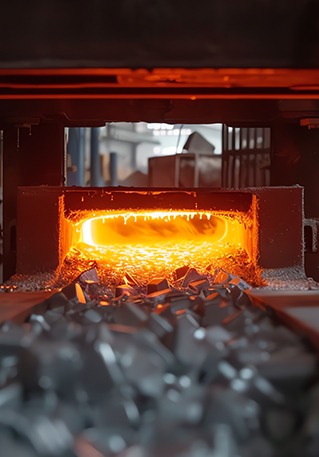
Temperature controllers optimize your heat treatments, guaranteeing precision, energy savings and equipment durability. Find out how!
October 30, 2024

Fuji Electric will be exhibiting its control solutions designed for the plastics industry: digital temperature controllers, multi-loop controllers, solid-state relays, etc.
September 24, 2023
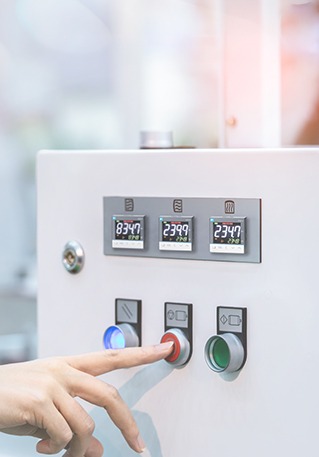
Discover 10 industrial applications where temperature control equipment optimizes production and guarantees quality and safety.
September 12, 2023

Ensure precise, consistent firing in pottery kilns thanks to optimal temperature control. Find out how to control every step of the process.
July 10, 2023