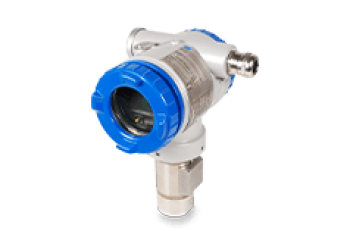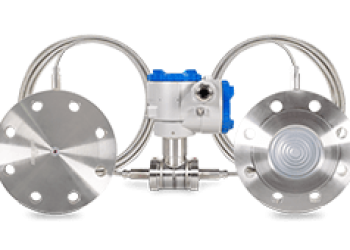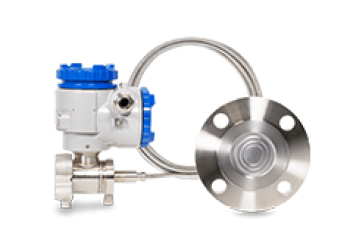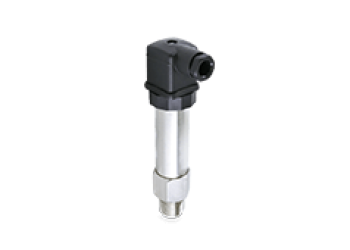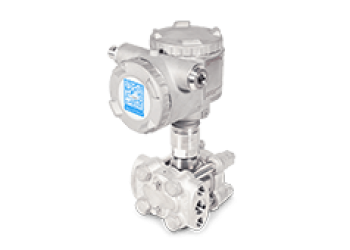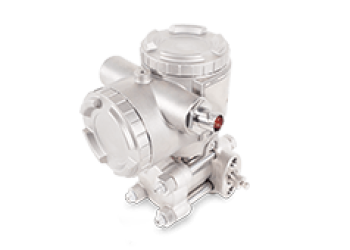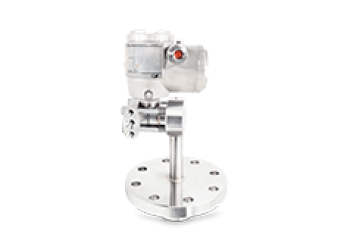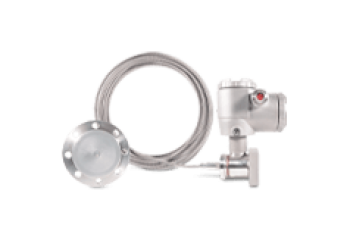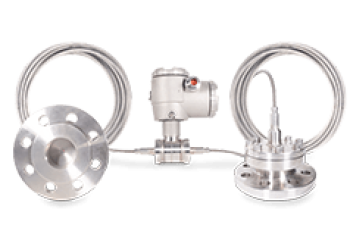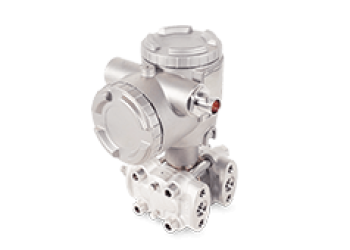


Differential pressure transmitter - FKC
Retail price
depending on configuration
Discounts available on request
Request a quoteDisplaying 1–24 of 45 results
Retail price
depending on configuration
Discounts available on request
Request a quote
Retail price
depending on configuration
Discounts available on request
Request a quote
Retail price
depending on configuration
Discounts available on request
Request a quote
Retail price
depending on configuration
Discounts available on request
Request a quote
Retail price
depending on configuration
Discounts available on request
Request a quote
Retail price
depending on configuration
Discounts available on request
Request a quote
Retail price
depending on configuration
Discounts available on request
Request a quote
Retail price
depending on configuration
Discounts available on request
Request a quote
Retail price
depending on configuration
Discounts available on request
Request a quote
Retail price
depending on configuration
Discounts available on request
Request a quote
Retail price
depending on configuration
Discounts available on request
Request a quote
Retail price
depending on configuration
Discounts available on request
Request a quote
Retail price
depending on configuration
Discounts available on request
Request a quote
Retail price
depending on configuration
Discounts available on request
Request a quote
Retail price
depending on configuration
Discounts available on request
Request a quote
Made in France
Local service near you
Customer support every step of the way
Seamless technical communication
The pressure transmitters are indispensable in various industrial and technological applications.
From the origin and unit of measurement of pressure to the advantages and disadvantages of different types of sensors, you will discover what a pressure transmitter is, how it works, and how a pressure transmitter operates.
We will also detail the composition of a pressure transmitter, the types of output signals, and the essential criteria for choosing an industrial pressure transmitter . By exploring the different categories of pressure transmitters differential pressure transmitter , absolute pressure transmitter , and gauge pressure transmitter — we will guide you on how to calibrate, install, and test them effectively.
Finally, we will look at pressure transmitter configuration and the practical applications of this essential field instrument, weighing up its advantages and disadvantages.
Download your brochure to select your ideal pressure transmitter!

The Pascal unit of measurement is named after the renowned French philosopher, physicist and mathematician : Blaise Pascal.
Born in Clermont-Ferrand, where the production unit of Fuji Electric France SAS, a French manufacturer of industrial pressure transmitters , is headquartered, Pascal carried out a fundamental experiment by transporting a barometer to the summit of the Puy de Dôme, to prove that atmospheric pressure decreases with altitude above sea level.
However, Italian scientist Evangelista Torricelli was the pioneer in demonstrating the pressure exerted by the weight of the volume of air on the earth and designed the first mercury-based barometer.

Thep is expressed in units of force F per unit area A: p = F / A
Knowing the pressure units and their conversion is important for making the right choices of scales for your industrial pressure transmitter .

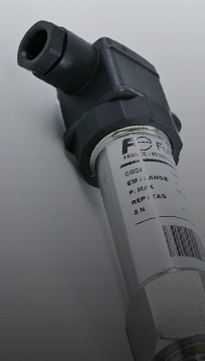
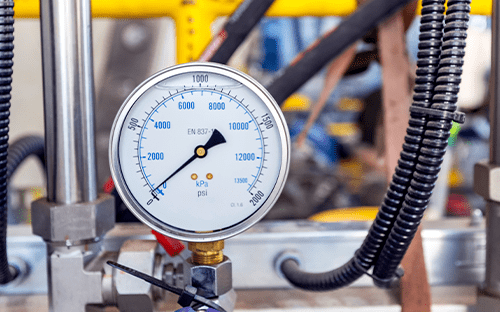
The pressure transmitter is also known as a pressure sensor, pressure gauge, or pressure transducer. There is no significant difference between these different names. However, a distinction is made between pressure transmitters and intelligent process transmitters.
If we refer to the definition of a pressure transmitter, it is a pressure sensing device whose principle consists in converting the force applied by the pressure of a fluid on a given surface (deformation) into an electrical signal.
Industrial companies use pressure transmitters to :

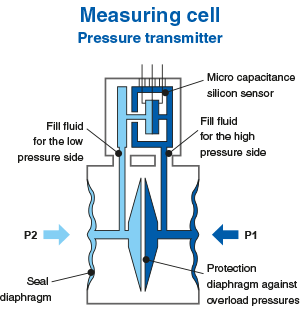
The fluid pressure is applied to an internal measuring component via a fitting and then a mechanical interface - measuring diaphragm made of stainless steel, ceramic or another noble material.
The electronic measuring element converts the pressure into a raw output signal.

There are different technologies, methods, techniques and measurement principles for pressure transmitters models, each adapted to specific applications in the fields of process automation and industrial plants.

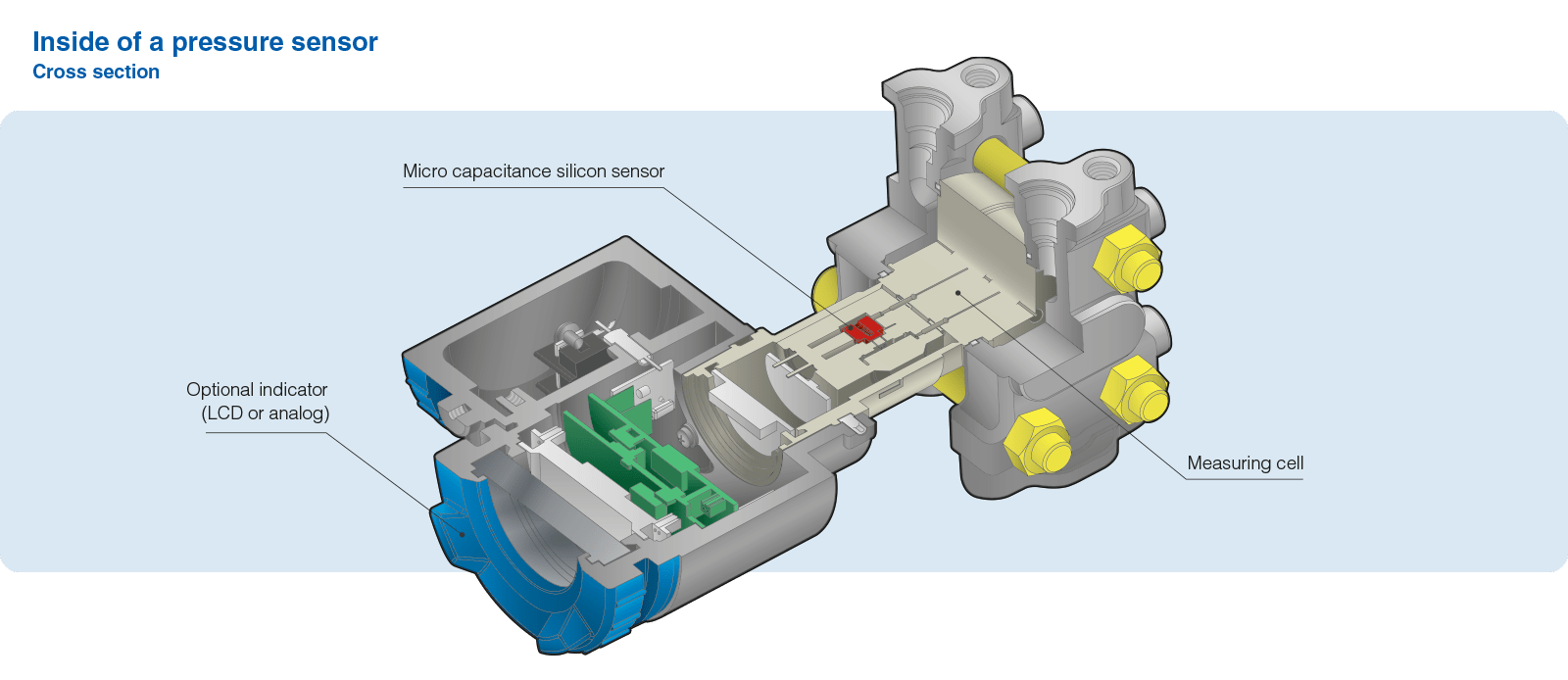
The construction of a pressure transmitter comprises several essential elements:


The pressure transmitter can be either analog or digital. The analog signal from pressure transmitter is usually a 4-20mA current output, a 0-10V voltage output or a 1-5V voltage output. The output signal is sent to the control unit in order to act on the control unit.
The 4-20mA analog output signal is commonly used by these devices because of the many advantages it offers.
First, the pressure transmitter 4-20 mA is resistant to signal loss due to the transmission line, ensuring accurate measurement.

It also extends the distance between the pressure transmitter and the system concerned. In addition, the absence of current makes it possible to detect line faults, facilitating troubleshooting. The 4-20mA 2-wire or 4-wire pressure transmitter is also less sensitive to electromagnetic interference, which guarantees its reliability.
Finally, it can be used in a 4-20mA loop to power several devices such as the display, controller and recorder.
Digital communication is available with various communication protocols - HART - Fieldbus - Profibus - Modbus. These communication protocols not only transmit the measured value, but also enable pressure measurement devices to be configured. These are known as SMART electronic pressure transmitters. Some electronic pressure transmitters also offer IO Link interfaces, a range of specific measurement accuracies and ranges, and international approvals.
The choice of industrial pressure transmitter depends on the fluid to be measured, the pressure range and the operating conditions of the application and process.


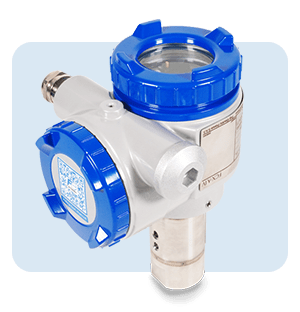
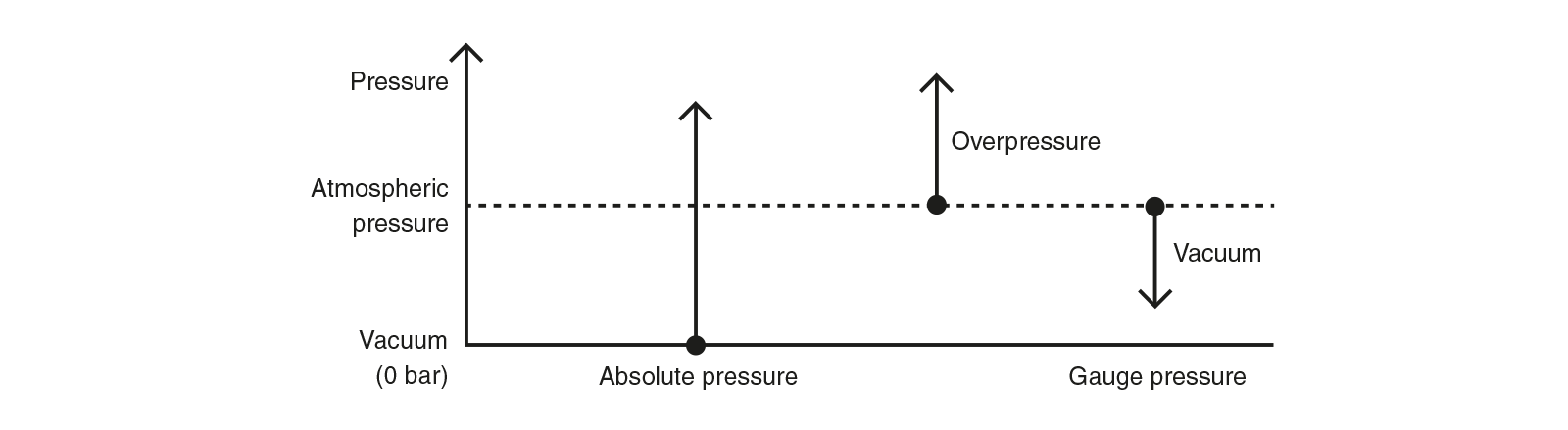
The gauge pressure transmitter measures the gauge pressure the process relative to atmospheric pressure. Atmospheric pressure is measured using a reference cavity inside the transmitter. This pressure decreases as altitude increases.

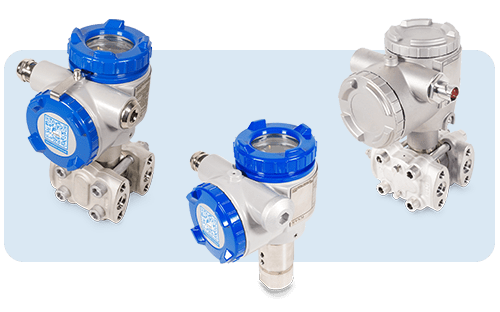
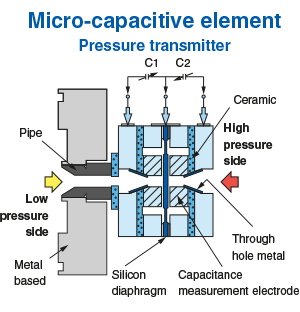
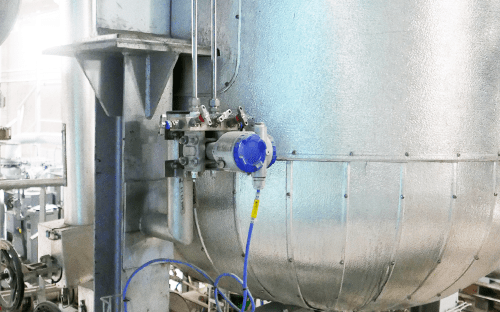
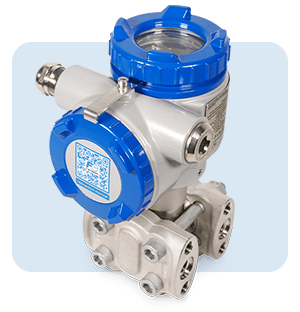
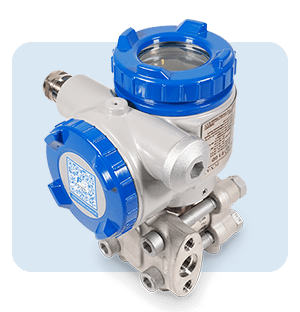
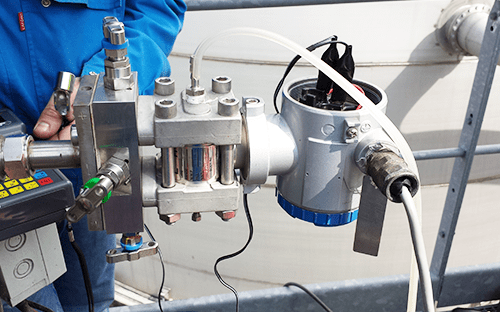
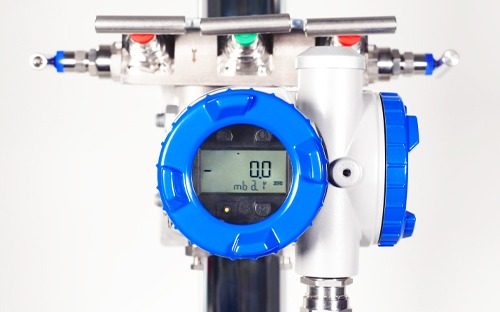
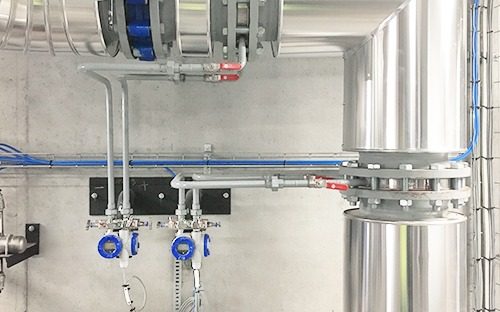
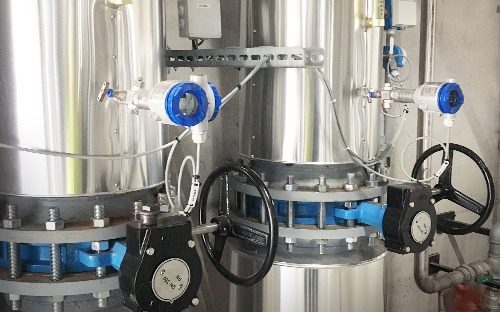
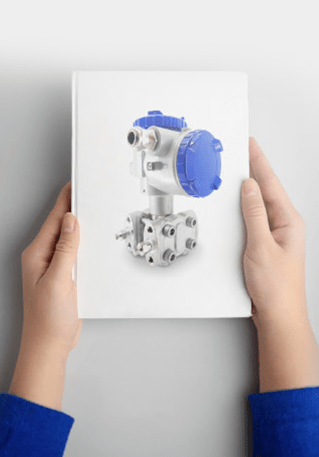
The differential pressure transmitter uses two separate chambers connected by a flexible membrane. Pressure is measured on each side of the membrane. The differential pressure (dp) is the difference between these two pressures: a reference pressure on the low-pressure side (LP) and a pressure on the high-pressure side (HP). This differential pressure measuring device is used to measure fluid flow in pipes, monitor filter clogging, or calculate pressure drops.

The absolute pressure transmitter compares gauge pressure absolute vacuum. Absolute pressure is always positive. The advantage of this device is that it is not affected by variations in atmospheric pressure thanks to a vacuum reference chamber, thus providing greater accuracy.
Absolute pressure is expressed from gauge pressure by adding 1.013 bar, i.e. p. absolute (bar abs.) = p. relative (bar) + 1.013.


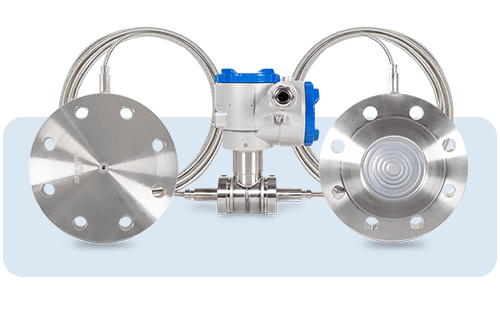
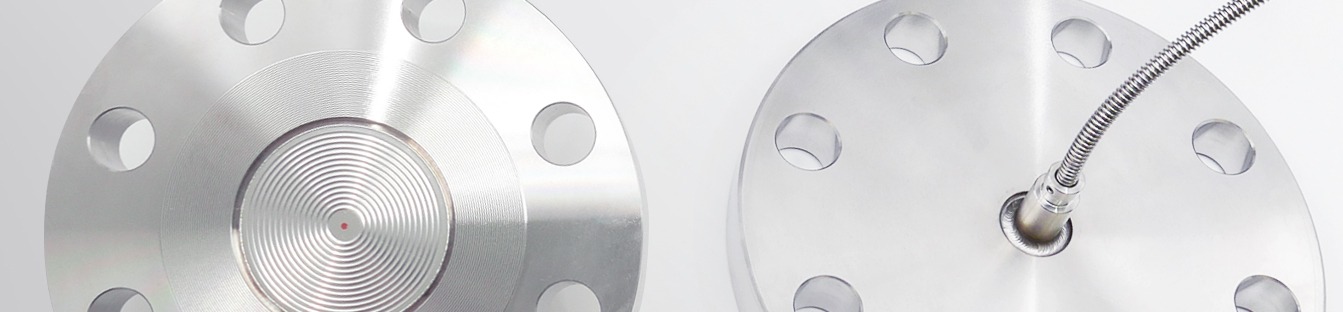
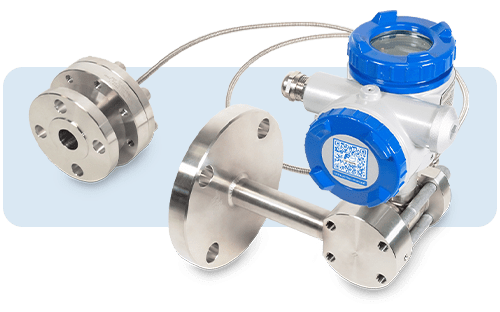
A diaphragm seal pressure transmitter separates the process medium being measured from the pressure cell. The diaphragm and contact parts are made of a material resistant to the fluid being measured, and are welded to the base of the pressure cell.
A capillary tube or connecting sleeve provides the link between the separating diaphragm and the pressure cell. This space must be degassed under vacuum, then filled with oil and sealed. The measured pressure exerts a force on the outer surface of the diaphragm. As the diaphragm flexes inwards, it attempts to compress the filling fluid inside the instrument.
This filling liquid is designed to resist compression, so the force is channeled directly to the pressure-measuring cell. The entire operation of a diaphragm seal pressure transmitter is based on Blaise Pascal's principle.
The diaphragm seal pressure transmitter is made from a variety of materials, including stainless steel, titanium, Inconel, Hastelloy, Monel, Tantalum, ceramic and nickel. The materials used depend on the type of application and temperature for which the industrial pressure transmitter is designed.
The pressure transmitter with diaphragm seals is used to measure fluid pressures in the high-temperature range.


The hydrostatic level transmitter is a measuring device used to determine the filling level of a liquid in tanks or vessels. The measuring principle is based on hydrostatic pressure, which is the weight exerted by a liquid as a function of the height of the filling column.
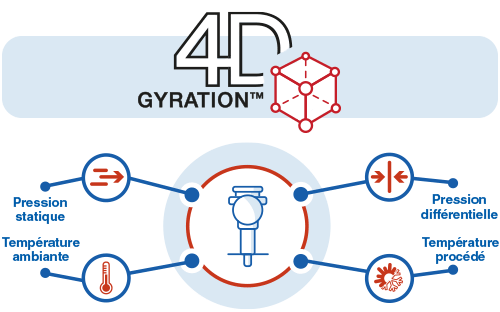
The multivariable pressure transmitter combines differential pressure measurement, absolute pressure measurement and temperature measurement in a single sensor. These products are used in particular for mass flow measurement.
This submersible or hydrostatic pressure sensor can be immersed in a liquid and used to measure the level of a tank or reservoir. The submersible pressure transmitter is generally fitted with a stainless steel diaphragm.

Industrial pressure transmitters require periodic calibration to ensure accurate industrial metrology throughout their lifecycle and avoid factors that influence the accuracy of your sensors.
The calibration period is defined by the pressure transmitters manufacturers. Zero and span must be calibrated.
At the factory, to check the linearity of the output signal, accuracy is verified at several points in the pressure range.
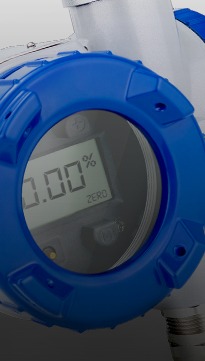
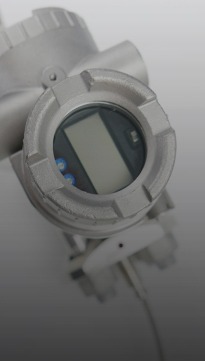
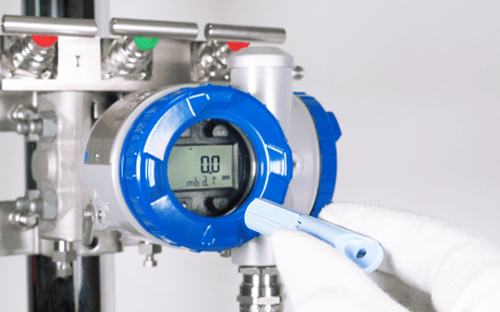
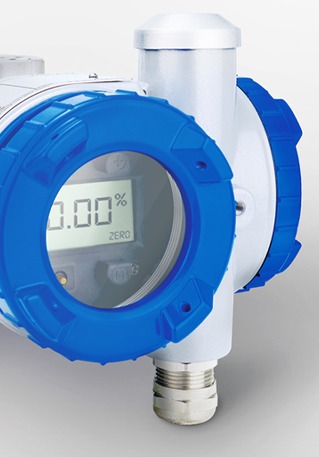
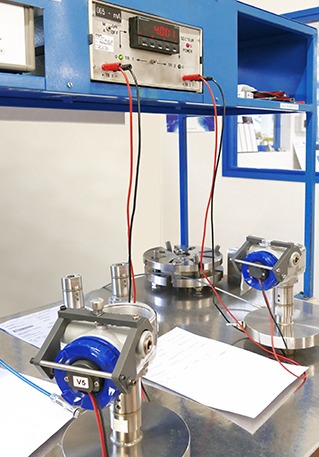
Calibration involves applying a defined reference pressure to the sensor's mechanical interface, checking the 4-20 mA output signal and then applying compensation. The sensor can be calibrated using an external adjusting screw, a programming interface or programming software. Pressure transmitter models with display and pushbuttons can be calibrated locally.
In order to carry out the various manipulations, it may be necessary to have an isolating valve or manifold mounted on the pressure transmitter to isolate it from the process.
For your annual calibrations, you can call on a company specializing in pressure transmitters calibration.
Regular pressure transmitter calibration ensures accurate pressure measurement for consistent results.

Pressure transmitters can be attached to the Primary Elements for DP Flow or to the pipe where the pressure is to be measured, by means of a mechanical process connection.
Special installation precautions must be taken depending on the process pressure and temperature conditions.

The 4-20 mA output signal of this device can be connected to a display system (an industrial digital display, a recorder, a controller, or a supervision system) or to a PLC (automation system for pressure measurement) in order to control a control device and regulate the pressure of a process.
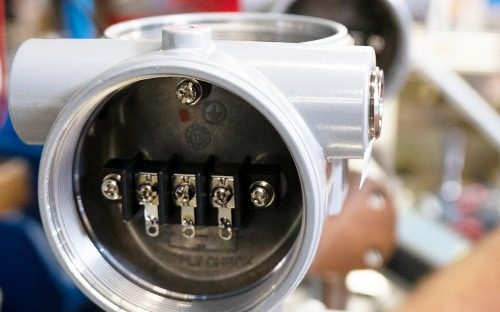
For your own safety, check the pressure transmitter wiring diagram before wiring the field instrument.
If you need help, we recommend that you call in a professional company to install and commission your measuring instrument.

A pressure transmitter 4-20 mA can be tested by applying a known pressure to the mechanical interface of the pressure sensor and checking the measured analog output signal. If you have a pressure transmitter a display, check the value shown on the indicator.
If your instrument is faulty, you can ask a specialist or one of the manufacturers of industrial sensors to repair it for you.
If repair is not possible, you can replace your old pressure transmitter with a new, more modern model.

Intelligent digital transmitters with HART protocol can be configured :


Understanding why measuring pressure in process industries is important for ensuring safety, optimizing process control, improving energy efficiency, and maintaining the quality of finished products.
The pressure transmitter is used in many industrial applications.
This digital pressure transmitter can detect pressures ranging from a few millibars to several hundred bars. It is therefore essential in a wide range of industries for the automation of production lines and machines.
Gauge or absolute compressed air pressures, water pressures, steam pressures and gas pressures can all be measured.
Applications include differential pressure measurement of liquid flow, gas flow or vapor flow in a pipeline, filter monitoring, liquid level measurement in a tank with a flush diaphragm pressure transmitter , fluid density measurement.
Depending on your industry, you need to choose the right measuring instrument for your application and the constraints of your industrial environment.
Precision and reliability
Resistance to extreme conditions
Durability and strength
Flexibility of use
Easy to install
Resistance to overloads and overpressures
Initial cost
Sensitivity to interference
Complexity of installation
Maintenance under specific conditions

Pressure measurement requires the involvement of professionals in the field of instrumentation.
The experts at Fuji Electric, a French manufacturer of industrial pressure transmitters , will guide you and offer you pressure transmitters designed for your most demanding application, to ensure that you get the performance and results you expect, and to avoid errors in your process pressure measurement. So you can enjoy the benefits of pressure transmitter without the drawbacks.
Fuji Electric pressure transmitters are renowned for their high technology, pressure measurement accuracy, wide measurement range, long-term stability, build quality, reliability, durability, technical support, easy return policy and fast delivery service for customers.
Our sales team is at your disposal
to help you with your projects.
Have a question or need assistance? Our experts are here to help you with fast, reliable solutions.
Ask for help