






4 products
Showing all 4 results
Please contact us
Please contact us 
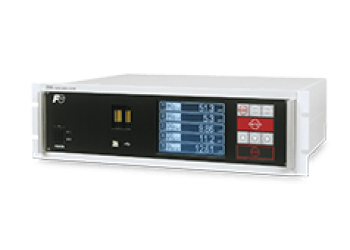
Infrared gas analyser - ZKJ
Please contact us 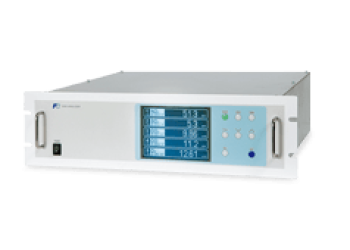
Infrared gas analyser - ZPA
Please contact us 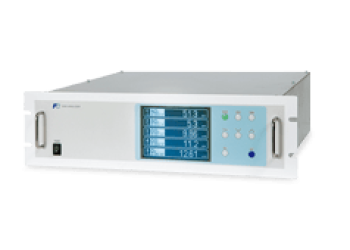
Infrared gas analyser - ZPA - for marine applications

Showing all 4 results

Made in France

Local service near you

Customer support every step of the way

Seamless technical communication
Technologies
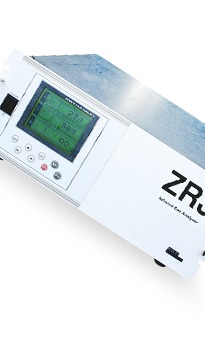
Find out how Fuji Electric is replacing its older gasanalysers models with innovative, sustainable versions that optimize performance and environmental compliance.
An infrared gas analyser is a device used to measure the concentration of certain gases. Using infrared technology, or NDIR (Non-Dispersive Infrared), this analyser detects gases through the selective absorption of infrared light, thereby enabling precise monitoring—which is essential for the continuous monitoring of pollutant emissions and the control of industrial processes.
 Brochure
Download the brochure to find out more about precise, robust multi-gas analysis solutions for all your industrial applications.
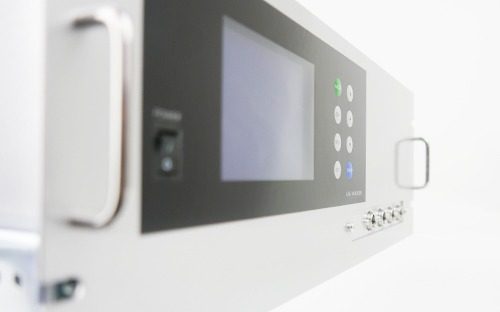
Their QAL1 certification guarantees high performance and compliance with regulations and standards.
Reliable and precise, their quality design guarantees 24/24 operation in harsh environments such as industrial chimney fumes.
Their robustness reduces maintenance costs and increases boiler and equipment availability.
The sampling procedure involves drawing a gas sample from the chimney or gas line using a sampling probe and conveying it to the gas analyser .
The gas is sampled and treated to ensure optimal conditions for gas analysis.
Fuji Electric's line of multigas analyser consists of a 5-gas non-dispersive infrared analyzer.
They allow simultaneous and continuous measurement by extraction of 1 to 5 gases from among :


simple maintenance

good precision

digital link

automatic calibration
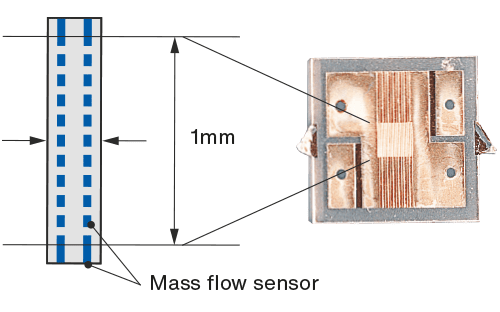
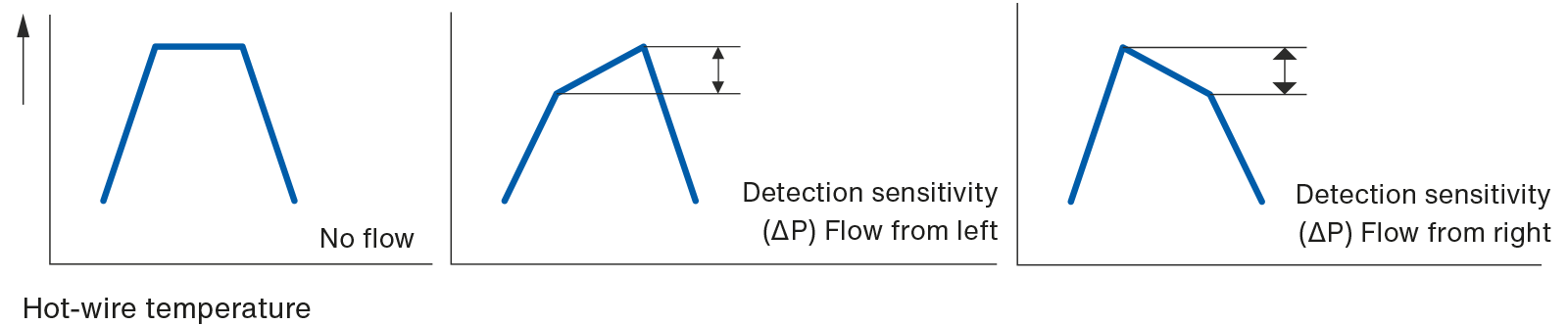
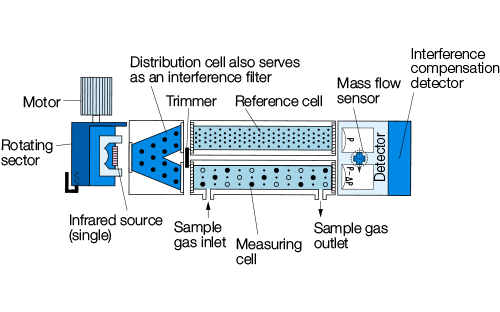
In non-dispersive infrared spectroscopy, the mass flow meter determines the amount of infrared light absorbed by the measurement cell.
Mass flow meter :
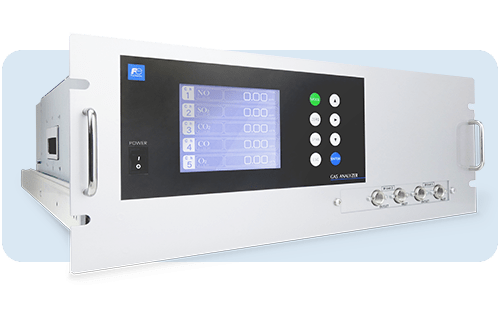
Uses a highly sensitive mass flowmeter as a gas detector
Simultaneous, continuous measurement of 5 gases
CO2 – CO – CH4 – NOx – SO2 – O2– NO – N2O
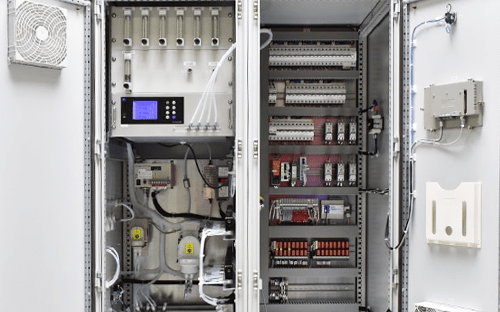
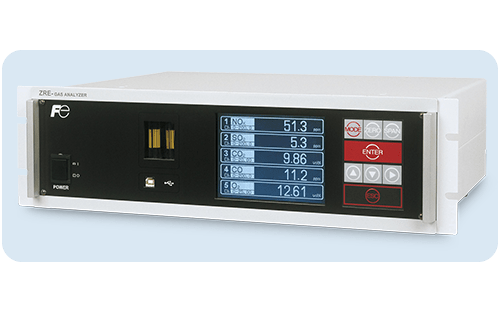
Simultaneous, continuous measurement of the concentration of 5 gases
Features
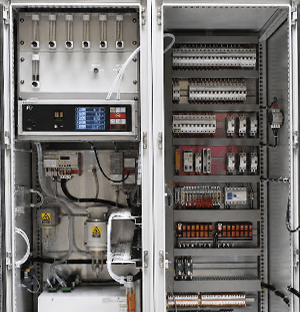
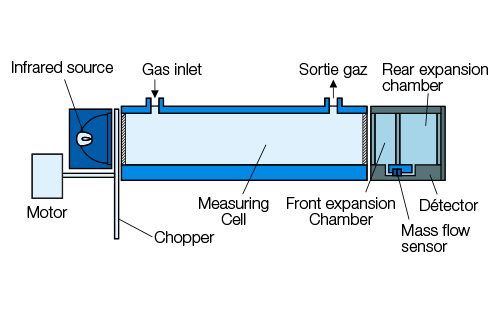
The amount of infrared radiation absorbed in the measuring cell is detected by a micro mass flow meter.
The low-impedance micro mass flowmeter has excellent immunity to interference, and the sensor, with no moving parts, is insensitive to vibration.
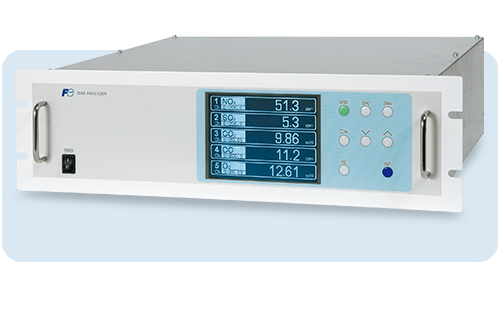
Optimal use as an analysis unit for measuring waste combustion exhaust gases from boilers and incinerators, or gases from various industrial furnaces.
Non-dispersive infrared absorption method. Single-source, single-beam: NO – SO2 – CO2 – CO – CH4
Electrochemical or paramagnetic method (measuring element built into the analyser) or zirconia method (external analyser, type ZFK7): O2
| Model type | ZRE | ZKJ | ZPA | |||
| Visual | 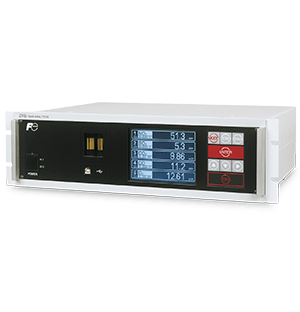 | 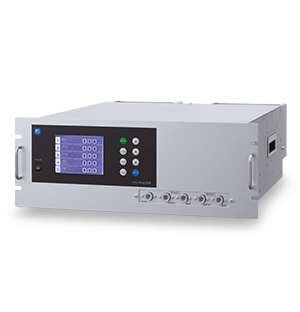 | 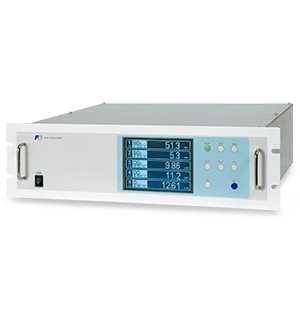 | |||
| Gases measured | Mini scale | Max. scale | Mini scale | Max. scale | Mini scale | Max. scale |
| NO | 0-200ppm | 0-5000ppm | 0-50 ppm | 0-5000 ppm | 0.200 ppm | 0–5,000 ppm |
| SO2 | 0-200ppm | 0-10 vol% | 0-50 ppm | 0-10 % | 0–200 ppm | 0–10% |
| CO2 | 0-100ppm | 0-100 vol% | 0-20 ppm | 0-100 % | 0–100 ppm | 0–100% |
| CO | 0-200ppm | 0-100 vol% | 0-50 ppm | 0-100 % | 0–200 ppm | 0–100% |
| CH4 | 0-500ppm | 0-100 vol% | 0-200 ppm | 0-100 % | 0–500 ppm | 0–100% |
| N2O | _ | _ | 0-200 ppm | 0-2000 ppm | _ | _ |
| O2 (electrochemical) | 0-10 vol% | 0-25 vol% | _ | _ | 0–10 vol% | 0–25% |
| O2 (paramagnetic) | 0-10 vol% | 0-25 vol% | 0-5 vol% | 0-25 vol% | 0–5 vol% | 0–100% |
| O2 (externalanalyser ) | 0-5 vol% | 0-25 vol% | 0-5 vol% | 0-25 vol% | 0–5 vol% | 0–25% |
| ZRE | ZKJ (1) | ZPA | ||||
| mg/m3 | ppm | mg/m3 | ppm | mg/m3 | ppm | |
| CO | 0–125 | 0–100 | 0–125 | 0–100 | 0–375 | 0–300 |
| CO2 | - | 0–20% | 0–20% | |||
| NO | 0–268 (2) | 0–200 | 0–134 (2) | 0–100 | 0–268 (2) | 0–200 |
| NOx | - | - | 0–205 (3) | 0–100 | - | - |
| SO2 | 0–571 | 0–200 | 0–286 | 0–100 | 0–571 | 0–200 |
| O2 (4) | 0–25% | 0–25% | 0–25% | |||
(1) ZKJ is currently undergoing certification by TÜV Rheinland.
(2) The unit for the NO component certification range is mg/m³ NO.
To express the value in mg/m³ NO₂, multiply by 1.53
(3) The unit for the NOx component certification range is mg/m³ NO₂.
(4) 0–10% is also certified as an additional range for O₂.
The CO, NO, and SO₂ components are also certified with additional, higher ranges; see the corresponding certificates.
Our sales team is at your disposal
to help you with your projects.
Have a question or need assistance? Our experts are here to help you with fast, reliable solutions.
Ask for help