






Clamp-on ultrasonic flow meter for steam - Converter - FSJ
ref : FSJ
Retail price
depending on configuration
Discounts available on request
Request a quote
13 results displayed
Retail price
depending on configuration
Discounts available on request
Request a quote
Retail price
depending on configuration
Discounts available on request
Request a quote
Retail price
depending on configuration
Discounts available on request
Request a quote





Retail price
depending on configuration
Discounts available on request
Request a quoteTechnologies
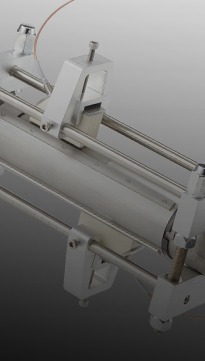
Discover the Benefits of Non-Intrusive Ultrasonic Flow Measurement for Steam | Improve Accuracy, Save Time and Reduce Costs Harness the Power of Innovative Technology!
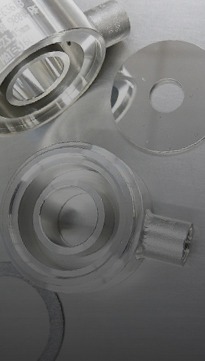
Do you need to measure the flow of a liquid, gas or steam? We manufacture primary elements with dp transmitters.
In industrial facilities around the world, steam serves as the primary energy carrier for heating, sterilization, power generation, and countless industrial applications. Accurate steam flow measurement is essential for optimizing energy efficiency, controlling costs, and ensuring process reliability. Whether you work with moderate-pressure saturated steam or superheated steam in high-temperature applications, choosing the right steam flow meter technology can have a significant impact on the success of your operations.
Modern steam flow meters have evolved far beyond simple mechanical devices to become sophisticated instruments capable of measuring mass flow, volumetric flow, energy content, and steam quality with exceptional accuracy. This comprehensive guide explores the different technologies available, their specific applications, and the critical factors to consider when implementing steam measurement solutions in your facility.
A steam flow meter is a precision instrument specifically designed to measure steam flow in industrial piping systems. These specialized instruments must overcome the unique challenges posed by steam, including high-temperature applications, variable pressure conditions, and the compressible nature of steam compared to liquids or gases.
Steam flow meters play a vital role in energy efficiency and process optimization by providing accurate data for:
The challenges associated with measuring steam are considerable. Unlike flow measurement in liquids, the properties of steam change significantly with variations in temperature and pressure. A steam flow meter must account for these changing conditions to provide reliable data. Whether it is saturated steam at the boiling point for a given pressure, superheated steam at temperatures above saturation, or wet steam containing entrained water droplets, each condition requires specific measurement considerations.
Key measurement parameters include mass flow rate (usually expressed in kg/h or t/h), volumetric flow rate, steam pressure, temperature, and energy flow. Modern steam flow meters often incorporate multiple sensors to provide comprehensive measurement data, including automatic compensation for density variations based on the thermodynamic properties of steam.
The choice of the appropriate technology for steam flow meters depends on the specific requirements of the application, operating conditions, and expected performance. Each technology has distinct advantages and limitations that must be carefully evaluated.
Vortex steam flow meters are one of the most widely used technologies for industrial steam measurement. They operate on the Kármán street principle, where a non-streamlined body generates alternating vortices whose frequency is directly proportional to the speed of the steam, ensuring linear and accurate flow measurement.
The main advantages of vortex flow meters are their robust design with no moving parts, minimal maintenance, and long service life. Vortex steam flow meters also offer a high modulation ratio and maintain high accuracy across the entire measuring range. Many modern models feature integrated temperature and pressure sensors, enabling direct mass flow measurement without external compensation.
For optimal performance, the installation requires sufficient straight pipe sections to stabilize the flow, appropriate pipe sizing, and compliance with the specified Reynolds number range for the flow meter.
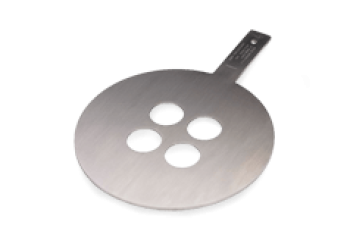
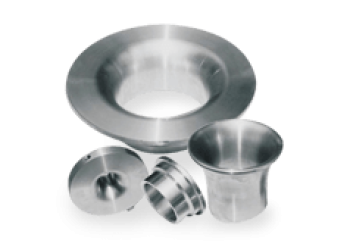
Differential pressure technology remains a cornerstone of steam measurement, particularly in high-pressure applications common in power plants. This approach uses pressure-reducing devices such as orifice plates, diaphragms, Pitot tubes, Venturi tubes, V-cone flow meters, and nozzles to create a measurable pressure difference across a flow restriction.
This technology is valued for its wide applicability, compatibility with a wide range of pipe sizes, and high standardization according to international standards such as ISO 5167.
The measurement principle is based on Bernoulli's equation, according to which an increase in velocity through restriction results in a corresponding decrease in pressure. Modern pressure transmitters incorporate intelligent electronics with temperature and pressure compensation, enabling direct calculation of mass flow. Multivariable sensors can integrate these measurements into a single process connection, simplifying installation and reducing potential leak points.
For accurate steam measurement, differential pressure systems with pressure-reducing devices require special attention to the impulse lines, particularly in applications where condensation is a risk. Proper installation includes condensation pots, isolation valves, and equalization valves to ensure reliable measurements. The design of steam-specific impulse lines must take thermal expansion into account and ensure adequate condensate drainage.
Thermal steam mass flow meters measure steam flow using heat transfer principles, determining the energy required to maintain a sensor at a constant temperature above the process flow. This technology allows direct measurement of mass flow without requiring separate pressure or temperature compensation.
Their main advantage lies in their high sensitivity to very low flow rates, making them ideal for detecting steam leaks, monitoring standby pipes, and identifying energy losses in steam distribution systems. Thermal mass flow meters work well in low-pressure steam applications and are suitable for small-diameter pipes where other flow measurement technologies may not work effectively.
However, these flow meters can encounter difficulties with wet steam, as condensate affects heat transfer and can lead to measurement inaccuracies. Variations in steam quality may also require frequent calibrations to maintain reliability.
Thermal mass flow meters are particularly well suited for energy audits, steam trap monitoring, and systems where capturing small, low-velocity steam flows is critical to improving energy efficiency.
Ultrasonic flow measurement technology offers unique advantages for steam applications, particularly in retrofitted installations and situations where non-intrusive measurement is preferred. These flowmeters use ultrasonic pulses to measure steam velocity by timing the acoustic signals that propagate upstream and downstream in the flowing fluid.
Transit time ultrasonic flowmeters operate by measuring the time difference between ultrasonic signals traveling in the direction of flow and those traveling in the opposite direction. Two transducers alternately send and receive ultrasonic signals through the steam, with the time difference being proportional to the average flow velocity along the acoustic path.
The main advantage of clamp-on ultrasonic flow meters for steam is their non-intrusive installation capability. These systems can be installed on existing steam pipes without interrupting operation, eliminating the costs associated with process downtime and avoiding pressure loss. This makes them particularly attractive for retrofit applications and temporary measurement needs.
Ultrasonic technology offers exceptional modulation ratios, making it suitable for applications where steam demand varies greatly. Ultrasonic flow meters can measure in both directions and are easily movable for study work or temporary monitoring applications.
Installation considerations include ensuring adequate acoustic coupling between the transducers and the pipe wall, accurate knowledge of the dimensions and thickness of the pipe wall, and steam conditions suitable for ultrasonic transmission.
Requirements for steam flow measurement vary significantly from one industry to another, each with its own unique challenges and regulatory requirements.
Steam flow meters are essential for ensuring reliable and efficient power generation. They are used to:
These applications often use high-precision differential pressure systems with specialized pressure-reducing components designed for extreme operating conditions.
Chemical and petrochemical plants rely heavily on steam for their thermal processes, requiring durable and accurate measurement solutions. Flow meters support:
Steam quality and precise flow control have a direct impact on product safety and consistency. Flow meters are used to:
These applications often specify stainless steel construction, smooth surface finishes, and designs that eliminate dead spaces where contamination could accumulate. Ultrasonic flow meters for steam are particularly advantageous in these sanitary environments due to their non-intrusive design, which avoids contact with the process and minimizes the risk of contamination.
Pharmaceutical manufacturing requires the highest level of steam purity and documentation. Steam flow meters guarantee:
Steam flow meters ensure process sterility, regulatory compliance, and product integrity in pharmaceutical manufacturing.
The accuracy of steam flow measurement depends on a combination of process parameters, measurement objectives, and installation constraints. Understanding these criteria is essential to selecting the most appropriate steam flow meter technology for reliable long-term performance.
For most steam applications, mass flow measurement is preferable because it directly reflects energy content and remains stable despite variations in pressure and temperature. When combined with pressure and temperature data, steam flow meters can also calculate thermal energy flow, which is essential for energy management, billing, and efficiency monitoring.
Some technologies measure volumetric flow and rely on compensation, while others (such as ultrasonic or multivariable differential pressure systems) allow direct calculation of mass and energy when combined with flow and energy calculators.
The pressure and temperature of the steam determine whether the application involves saturated or superheated steam, which directly influences the design of the flow meter and the choice of materials. High-pressure and high-temperature applications require robust mechanical designs, while low-pressure systems may favor low-flow sensitivity.
Steam quality (dry fraction) is another critical factor. Wet steam can reduce accuracy, especially for technologies that are sensitive to condensate. In applications where steam quality is variable, diaphragm seals, proper drainage, or non-intrusive technologies may be necessary to maintain measurement reliability.
Steam demand often fluctuates significantly. Applications such as energy distribution networks or batch processes require flow meters with a high modulation ratio, ensuring accuracy at both low and high flow rates. Technologies with limited modulation may be suitable for stable base load measurements, while others are better suited to variable consumption.
The diameter of the pipes, the straight lengths available, and the possibility of interrupting production strongly influence the choice of technology.
Transactional metering, regulatory reporting, and energy billing typically require higher accuracy and traceability than simple process monitoring. Repeatability is often just as important as absolute accuracy for control applications, where consistent measurement is essential for stable operation.
Environmental factors such as vibrations, extreme temperatures, corrosive condensates, and hazardous area classification must be taken into account. Maintenance expectations also play a role: some technologies prioritize simplicity and robustness, while others enable advanced diagnostics and predictive maintenance thanks to digital electronics.
Proper installation and calibration of steam flow meters are essential to achieve specified performance and maintain long-term accuracy. Installation requirements vary significantly between technologies, but share common principles to ensure reliable operation.
Adequate lengths of straight pipe upstream and downstream are required to stabilize the flow profile and achieve the specified accuracy.
Proper insulation of pipes helps maintain steam quality and protect personnel, while removable insulation sections at meters facilitate access for installation and maintenance. Condensate management is equally important: steam traps, drain points, or diaphragm seals upstream prevent the formation of wet steam, which can affect accuracy and damage sensors.
Mechanical stability must also be ensured. Steam pipes are subject to vibrations and thermal expansion. Adequate supports, vibration insulation, and flexible connections therefore help to protect the integrity of the meters and the stability of the measurements.
Flanged connections (ANSI/ASME B16.5, class 150-600) are the most common choice for steam applications, as they offer robustness and ease of maintenance. Threaded connections are generally limited to small diameters and low pressures, while wafer models offer compact solutions for retrofitted or space-constrained installations.
High-pressure steam systems, such as those used in power generation, may require reinforced fittings with certified pressure ratings, material traceability, and pressure test documentation to meet safety and regulatory requirements.
Most modern steam flow meters support universal power supplies (24 V DC or 100-240 V AC), the requirements for which are defined by local electrical codes and hazardous area classifications. Standard output signals include 4-20 mA, digital protocols such as HART, Modbus, or Profibus, and pulse outputs for totalization and energy monitoring.
For hazardous environments, flow meters must comply with certifications such as ATEX or IECEx. In high-temperature areas near steam pipes, high-temperature-resistant cables and appropriate routing are necessary to preserve signal integrity and ensure long-term reliability.
Effective maintenance and calibration programs ensure continued accuracy and reliability throughout the meter's lifetime, while minimizing operational disruptions.
Preventive maintenance of steam flow meters focuses on regular inspection, cleanliness, and system integrity. Periodic visual checks can identify corrosion, leaks, or damaged connections before they affect measurement accuracy.
For technologies such as vortex or thermal mass flow meters, sensor cleanliness is essential to maintain accuracy, particularly in systems where steam quality is variable. Seals and gaskets should be replaced based on operating conditions to ensure long-term safety and reliability.
Modern digital steam flow meters also require firmware and software updates, which can often be performed remotely to maintain performance, cybersecurity, and data integrity.
Regular calibration ensures accurate and traceable steam flow measurement, particularly for energy billing, efficiency monitoring, and regulated applications. Annual verification is common, with frequency adjusted to the criticality of the application and historical stability.
In situ calibration methods allow performance to be verified without stopping the process, while ISO 17025 laboratory calibration is recommended for high-precision or property transfer applications. Calibration uncertainty management helps optimize calibration intervals and maintain compliance with quality and regulatory standards.
Fuji Electric also provides dedicated installation, calibration, and maintenance services, ensuring optimal performance, long-term accuracy, and support throughout the life cycle of steam flow measurement systems.
Compliance with international standards is essential to ensure accurate, safe, and legally recognized measurement of steam flow. Fuji Electric steam flow meters are designed in accordance with major international and European standards, ensuring reliable performance for industrial processes, energy monitoring, and commercial applications.
For differential pressure steam flowmeters, ISO 5167 defines the reference standard for orifice plates, venturi tubes, and nozzles, ensuring consistent design, installation, and uncertainty calculation. IEC 60534 provides guidance for installations involving control valves, helping to maintain stable measurement performance in complex piping configurations.
For energy billing and transactional metering in Europe, the EN 12405 standard establishes the legal requirements for metrology, while the OIML R140 standard supports internationally recognized principles of accuracy and testing for steam and gas measurement systems.
Fuji Electric steam flow meters are also available with ATEX and IECEx certifications for hazardous areas and are manufactured according to ISO 9001 quality management systems, ensuring long-term reliability, safety, and compliance in demanding industrial environments.
Our sales team is at your disposal to help you with your projects.
Request a free quoteHave a question or need assistance? Our experts are here to help you with fast, reliable solutions.
Ask for helpOur related articles

Bernoulli's theorem describes the distribution of pressure, velocity and altitude in an ideal fluid flow. This fundamental principle is used in aerodynamics and in various fluid systems.
June 01, 2024
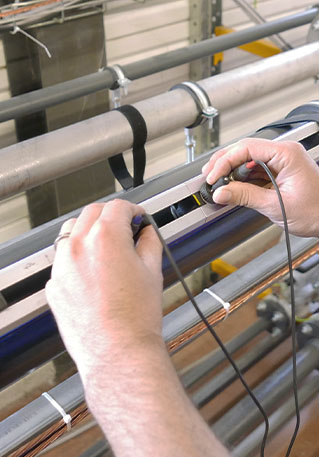
Doppler flowmeter vs. transit time flowmeter: find out how to choose between these two types of ultrasonic instruments to optimize your fluid measurements.
May 08, 2024

Discover our tips for choosing the perfect industrial flowmeter. Optimize your processes and ensure accurate fluid measurement.
March 28, 2024
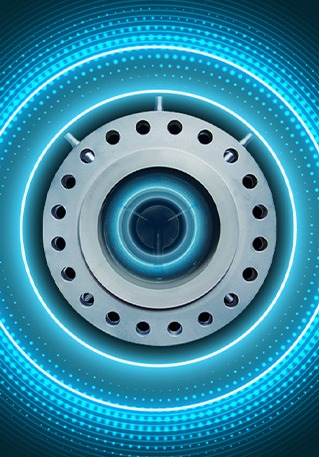
Discover the differences between McCrometer's V-Cone® flowmeters and orifice plates. Learn how each type is used to optimize your flow measurement projects.
March 10, 2023

Ultrasonic flowmeters, enhanced by technological advances, offer precision and low maintenance. Find out why they've become indispensable in a variety of industries.
July 06, 2023

Ultrasonic flowmeters measure fluid velocity using sound waves. Discover the Doppler and transit time types, their advantages in terms of accuracy and low maintenance, etc.
July 27, 2023