You have a part number that’s no longer available. It can take up to eight months to prepare a quote. The next production line shutdown is in eighteen months. And no one involved in the project can say for sure whether this part number has actually been discontinued or is simply hard to source this quarter.
This situation is routine across the nuclear fleet, and it is costly for one specific reason: most replacement decisions are made before the right checks have been carried out. Equipment that is still supported gets replaced. An engineering change is committed that costs more than the instrument itself. A connection mismatch nobody had spotted surfaces during requalification.
This guide starts from the reference installed on your site, not from a product to sell. Its purpose is simple: to save you time on the four decisions that matter — verify, qualify, compare, choose.

The obsolescence of instrumentation and control (I&C) systems is inevitable. It begins as soon as the facility is commissioned and worsens as the facility ages. The International Atomic Energy Agency (IAEA) notes that the aging of I&C systems can reduce safety margins and increase operating costs, and that obsolescence further complicates the situation as spare parts become difficult to source—an issue it documents in its guide to managing the aging and obsolescence of I&C systems.
For a pressure transmitter, several factors compound one another:
These factors come at a cost that is often underestimated. Premiums for replacement parts and support for legacy systems, reverse-engineering costs when the original supplier discontinues a product line, and the development of equivalents for outdated designs: a linear projection of current expenses underestimates the actual future burden.

useful benchmark regarding volume: a nuclear reactor unit typically has 400 to 600 pressure and differential pressure transmitters. On this scale, a widely deployed model becomes a risk to availability, not just an isolated replacement.
Finally, there is a schedule constraint that no one can shorten. Nuclear-grade sensors must be ordered well in advance, and the windows for installation are determined by reactor outages, which are planned years in advance. A decision delayed by one quarter can result in a postponement of several years—or in an exception that will need to be justified.
Fuji Electric France supports this type of challenge, from plants under construction to facilities undergoing refurbishment and decommissioning projects —see our instrumentation solutions for the nuclear industry.
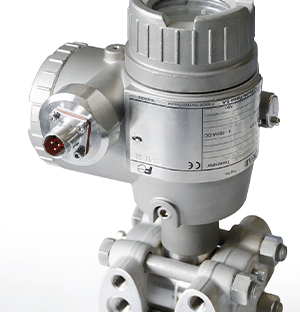
Certain families appear regularly in obsolescence files, because they were deployed in large numbers between the 1970s and the 1990s:
This list is there to identify the tags worth examining, not to draw conclusions. The status of any given reference rests with the original manufacturer, and with them alone: a range may be fully discontinued, partly discontinued model by model, or simply moved into a maintenance phase with no further development. Fuji Electric does not comment on the lifecycle status of other manufacturers' products.

This is the step most often skipped, and the one that avoids the most unnecessary expenditure.
Three levels of reliability, from highest to lowest. The manufacturer’s official end-of-sales notices, including the latest order dates, are considered authoritative. Next come the manufacturer’s product pages and product lifecycle guides. Finally, there are catalogs from distributors, surplus dealers, and third-party marketing materials, whose obsolescence statements are unverifiable and sometimes inaccurate—none of which are sufficient to justify a technical modification.
Two caveats should be noted regarding this ranking.
Inclusion in the catalog does not prove that a product is currently in production. A product line may remain listed—with a technical data sheet to support it—even though production has ceased and only the listing remains. The only reliable proof is a written commitment from the supplier regarding availability and lead time for the exact configuration of your part number.
Manufacturers think in terms of phases, not in black-and-white terms. Several manufacturers publish a four-stage lifecycle model—active, maintenance, limited support, obsolete—each of which involves a different level of service. This gradation provides you with a sense of timing: a product in the maintenance phase does not require immediate action, while one in the limited support phase requires planning. This is precisely what makes it possible to spread out replacements over several unit outages rather than having to handle everything at once.
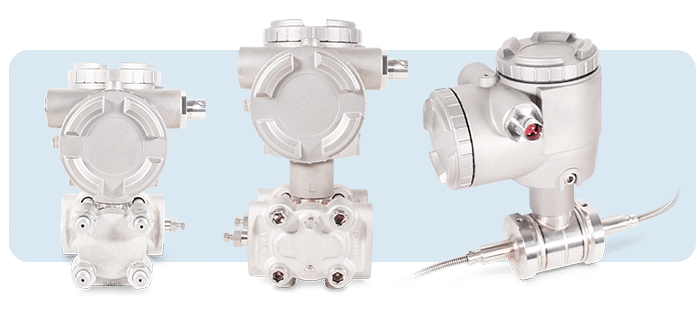
There is no universally correct answer. Both technologies have their place, and the choice is made tag by tag.
Sticking with analog technology is justified when continuity is paramount: simple architecture, proven reliability, direct maintenance, and no embedded firmware. Analog technology minimizes changes to operating procedures and qualification dossiers, and reduces exposure to cybersecurity requirements and software-induced common-cause failures. It is often the most cost-effective option in terms of total cost for non-safety-related applications. Our analogue nuclear pressure transmitters certified to RCC-E meet this need.
Going digital is justified when the application derives a real benefit from it: a need for on-board diagnostics, remote configuration via a HART- pressure transmitter , superior accuracy or rangeability, integration into a modernized control architecture, or when the retrofit project already calls for a broader overhaul of the control and command system.
However, we must also address the challenges that digital technology brings: cybersecurity requirements, long-term firmware management, accounting for common-cause software failures, team training, revised procedures, potential licensing impacts, and shorter product lifecycles. The IAEA also emphasizes that while digital modernization offers benefits in terms of diagnostics and monitoring, it must be carried out as part of a well-managed strategy.
So the right question is not “analog or digital?” in absolute terms, but rather: Which technology is best suited for this specific application, given its safety class, its environment, and the impact on the entire life cycle?

When faced with an obsolete pressure transmitter , there are four possible courses of action. These are not mutually exclusive; a mixed fleet often combines several of them.
An obsolete reference ultimately requires the identification and qualification of an alternative solution—its deployment can be planned for the medium term, but it cannot be postponed indefinitely. Temporarily extending the operation of existing equipment is permissible only if such an extension is based on a risk analysis, a documented spare parts strategy, and a qualified replacement plan. In the absence of these elements—and particularly the availability of spare parts—postponement is not a safe option.
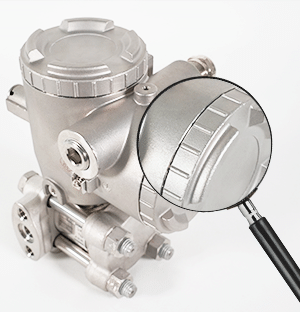
You should never choose replacement based solely on the model number. Here are the points to check, part by part:
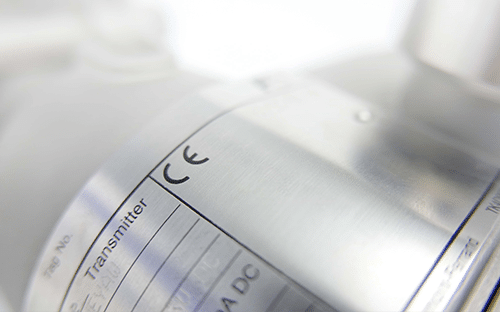
The nuclear qualification of a pressure transmitter is based on several standards, the selection of which depends on the country of operation, the type of reactor, and the safety class of the reference:
The applicable standard must be identified as soon as the benchmark is analyzed: a sensor qualified under a given framework is not automatically acceptable in another regulatory context.
For markers that serve a safety function, these criteria are supplemented by specific requirements, detailed in our article on 6 Essential Criteria for Ensuring a Safety Function with a pressure transmitter..

Always in this order:
(1) Identify the reference point and verify the actual reference,
(2) analyze the application and the terms of service,
(3) determine the risk class,
(4) choose the alternative route,
(5) compile the evidence file,
(6) Select the supplier.
Bypassing reference checks or application reviews is the leading cause of errors.
⚠️ Do not replace based solely on the part number
Two sensors from the same family may differ in their measurement range, configuration, connections, materials, mounting, and qualification level. The decision must be based on the complete model code, the data sheet, the nameplate, and the application requirements.

The purchase price is only part of the cost. You must also factor in engineering modifications, qualification, the impact on unit shutdowns, and maintenance. In many cases, engineering modifications and the qualification dossier cost more than the components themselves. This is the decisive argument in favor of a well-chosen equivalent: it minimizes engineering changes, requalification, and the impact on documentation.

For each item: technical data sheet and complete model code; proof of life-cycle status issued by the manufacturer, and a written commitment regarding availability and lead time; qualification file (RCC-E, IEEE, KTA, as applicable); seismic and radiological safety; electromagnetic compatibility; quality assurance and traceability; long-term availability data; supply chain resilience; operational references in comparable environments.
This package protects safety and budget alike. It heads off the unwelcome surprises that arise during requalification, when they cost the most.
The matrix is built from documentary evidence, situation by situation.
| Situation | Risk Class | Recommended Route | Required Evidence |
|---|---|---|---|
| Uncertain Status | To be determined | Check the status before making any decisions | Manufacturer confirmation, availability commitment |
| Reference set; application not related to security | Low / Moderate | Functional equivalency, analogue or digital as required | Model code, datasheet, calibration points |
| Discontinued reference, severe environment | High | Qualified transmitter, documented equivalency | Qualification, seismic and radiation withstand |
| Manufacturer no longer supporting | Variable | Functional equivalence | Datasheet, nameplate data |
| Temporary extension being considered | Variable | Risk Analysis + Parts Strategy + Qualified Replacement Plan | Documented Justification File |
Fuji Electric France designs and manufactures in France a complete line of nuclear- pressure transmitters , available in both analog and smart versions. This dual offering allows customers to choose the technology best suited to their reference system, without requiring or prohibiting a migration.
| Measurement type | Version pressure transmitter : SMART Nuclear | pressure transmitter 's Nuclear Analog Version |
|---|---|---|
| Pressure transmitter nuclear differential | FKC – NC – K3 | FYC – K3-ad |
| Nuclear gauge pressure e sensor | FKG – NC – K3 | FYG – K3-ad |
| Pressure transmitter nuclear absolute | FKA – NC – K3 | FYA – K3-ad |
| Pressure transmitter nuclear differential with diaphragm seals | FKD – NC – K3 | FYD – K3-ad |
| Nuclear gauge pressure e detector with diaphragm seals | FKB – NC- K3 | FYB – K3-ad |
| Pressure transmitter nuclear absolute with diaphragm seals | FKM – NC – K3 | - |
| Relative High-Pressure Nuclear Sensor | FKR – NC – K3 | - |
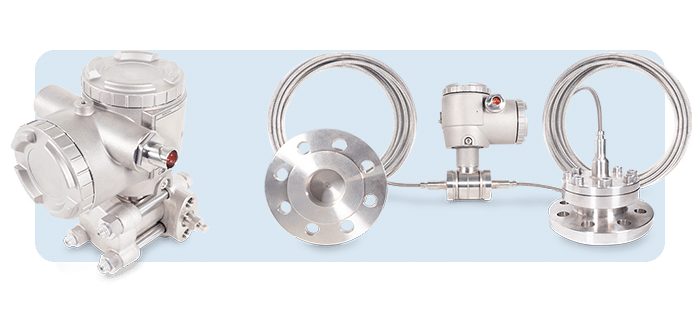
These pressure transmitters, including diaphragm seals , and capillary sensors, also cover level measurement via hydrostatic pressure and flow measurement via differential pressure across a flow restrictor. The differential pressure transmitters line forms the core of the products affected by obsolescence. Related accessories—2-, 3-, or 5-way manifolds, nuclear-grade electrical connectors, mounting brackets, high-pressure/low-pressure inverters, and displays—facilitate integration into an existing installation.
Qualifications: RCC-E (NC) compliance, 2019 edition, including seismic performance (TAS); K3-A/1E and K3-ad/1E qualifications; component seismic spectrum up to 35 g, TID 50 kGy irradiation qualification with integrity up to 65 kGy, performance maintained under accident conditions (LOCA, high temperatures), ANFL-qualified electronics per IEC 62671, SIL2 / SIL3 in accordance with IEC 61508 and 61511, EDF and Framatome qualifications (QN100 / QN200 / QN300), and a quality management system compliant with ISO 19443 (certification pending), ISO 9001, and ISO 14001.
Fuji Electric does not promise a universal “plug-and-play” replacement and does not claim equivalence without evidence. The process involves a technical review on a component-by-component basis, with qualified alternatives proposed when documentation permits. Details on part numbers and connections can be found in our lineup of nuclear- pressure transmitters .

You do not need a complete file to begin the analysis. One reference, a tag list or a datasheet is enough.
Please send us your part number, tag list, or technical data sheet.
Our experts will provide you with an initial technical assessment: what actually needs to be replaced, what can be planned, points to watch out for, the information you’ll need to gather, and the simplest approach for your situation—analog equivalence, a controlled digital migration, or a custom solution. All of this will be provided before you proceed with a consultation or make any changes.
Would you rather start on your own? Check out our catalog of replacements for obsolete pressure transmitters to help guide your internal analysis.

It depends on the model installed: measurement type, measurement range, signal, connections, safety class, and qualification requirements. Depending on the application, the choice will be an analog system to maintain technological continuity, or a digital system when warranted.
By requesting an official notice of discontinuation or a written commitment regarding availability from the manufacturer. A product’s presence in the catalog does not prove that it is still in active production, and information provided by retailers is for marketing purposes only. A product line may also be discontinued on a model-by-model basis.
Both are relevant depending on the context. Analog systems preserve continuity and minimize the impact of system upgrades, cybersecurity, and procedural changes. Digital systems offer diagnostics, remote configuration, and integration, but come with additional requirements for firmware, training, and lifecycle management.
Primarily RCC-E (French standards), IEEE 323 and 344 (international Class 1E framework), and KTA 3505 (Germany), supplemented by IEC and ISO 19443 standards. The applicable standards depend on the country, the reactor type, and the safety class of the reference design.
Technical data sheet and complete model code, proof of life-cycle status, qualification dossier, seismic and radiological safety, electromagnetic compatibility, quality assurance, long-term availability data, and comparable operating references.

Antonin LE MAY
Specialist in environmental and industrial technologies