





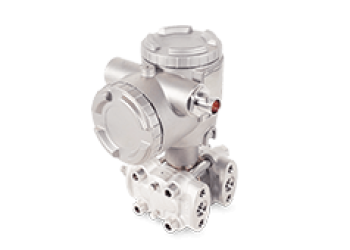
Pressure transmitters are key components in measurement and control systems for critical industrial installations, particularly in the nuclear sector.
They play a direct role in monitoring operating parameters and safety systems, contribute to the availability of installations, and provide decision support during normal, incidental, or accidental operating phases.
In this context, metrological reliability, equipment availability and compliance with regulatory requirements are essential.
THE pressure transmitters Fuji Electric analog nuclear reactors have obtained RCC-E (K3 and K3ad) qualification , issued by CNEPE .
This qualification is recognized by all international players in the nuclear industry (EDF, Orano, Framatome, Westinghouse or Rosatom, for example) as a reference standard for nuclear instrumentation equipment.
Summarize this article with :

EDF (Électricité de France) is the incumbent operator of the French electricity system and a leading industrial player in the energy sector.
The company is involved in the entire value chain, from production to the operation and maintenance of facilities, particularly France's nuclear power plants.
Nuclear power accounts for around 67% of the electricity generated in France, according to data published in 2024 by RTE France, the public electricity transmission system operator.
This method of generation is a key component of the national energy mix and a major factor in ensuring the continuity and stability of the electricity supply.
The operation of nuclear facilities is subject to a particularly demanding regulatory framework.
The equipment used must comply with strict technical standards defined by EDF, such as RCC-E, in order to guarantee the safety, reliability, and availability of the systems


The RCC-E is a technical reference document developed to provide a framework for the design, qualification, and use of electrical and instrumentation equipment intended for nuclear facilities.
It is part of a comprehensive approach aimed at ensuring a high level of safety, reliability, and control of industrial risks.
The RCC-E qualification covers a set of technical and organizational requirements relating in particular to:
RCC-E qualified electrical and instrumentation equipment must demonstrate its ability to operate reliably over the long term, under severe industrial conditions .
They must maintain their metrological and functional performance despite the specific constraints of the nuclear environment.

equipment design and sizing

manufacturing processes and methods

qualification and verification tests

the compilation of technical documentation

traceability of components and processes

The tests carried out as part of the qualification process are designed to demonstrate the ability of the equipment to operate reliably and safely in a nuclear environment, in accordance with the requirements of RCC-E K3.
They aim to verify that functional and metrological performance is maintained under conditions that are representative of, or even worse than, actual operating conditions.
For qualification level K3, applicable to safety-critical equipment, testing demonstrates that sensors retain their essential functions in normal, incidental, or accident situations.
They are part of a comprehensive approach to justifying equipment performance

Depending on the applicable requirements, these tests may include:
All of these tests constitute a decisive step in the RCC-E K3 qualification process.
They contribute directly to demonstrating safety and justifying the use of instrumentation equipment in nuclear facilities.
For nuclear instrumentation, such as pressure transmitters , RCC-E K3 qualification is a fundamental prerequisite.
It certifies their ability to provide continuous, accurate, and reliable measurement, which is essential for process monitoring and the safety of nuclear facilities.

The CNEPE (Centre National d’Équipement de Production d’Électricité) is the EDF body responsible for qualifying equipment intended for nuclear installations, in accordance with the requirements of the RCC-E standard.
It intervenes prior to commissioning in order to verify the technical, regulatory, and documentary compliance of the equipment.
The qualification issued by CNEPE certifies that pressure transmitters Electric pressure transmitters meet functional, environmental, and regulatory requirements.
It validates their suitability for safe, controlled, and sustainable operation in a nuclear environment.
This qualification process allows operators to ensure the safety of the equipment they use.
It helps to control industrial risks by excluding the use of unqualified or non-compliant equipment
Fuji Electric pressure transmitters have technical characteristics that meet the requirements of nuclear applications, both in terms of measurement and integration and regulatory compliance.

All of these features help to ensure measurement reliability, equipment durability, and compliance with regulatory requirements in the nuclear industry.

Stability and metrological accuracy

Standardized analog output signals

Robust mechanical design

Suitability for harsh environments

Traceability and documentation


Sylvain GRAVEROT
Nuclear qualification/certification engineer and safety expert