





The GEREP 2027 reporting campaign covers atmospheric emissions measured during 2026. Operators of facilities classified as requiring environmental protection (ICPE) that are subject to reporting requirements must submit their environmental data by March 31, 2027.
In an increasingly stringent regulatory environment, monitoring air emissions is a key challenge for ensuring that industrial facilities comply with regulations, reducing their environmental impact, and guaranteeing the quality of the data reported to the authorities.
Continuous emissions monitoring systems (CEMS), combined with certified measurement chains and high-performance data acquisition systems, play a central role in this process.
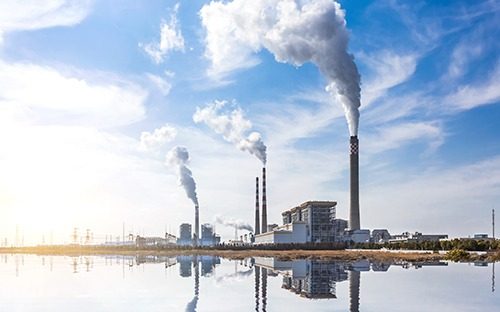
August 17, 2021 marks the opening of a new chapter in the fight against air pollution in Europe, and more specifically in the sector involving large combustion plants.
In fact, industrial air emissions are regulated by several national and European laws designed to limit their impact on the environment and human health. Nitrogen oxides (NOx) and sulfur dioxide (SO₂), which are primarily responsible for acid rain, are among the most closely monitored pollutants.
Emission limit values (ELVs) applicable to industrial facilities are now largely defined based on the emission levels associated with best available techniques (BAT-AELs: Best Available Techniques Reference Document on Large Combustion Plants).
In accordance datasheet BREF LCP datasheet , these operators are now required to comply with the stringent standards set by Best Available Techniques (BAT).
These guidelines, the fruit of a European consensus, aim to standardize industrial practices while reducing the environmental footprint.
Incorporating the Industrial Emissions Directive (IED), this development shows how consistent action can be taken to protect the environment. It underlines the commitment of France and its European partners to clean, sustainable industry. This process also includes the careful implementation of Best Available Techniques (BAT).
Approximately 350 French facilities are currently subject to the IED Directive. These include large combustion plants, whose emissions account for nearly one-third of the country’s total sulfur oxide emissions. Combustion plants with a thermal capacity exceeding 50 MW are subject to stricter requirements regarding the monitoring, control, and reduction of air emissions.
This approach reinforces our ongoing commitment to fair competition while prioritizing environmental protection within the European Union.
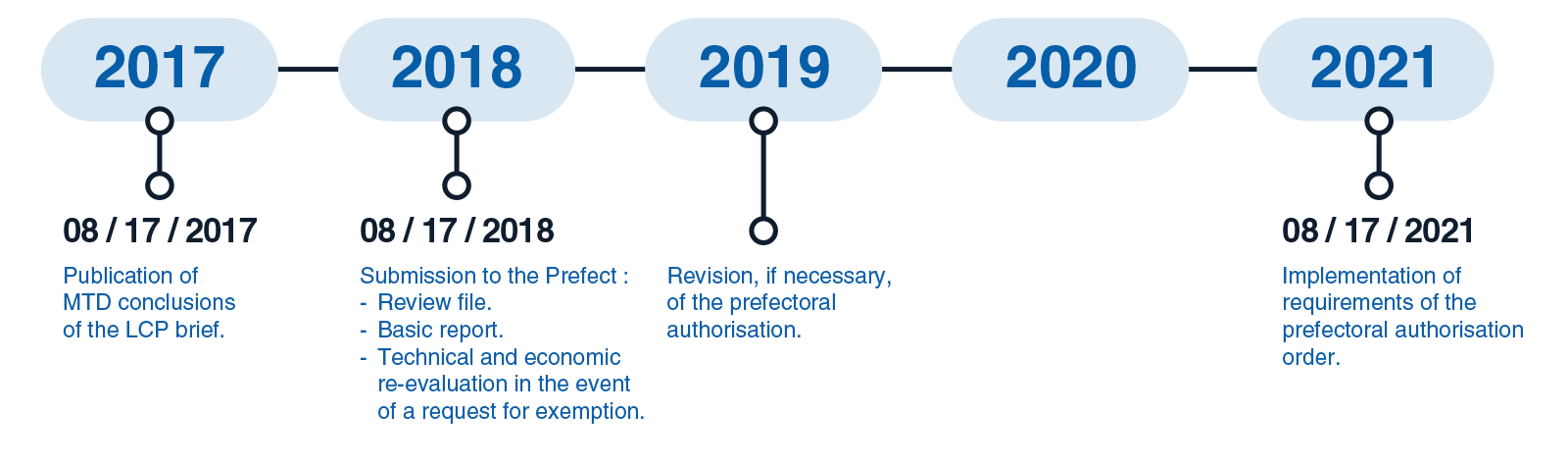
The ministerial decree of August 3, 2018 requires the implementation of the conclusions of the BREF (Best Available Techniques Reference Document) on Large Combustion Plants (LCPs) in order to reduce emissions of pollutants into the atmosphere.
The regulatory framework governing large combustion plants (≥ 50 MW) was updated by the order of January 30, 2025, which amends the provisions of the order of August 3, 2018. These changes include adjustments to emission limit values, monitoring procedures, and certain technical requirements effective in 2025 and 2026.
Here are the main conclusions of this decree:

Pollutant reduction

Implementing BAT

Monitoring & Reporting

Compliance Calendar

Sanctions and Measures

Cooperation and Training
These measures are designed to radically reduce the release of pollutants into the atmosphere, thereby helping to protect the environment and public health.

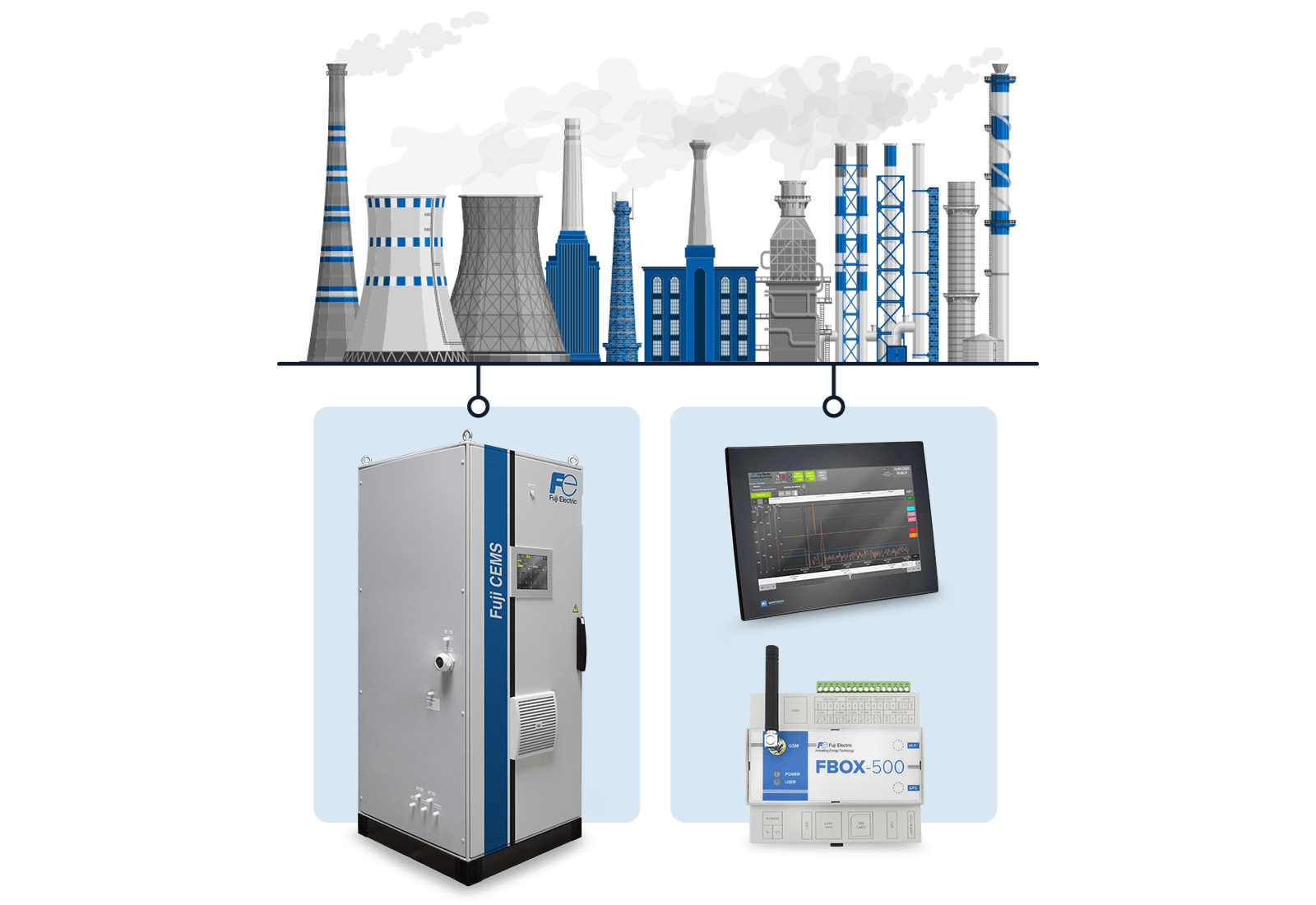
To ensure compliance with the new emission limits, the authorities have tightened the requirements for continuous monitoring of air pollutants.
Industrial plants must now implement sophisticated monitoring systems that measure emissions of harmful substances such as sulfur oxides (SO₂), nitrogen oxides (NOₓ) and fine particulates (PM) in real time.
On the one hand, the Continuous Emission Monitoring System (CEMS)installed on site must have been certified as QAL1 by TÜV (Germany) or MCERTS (United Kingdom) in its entirety.
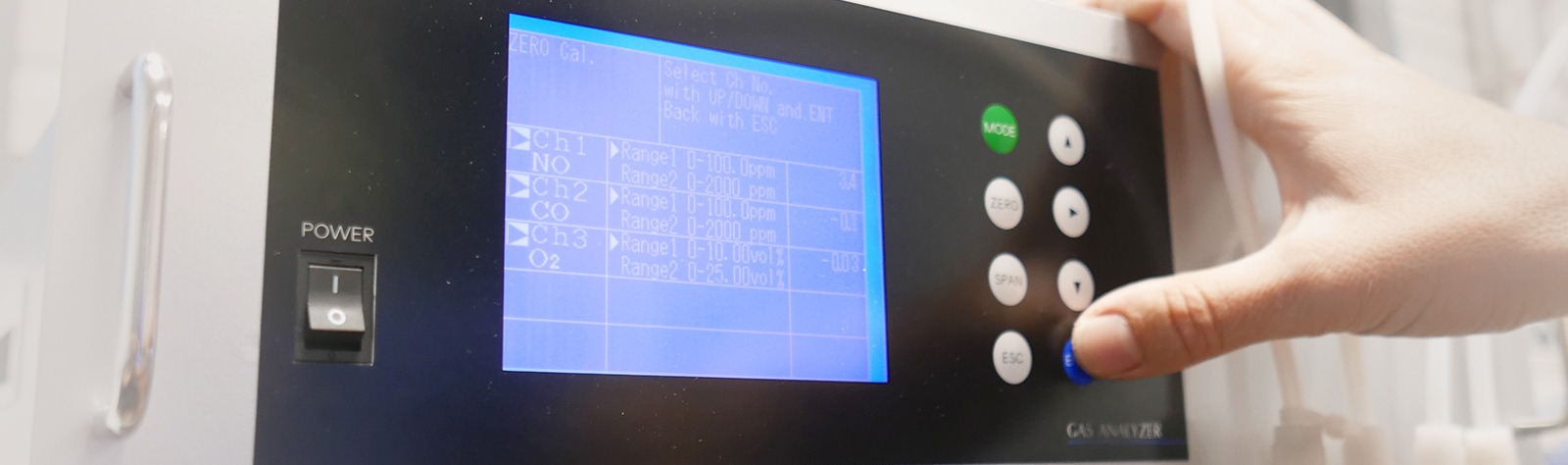
The standard defines a “certified system” as a “complete metrological chain that has been tested and certified as compliant with EN 15267-3” and meets the requirements of EN 14181. This chain includes several essential steps to ensure the reliability of the measurement process, including flue gas extraction, the conditioning system, and the gasanalyser . Thus, the gasanalyser cannot be certified on its own but is an integral part of the certified system as a whole.
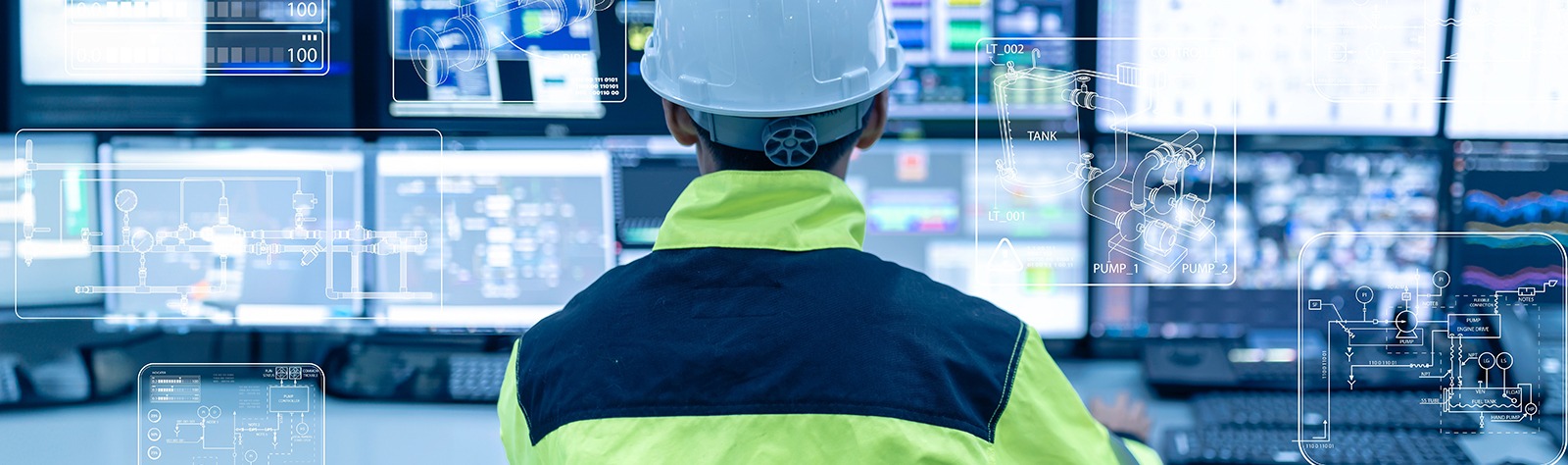
In addition, the Data Acquisition and Processing System (DAHS) is essential for reporting emissions, not only under normal operating conditions (NOC), but also under non-normal operating conditions (OTNOC).
This continuous monitoring enables immediate detection of threshold exceedances, facilitating a rapid and effective response to remedy infringements.
The data collected is important not only for ensuring transparency and traceability, but also for optimizing production processes to minimize emissions.
What's more, these enhanced requirements help facilities to comply with stringent environmental regulations and make a significant contribution to protecting public health and the environment.
By 2026, this monitoring will be part of a comprehensive environmental management framework. Operators must be able to guarantee the quality, traceability, and consistency of the measured data, particularly in light of the changes introduced by the order of January 30, 2025.
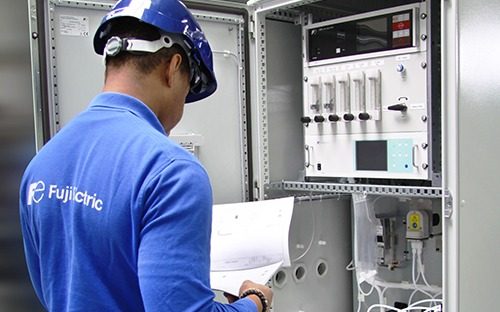
Since its establishment in 1995, Fuji Electric France has established itself as a European leader in industrial measurement equipment and environmental protection solutions, particularly in the field of gas emissions analysis. With roots firmly grounded in experience and innovation, the Fuji Electric Group enjoys an international reputation, celebrating over 60 years of excellence as a supplier of high-quality Continuous Emission Monitoring Systems (CEMS).
At the heart of Europe, Fuji Electric France excels in the engineering, integration and provision of services dedicated to gas analysis, operating from its technical center in Clermont-Ferrand. For two decades, this European branch has been involved in research, production, QAL1 (TÜV) certification and the innovative design and maintenance of CEMS gas analysis solutions and cabinets.
With particular attention paid to the measurement of exhaust emissions, flue gas flow, dust measurement and particle concentration, Fuji Electric France guarantees exceptional after-sales service.
An expert, dynamic team maintains and monitors over 200 CEMS installations across France, affirming its commitment to cleaner, more responsible industry.
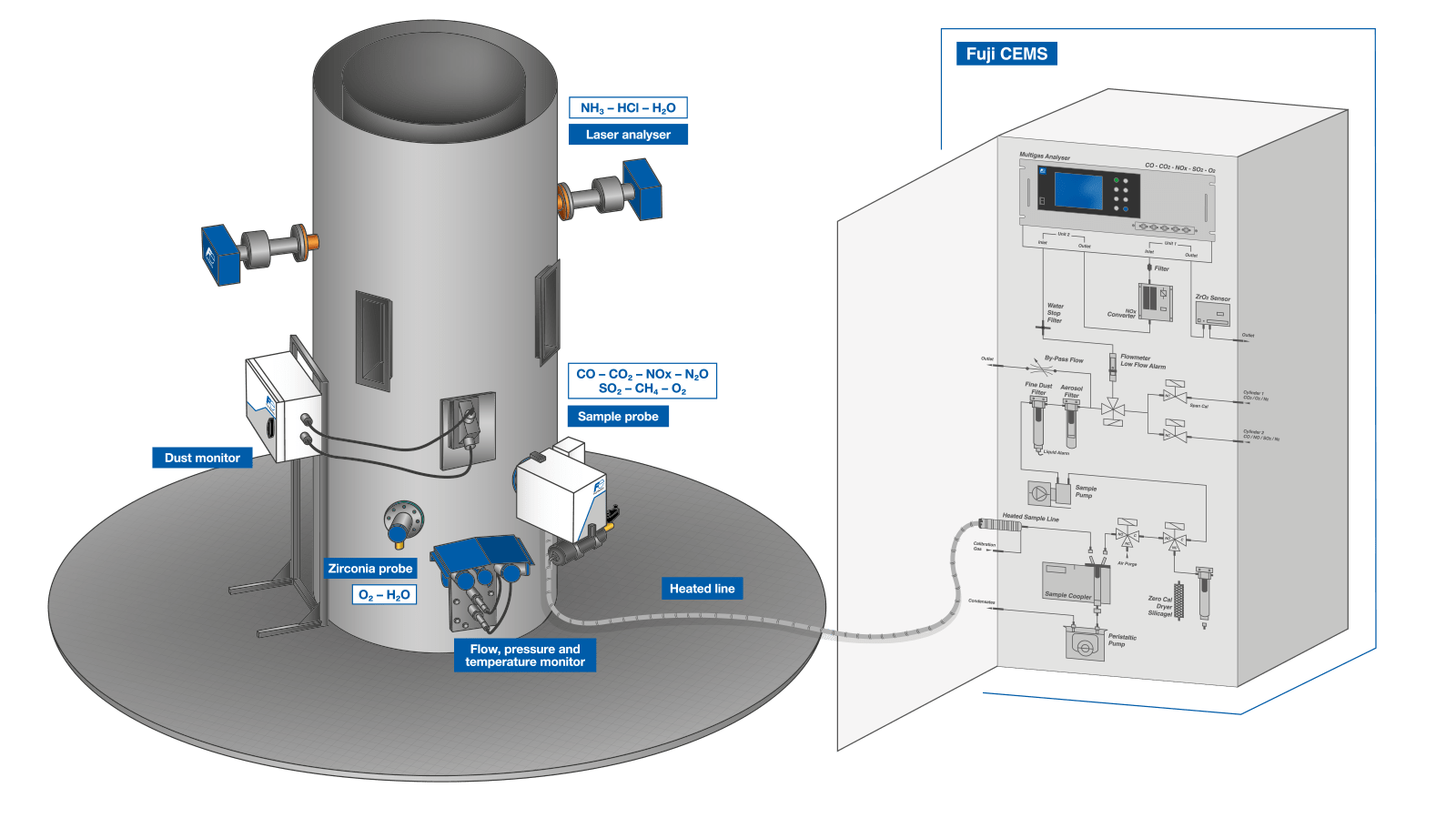
Industrial plants are now required to install and maintain emission measurement and control systems to comply with stringent environmental standards. These systems monitor pollutant levels released into the atmosphere in real time, enabling early detection of threshold exceedances. They provide accurate, continuous data to help operators optimize their production processes to minimize emissions.
Fuji Electric has a wealth of experience and expertise in these two related fields:
Regular maintenance of this equipment is essential to ensure its reliability and accuracy, thus contributing to environmental protection and public health.
By investing in state-of-the-art emission control technologies, facilities demonstrate their commitment to sustainability and regulatory compliance.
In the 2026 regulatory environment, the quality of data measurement and processing systems is becoming a key issue for ensuring compliance and anticipating regulatory changes.
Fuji Electric has developed the Fuji DAHS data acquisition and processing system. This software enables operators of facilities covered by the annual pollutant emissions declaration to report air emissions and greenhouse gas emissions.
With Fuji DAHS, users can automate the collection and processing of environmental data, guaranteeing the accuracy and reliability of the information reported.
The system is designed to comply with current regulations, and facilitates reporting to the GEREP (Gestion des Émissions et des Rejets des Établissements Polluants) platform.
Fuji Electric France, as an influential member of GIMELEC Analyse, plays an active role in advancing technologies in the field of industrial analysis.
The expertise of our professionals has been decisive in perfecting the algorithms of the latest iteration of Fuji DAHS v7, the fruit of close and productive collaboration with various specialists in the sector.
Our approach was enriched by major contributions from active members of FEDENE, a network of companies specializing in energy and environmental services, underlining the importance of working together.
We are proud to announce that our joint efforts with Gimelec Analyse and Fedene have led to the joint publication of the "Fedene/Gimelec Guide", a reference document for the acquisition, processing and reporting of data relating to the monitoring of air pollutant emissions, thus consolidating our commitment to the continuous improvement of environmental practices.
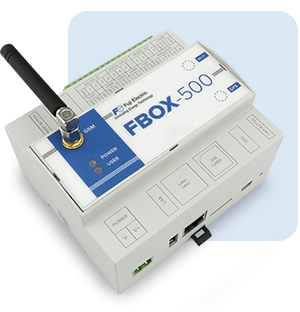
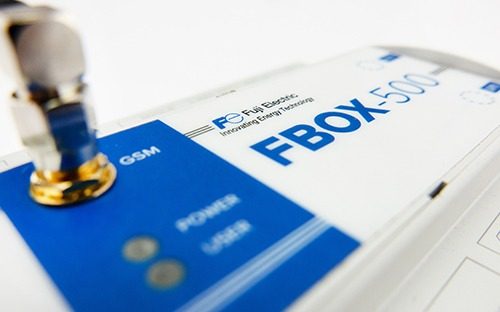
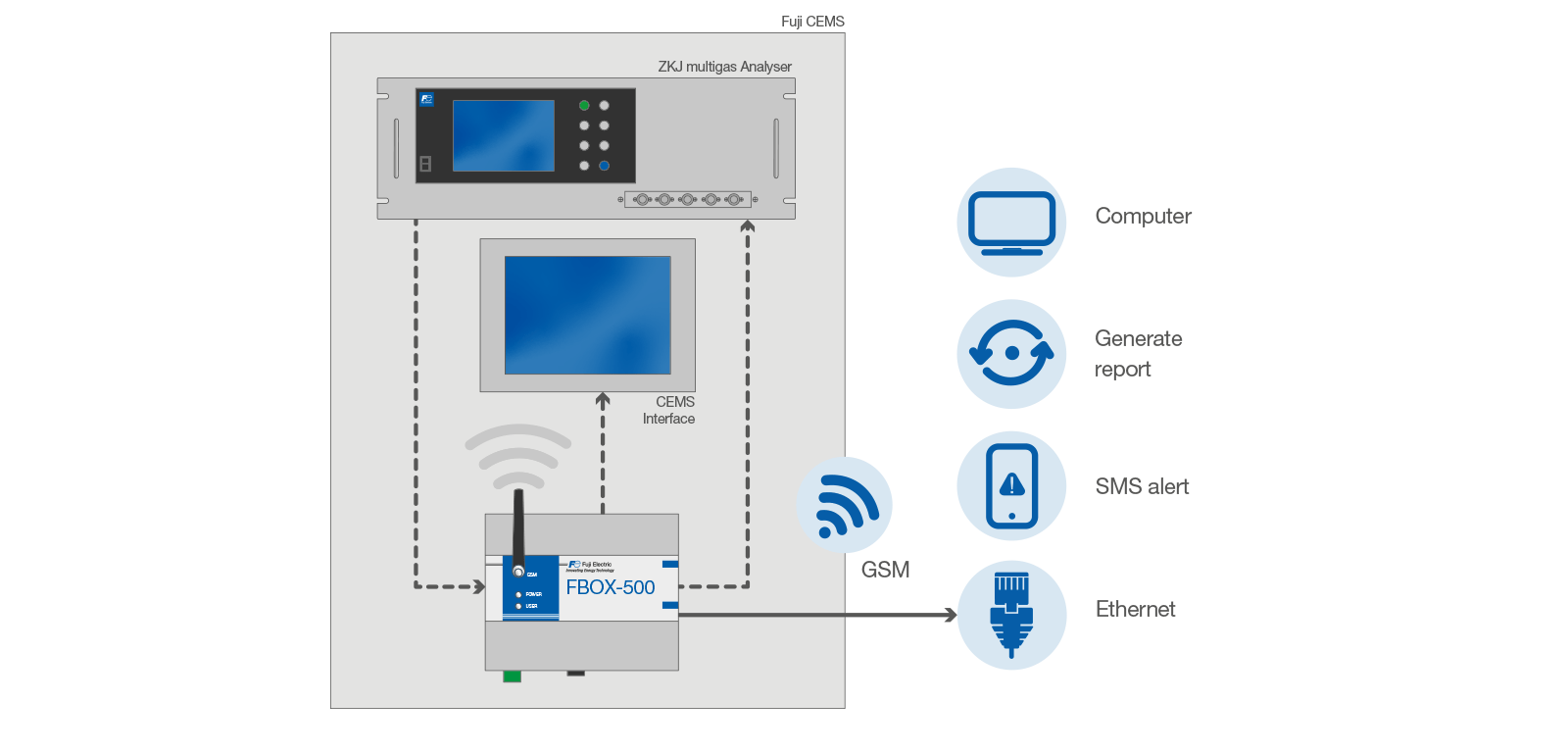
The new Fuji DAHS v7 data acquisition and processing system marks a significant advance in the field of pollutant emissions management. This innovation completes Fuji Electric's digital transformation strategy. It uses the latest digital communication technologies. This includes wireless solutions and secure cloud data storage. It also enables notifications to be sent by e-mail or SMS.
The Fuji DAHS v7 is not only a technological feat; it also meets the most stringent regulatory requirements. Complying with French and European standards, notably EN17255, this system ensures that operators are fully compliant with current and future regulations.
By integrating these advances, Fuji Electric offers companies a robust, modern solution for continuous emissions monitoring, ensuring effective, proactive management of their environmental impact.
This evolution enables users to benefit from improved data accuracy and enhanced reactivity thanks to instant alerts. By choosing the Fuji DAHS, operators gain an indispensable tool for meeting current and future environmental challenges, while optimizing their operational performance and regulatory compliance.


The GEREP 2027 report is based on data collected between January 1 and December 31, 2026.
In particular, the operators concerned must:
Preparing data in advance helps ensure regulatory compliance and minimizes the risk of errors during the reporting period.
Regulatory measurements of air emissions must be conducted at intervals specified by prefectural orders and the relevant ICPE classifications.
Depending on the activities and pollutants being monitored, periodic inspections may be required every 3 months to every 3 years.
Certain particularly sensitive substances, such as dioxins and furans, may be subject to monthly monitoring campaigns at specific facilities.
The measurement of atmospheric emissions relies on standardized methods that allow for the accurate quantification of gas and particulate matter concentrations released into the atmosphere.
Two main approaches are used:
Depending on the pollutants being monitored, several technologies can be used:
The monitoring of industrial emissions is part of an international framework aimed at reducing air pollution and its environmental impacts. Several international conventions therefore require a gradual reduction in pollutant emissions.
At the same time, air quality monitoring makes it possible to assess pollutant concentrations in the environment and verify compliance with standards designed to protect human health.

BRUNO GOUTAGNY
Expert in gas analysis and continuous emission measurement systems