






Without the process of photosynthesis, light energy would not be able to convert carbon dioxide into oxygen, which is essential for life and our crops. CO2 supplementation is beneficial for plant growth, especially for vegetables, as it leads to increased yields and improved quality. The CO2 level must be continuously monitored to ensure the yield of the greenhouse crop and the quality of the harvest. By monitoring CO2, growers can expect higher yields and better crop quality.
How can precise CO₂ control be ensured?

Did you know that in addition to oxygen, our plants also produce sugar?
Photosynthesis is the source of the oxygen we breathe, as well as the food we eat.
Without the photosynthesis process, the light energy would not convert carbon dioxide into oxygen.
This process occurs in the presence of light, water, carbon dioxide, and nutrients, which are all essential for plant growth.
The efficiency of photosynthesis can vary depending on several parameters, including the carbon dioxide concentration in the surrounding air.
As well as carbon dioxide, the plant needs sugar to grow. And the key point is that it indeed creates sugar by itself.
Minerals, water, nutrients, and light are the other components required.

The photosynthesis reaction is then as follows:
CO₂ + H₂O + Light → Sugar + O₂
The plant more precisely uses this sugar as a fuel. It allows it to generate new cells and, in a way, to breathe.
The answer is straightforward: in order to optimise the photosynthesis process thus stimulating and controlling the growth of plants.
Monitoring CO₂ in greenhouses is also essential for managing exposure levels, both for plants and workers, ensuring safety by keeping CO₂ concentrations within recommended limits.
Greenhouse crop production is now a growing and global reality with an estimated 405 000 ha of greenhouses spread throughout Europe.

The last 20 years have seen a revolution in greenhouse cultivation and technology.
Just a few years ago, a tomato yield of 100 tonnes/ha in a greenhouse was considered a good performance. Today, a harvest of 600 tonnes/ha is not unusual in high-tech greenhouses.Hans Dreyer, Director of the Plant Production and Protection Division at the Food and Agriculture Organization of the United Nations.
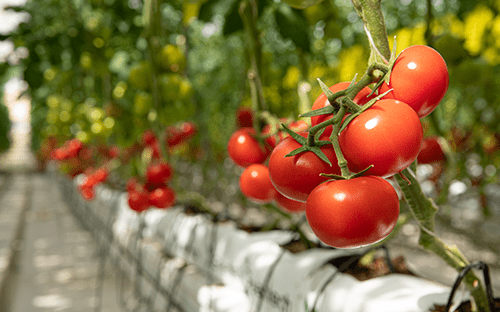
You’d think that regions of the world with abundant sunshine wouldn’t need greenhouses. But this is not the case.
Depending on the plant cultivated, here again, CO2, as well as temperature and air speed, is a key parameter, and its optimal level varies.
The concentration of CO2 is crucial for optimizing plant growth, as it directly affects the rate of photosynthesis and yield.
The CO2 concentration in ambient air, is famous for increasing dramatically since the industrial revolution, and faster and faster nowadays. While the average level is currently around 400 ppm (parts per million) which means 0,04% of the air we breathe, higher levels of CO2 can enhance plant growth up to a certain point.
Whereas, for instance, under adequate light and temperature conditions, tomatoes grow best at 900 ppm and cucumbers at 700 ppm.
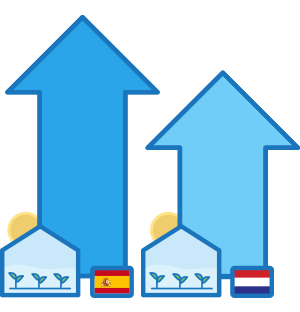
It appears then obvious that CO2-controlled atmospheres, and hence greenhouses, need to be developed at any place in order to meet the challenge of human nutrition in the coming years.
In both greenhouses and grow rooms, set points are used to automatically control CO2 levels for optimal plant growth.
The Netherlands are well known as the pioneer country for crop growth in climate-controlled houses. With the huge and still growing number of 9000 large greenhouses, which occupy 0.25% of the total land area, this market represents a significant part of the country’s GDP.
150 000 workers are employed and 80% of the products are exported.
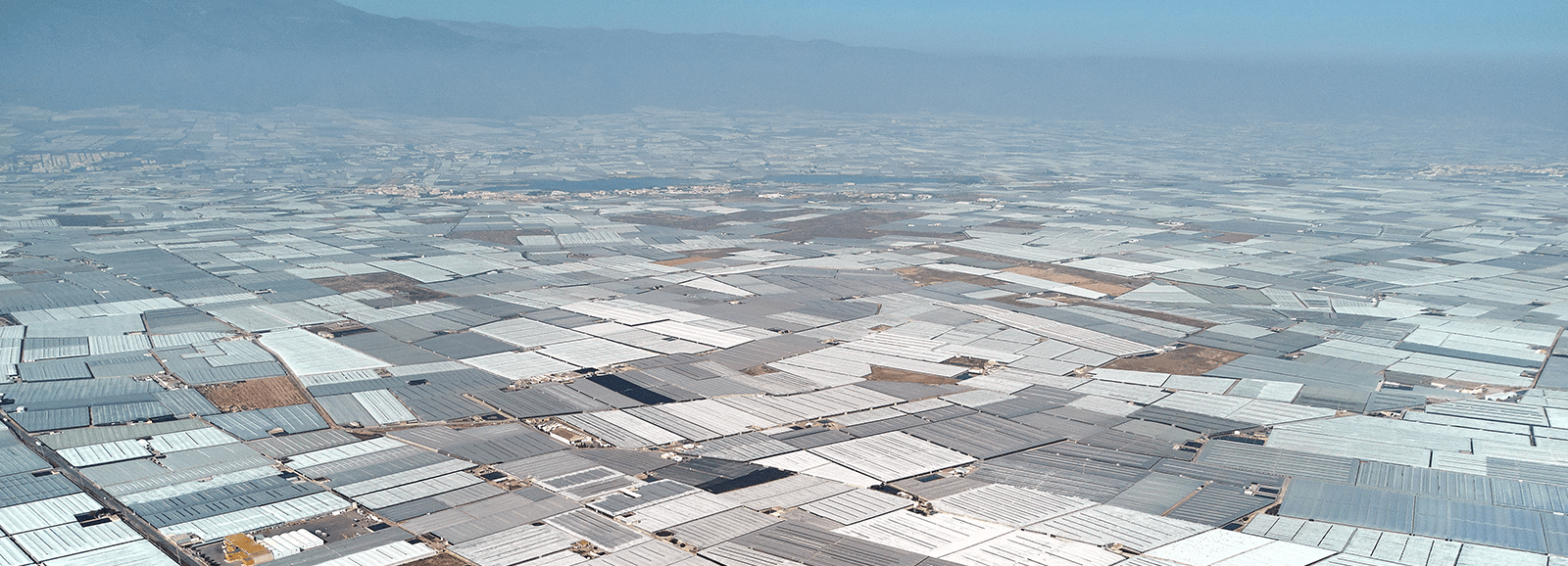
Spain is also famous for having one of the largest greenhouses in the world. This is in Almeria, where greenhouses cover almost a 200km2 area.

Effective water and nutrient management is essential for supporting robust plant growth and maximizing plant yield in greenhouses. Each type of plant has unique requirements, but a balanced nutrient solution with a pH between 5.5 and 6.5 is generally ideal for most crops. Using a flow meter allows growers to monitor water usage precisely and adjust irrigation schedules to match the needs of their plants, preventing both under- and over-watering.
Maintaining optimal environmental conditions—such as temperature and humidity—is equally important. High levels of carbon monoxide can be harmful to plant health, so it’s crucial to ensure proper ventilation and air quality. By closely monitoring these factors, growers can create an environment that promotes healthy growth, reduces the risk of nutrient deficiencies, and helps prevent the onset of pests and diseases.
Consistent attention to water and nutrient management not only boosts yield but also supports the overall health and resilience of greenhouse crops.

Protecting your greenhouse crops from pests and diseases is vital for maintaining high yields and ensuring the long-term success of your operation. Growers can employ a combination of biological, chemical, and cultural control methods to keep threats at bay. Regularly monitoring plants for early signs of infestation or disease is essential, as prompt action can prevent problems from spreading and causing significant damage.
A CO2 monitor can be a valuable tool in this process, as sudden changes in carbon dioxide levels may signal the presence of pests or diseases affecting plant respiration. Maintaining a clean, well-ventilated greenhouse environment further reduces the risk of outbreaks.
By implementing a proactive pest and disease control strategy, growers can protect their investment, maintain healthy plants, and ensure consistent, high-quality production.

The design and layout of your greenhouse are critical factors that influence plant yield, efficiency, and overall operational costs. A well-planned greenhouse should provide optimal light intensity, precise temperature control, and effective ventilation to create the best possible environmental conditions for plant growth. When designing a greenhouse, consider the specific needs of your crops, the local climate, and the available space to ensure every plant receives the right amount of light and air circulation.
A sealed greenhouse offers enhanced control over carbon dioxide, temperature, and humidity, allowing growers to maintain the desired level of each factor for maximum productivity. However, this approach requires careful monitoring and management to prevent issues such as excessive humidity or CO₂ build-up.
By investing in a thoughtfully designed greenhouse, growers can optimize plant growth, increase yield, reduce energy costs, and improve the overall efficiency of their operation.

Proper post-harvest handling and storage are essential steps in the greenhouse production process to maintain the quality and value of your crops. Gentle handling minimizes damage, while storing produce in a cool, dry environment helps preserve freshness and extend shelf life. Utilizing a CO2 controller or CO2 monitor provides a simple and affordable way to maintain optimal carbon dioxide levels during storage, which can further enhance the longevity of your crops.
Monitoring temperature and humidity is also crucial, as high levels of moisture can lead to spoilage and reduce the value of your harvest. A flow meter can help track water usage and prevent unwanted moisture buildup during storage.
By following best practices for post-harvest handling and storage, growers can reduce waste, maintain high product quality, and increase customer satisfaction—ensuring that the hard work invested in production pays off all the way to market.

It can be extracted from burners using oils or natural gas. In such cases, care must be paid to avoid the presence in the greenhouse of toxic gases – whether for plants (SO2, ethylene etc.) or humans (carbon monoxide). CO2 generators that use combustion can also provide heating for the greenhouse, making them efficient for large-scale operations.
CO₂ can be extracted from burners using fuel oil or natural gas. In this case, it is essential to take care to avoid the presence of toxic gases in the greenhouse - be they gases harmful to plants (SO₂, ethylene, etc.) or humans (carbon monoxide). Combustion-powered CO₂ generators can also provide heating for the greenhouse, making them particularly effective for large-scale operations.
Alternatively, pure liquid CO2 purchased from commercial suppliers may be used. In this case, pressure regulation in CO2 tanks and delivery systems is essential for controlling CO2 flow and maintaining safety.
The most common method of CO2 enrichment for greenhouse applications is the combustion of fossil fuels. And the most widely used fuel for CO2 enrichment is natural gas. Burning one m³ of natural gas generates around 1.8 kg of CO2.
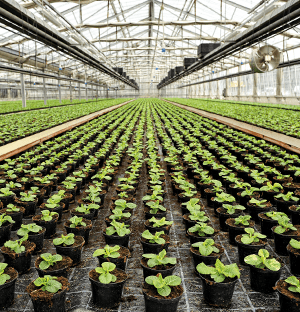
Then supplying CO2 may lead to local variations in CO2 concentration throughout the greenhouse. Horizontal, and vertical gradients in environmental conditions are disadvantageous but inevitable. Most importantly is to prevent a decrease in the homogeneity of plant growth and crop production.
For instance, with a distribution network, a high CO2 concentration is found near the distribution tubes and a low level close to the ridge, or near the opened ventilation windows. It is then recommended to place the CO2 distribution lines on a low level near the crops.
In this way, the natural diffusion of carbon dioxide towards the top of the greenhouse will ensure uniform CO2 enrichment along the vertical axis.
The horizontal distribution is also a challenge since the whole surface of the greenhouse should also contain the same amount of CO2, so that all plants grow at the same speed and the maturity and quality are homogeneous throughout the whole culture.


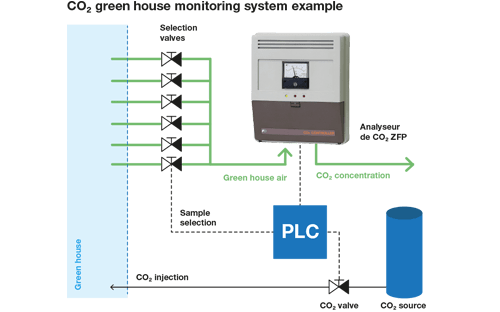
Toensure volumetric uniformity(both horizontally and vertically)of theCO2concentration in the greenhouse, the best strategy is tomeasure itat several locations throughout the greenhouse.
This can be done usingmultiple gas analysers s and/orby performingmultipoint sampling with a single analyser, depending on the size of the greenhouse and the available budget.
In the case of a large greenhouse, severalCO2 controllers will be used to cover the entire volume. To ensure the best representation of the atmosphere, each controller will simultaneously measure several smaller zones (usually 4 or 6).
This optimized strategy ensures that CO2 is distributed evenly over all crops.
Fuji Electric's CO₂ sensor is a reliable device specially designed for greenhouse applications. Key features include adjustable parameters, alarms and connectivity options, making it versatile and easy to integrate into different greenhouse environments.
The Fuji Electric ZFP CO2 controller for greenhouses is a dedicated NDIR (Non-Dispersive Infra-Red) gas analyser . It was designed years ago for this purpose and has been improved with experience. The CO₂ sensor offers rapid response to variations in CO₂ concentration, enabling real-time detection and alerts to maintain optimal air quality for plant growth.
More than 10,000 ZFP CO2 monitors are currently in use across Europe to optimize our food production by enhancing photosynthesis through CO2 fertilization.
Equipped with its own internal filter and pump, this infrared analyser is able to draw in ambient air around its own position, and then from distant areas via a network of sampling pipes.
A common strategy, like the one illustrated opposite, is to draw in air from several areas to ensure homogeneous CO2 in the targeted zone.
Installation of the CO₂ ZFP controller is straightforward, and its unique stability allows an annual calibration frequency.
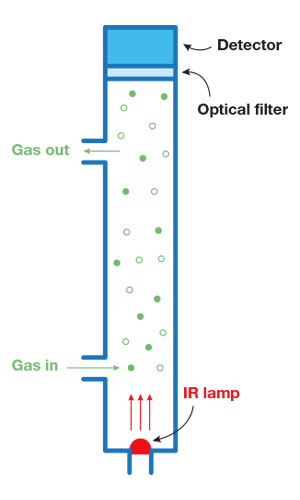
The Fuji Electric CO2 monitor's non-dispersive infrared technology has been renowned since the 1960s for its robustness and signal stability in the harshest weather conditions.
The sensor operates using an infrared (IR) source that directs light waves through a cell filled with a sample of air. This air moves towards an optical filter located in front of an IR light detector.
The IR light detector measures the amount of IR light passing through the optical filter.
The IR radiation band also produced by the IR source is very close to the 4.26 micron absorption band of CO2.
As the IR spectrum of CO2 is unique, the wavelength match of the light source serves as a signature or "fingerprint" to identify the CO2 molecule.
As infrared light passes through the cell, the CO2 molecules absorb the specific band of infrared light and allow the other wavelengths of light to pass through. At the end of the detector, the remaining light strikes an optical filter that absorbs all wavelengths of light except the wavelength absorbed by the CO2 molecules in the sample cell. Finally, an IR detector reads the remaining amount of light that has not been absorbed by the CO2 molecules or the optical filter.
The difference between the amount of light radiated by the IR source and the amount of IR light received by the detector is measured.
As the difference is the result of light absorption by the CO2 molecules present in the air inside the cell, it is directly proportional to the number of CO2 molecules. This data is then processed by the internal electronic board and output as a 4-20 mA signal used by the CO2 enrichment system.
Fuji Electric has decades of experience in the manufacture of advanced gas analysis equipment, guaranteeing high-quality performance and proven reliability.

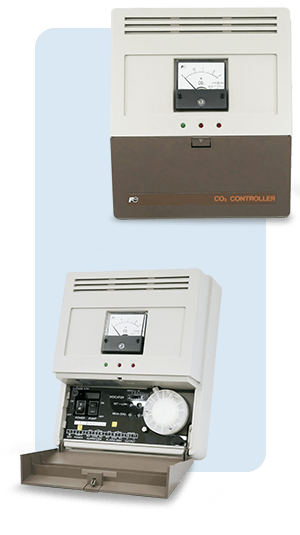
The ZFPanalyser is also suitable for use in grow rooms, providing reliable CO₂ monitoring and control to ensure optimal plant growth.
 Application
Download your application sheet and improve the productivity and quality of greenhouse production!