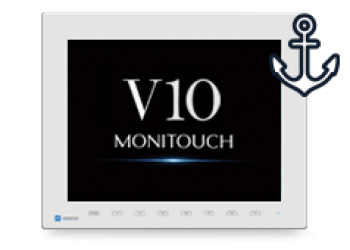





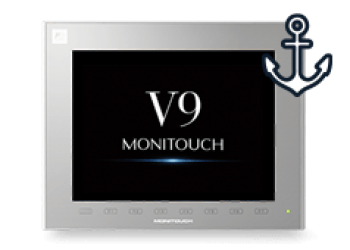
In the shipbuilding industry, the reliability, ergonomics, and readability of human-machine interfaces (HMIs) directly affect safety and performance on board.
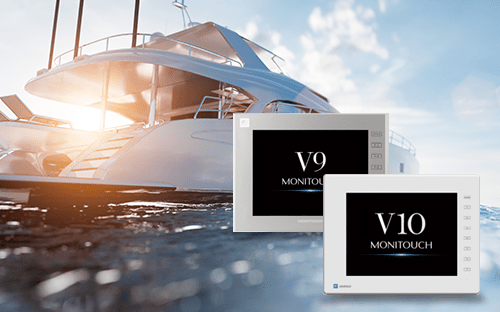
Fuji Electric's MONITOUCH V9 & V10 Marine series human-machine interfaces offer robust, compact, and customizable touchscreens that are ideal for replacing obsolete HMIs on yachts, superyachts, and commercial vessels, while complying with international maritime standards.
By integrating these industrial touchscreens, shipyards and integrators ensure compliance with maritime standards while improving the steering experience and system availability.
Summarize this article with :
Regulatory pressure is intensifying, and ship certification requires compatible and certified equipment. Without certified solutions, certification delays increase, impacting shipyard schedules and budgets.
In practical terms, a marine human-machine interface must be based on recognized certifications and documented ergonomics, in compliance with maritime standards.
At the same time, control consoles are becoming smaller. Shipowners are looking for attractive, intuitive, and easy-to-read interfaces that can display essential information without visual overload. Ship interfaces must remain compact and customizable, without compromising on robustness or day and night readability, in accordance with the rules of the International Maritime Organization, which regulates the ergonomics of control stations.
Finally, rapid advances in embedded electronics are accelerating the obsolescence of older interfaces. Migrating to modern, sustainable platforms is becoming a strategic priority. These platforms must enable remote maintenance and supervision of multiple systems. In practice, this migration aligns the human-machine interface with recent standards, particularly harmonized alert management and visibility guidelines.
Compliance and certification requirements are a crucial issue in the maritime sector. Shipyards and shipowners must comply with complex validation procedures imposed by classification societies. All equipment must meet strict criteria in terms of safety, performance, and resistance to marine conditions.
Delays or non-compliance in these procedures can result in additional costs, extra time, and sometimes even refusal to certify the ship.

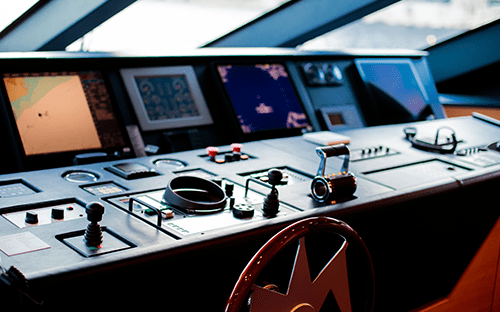
Modern gangways are becoming increasingly compact, limiting the space available for integrating new equipment. Shipyards have to contend with technical environments that are already densely equipped, making it difficult to add additional elements.
These space constraints require careful consideration of the console's layout, visibility, and ergonomics in order to maintain safety and comfort while driving.
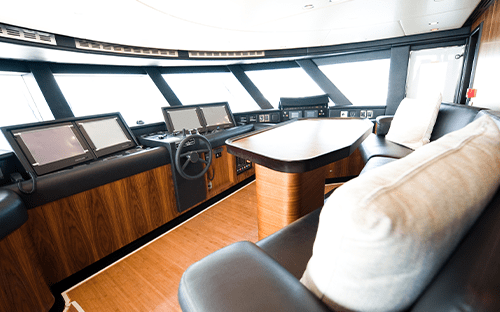
The readability of information is a constant challenge in maritime navigation. Lighting conditions change rapidly: bright sunlight, fog, nighttime, or glare on the bridge. Operators must be able to view essential data without visual strain or confusion.
Poor visibility can compromise decision-making and the safety of the vessel. This need for visual clarity is accentuated by the proliferation of screens and the increase in the volume of information displayed on board.
Crews and shipowners expect interfaces that can adapt the display to missions and navigation conditions. Modern yachts and ships incorporate a variety of systems (propulsion, energy, safety, navigation) that require clear prioritization of information.
The challenge lies in ensuring visual consistency and easy access to critical data in order to avoid cognitive overload. This requirement for customization is primarily aimed at ensuring operational fluidity and crew responsiveness.
Technological sustainability and compatibility between systems are major challenges for modern ships. Today's fleets incorporate a wide variety of equipment from different manufacturers. This heterogeneity complicates communication between onboard systems and makes maintenance more difficult.
Shipyards and shipowners must therefore ensure technical consistency between automation systems, sensors, and control interfaces. Lack of interoperability can lead to malfunctions, data transmission errors, and a loss of operational efficiency on board.
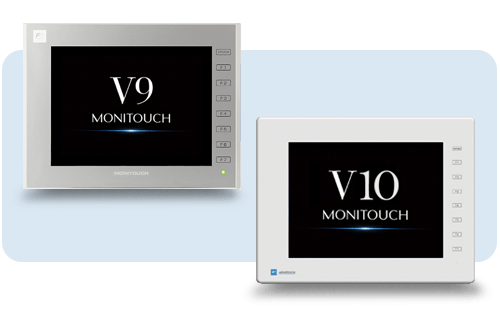
MONITOUCH V9/V10 touchscreens are certified by leading classification societies (DNV, Lloyd’s Register, ABS, ClassNK). This certification guarantees their compliance with international requirements and simplifies the approval process for shipyards. Integrators thus save time during inspections and ensure the reliability of the equipment installed on board.
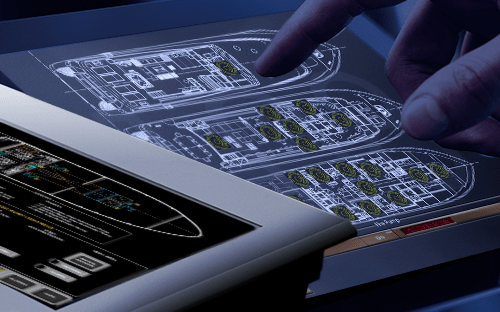
Designed for modern gateways, these touch interfaces are available in sizes ranging from 5.7 to 15 inches, making them easy to integrate into narrow or existing consoles.
Their shallow mounting depth and mechanical robustness allow for quick installation, limiting structural modifications while optimizing the available space on yachts and ships.
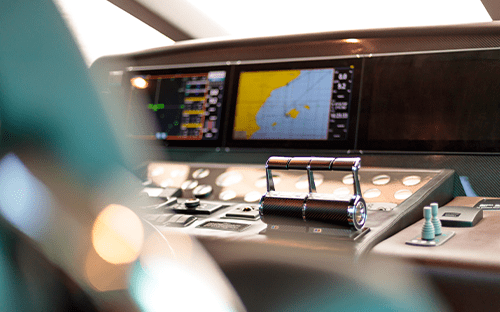
With LED backlighting and 128 adjustable brightness levels, the V9/V10 human-machine interface series ensures perfect visibility in all navigation conditions.
Operators benefit from consistent visual comfort, reduced glare at night, and clear readability in bright sunlight, contributing to improved maneuvering safety.

The interfaces are designed to communicate with a wide variety of controllers and embedded equipment thanks to their compatibility with Ethernet, Modbus, CAN, RS232, and RS485 protocols.
This compatibility allows for the centralization of ship data, simplifies maintenance, and ensures the sustainability of the supervision system.
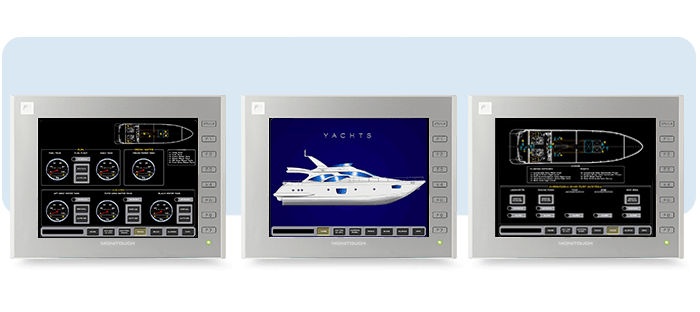
Each installation can be tailored to the specific needs of the yacht or vessel. Customizable displays (gauges, dials, alarms, etc.) allow for the design of a bespoke interface, perfectly aligned with the vessel's missions. These human-machine interfaces can display essential information such as:
This flexibility provides the crew with clear, intuitive ergonomics that are tailored to their working environment.
Replacing old human-machine interfaces is a strategic challenge for shipyards and shipowners. With decades of experience in designing industrial and marine equipment, Fuji Electric supports industry professionals in modernizing their control and display systems.
With its extensive experience, its HMIs have already been deployed on a wide range of vessels, from private yachts to commercial ships. This equipment has proven itself over several years, demonstrating its reliability and durability in demanding marine environments.
This expertise translates into a deep understanding of integration constraints, classification standards management, and interoperability requirements between old and new systems. The MONITOUCH V9 and V10 Marine human-machine interface ranges have been developed to ensure a smooth transition to more powerful technologies, while maintaining compatibility with existing architectures.
Thanks to this technical expertise and renowned engineering support, Fuji Electric guarantees comprehensive assistance: from auditing existing installations to commissioning new marine touch screens. This know-how makes Fuji Electric a partner of choice for adaptation, maintenance, and modernization projects in international shipbuilding.

Simplified replacement

Compliance assured

Optimized readability
 Application
Download your application sheet and discover reliable, compliant marine HMIs to ensure safe navigation every time!