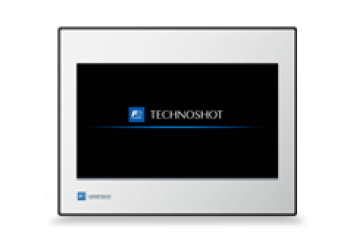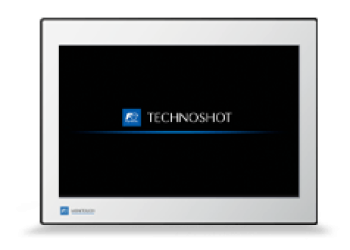





In indoor parking garages, monitoring gas emissions has become a key priority for balancing user safety, regulatory compliance, and operational performance. Fuji Electric’s TS4000 human-machine interface (HMI) series, when combined with detectors and control panels, enables centralized data collection, alarm monitoring, and more efficient ventilation control—both on-site and remotely.

Today, parking facilities are at the intersection of several key priorities. From a social and health perspective, users expect safer, better-ventilated, and more closely monitored spaces. From an economic perspective, operators must balance service continuity, personal safety, minimizing the risk of incidents, and controlling energy consumption. The challenge, therefore, is not only to detect when thresholds are exceeded, but also to act quickly and consistently across the entire facility.
The legislative and regulatory framework reinforces this requirement. This document is part of the EN 50545-1 standard, the European reference for fixed toxic gas detection devices in parking garages and tunnels. This standard specifically covers performance requirements, response times, alarm and fault management, self-monitoring, periodic testing, maintenance, and installation recommendations. DALEMANS gas detectors thus serve as the first line of defense, while the Fuji Electric touchscreen interface provides the supervision and data management layer.
Not to mention the emerging challenge posed by the electrification of the vehicle fleet. Early detection of certain gases can help identify thermal runaway in electric vehicle batteries. In this context, having a clear, responsive, and traceable monitoring system is essential for anticipating risks and guiding team responses.

On the ground, parking lot operators must manage facilities spread across multiple levels, traffic zones, and critical areas. Sensors are scattered throughout the infrastructure, and control centers already aggregate some of the data, but day-to-day operations reveal several challenges that hinder responsiveness and complicate compliance.
The first challenge involves data centralization. Measurements can remain scattered across sensors, control centers, and floors, with no single source of truth. If a threshold is exceeded, this fragmentation delays the time it takes to understand the situation and can lead to inconsistencies in the analysis.
The second challenge relates to data visualization. When interfaces are inconsistent or views are incomplete, teams have a less clear understanding of the areas involved, trends, and the temporal context. In an emergency, this lack of clarity can slow down decision-making.
Finally, traceability is a critical issue. Incomplete records of measurements, events, defects, acknowledgments, or tests make it more difficult to compile evidence of maintenance and compliance. For the operator, this means spending more time reconstructing information and facing less reliability in day-to-day operations.

The SMART solution combines an HMI interface from the Fuji Electric TS4000 series with DALEMANS detectors and control units in a unified monitoring architecture. Its role is to connect all control units, automatically collect measurements from each detector, and standardize data formats to provide a consistent data repository for all relevant teams.
Specifically, sensors located throughout the various levels of the parking garage continuously monitor concentrations of CO, NO₂, LPG, and CNG. Measurements are transmitted in real time to a central control center from the lanes, ramps, and areas prone to stagnant air. The control center aggregates and prioritizes the data, manages thresholds, acknowledgments, and faults, and then controls the ventilation system and alarms. The human-machine interface (HMI) then makes this information readable, accessible, and actionable.


One of the key features of the TS4000 HMI is continuous data logging. Values, alarms, faults, acknowledgments, and events are recorded, time-stamped, and linked to a zone, a floor, or a piece of equipment. This historical database facilitates searches, analyses, operational reviews, and maintenance planning. It also provides the customer with a comprehensive record of their facility’s operational history.
The touchscreen interface is also designed for customized display. The screens can display zones, trends, thresholds, alarms, faults, statistics, or ventilation-related indicators. Data can be viewed locally on the HMI touchscreen or transmitted remotely to a client supervisor via Modbus TCP, which enhances the solution’s integration into an overall building or site monitoring architecture.


 Application
Download your application sheet and discover the solution for monitoring and managing parking lot emissions!